Oct 24, 2026Technical Articles & Engineering Insights
e-GSE Power Electronics Integration Guide: Solving Vibration, Thermal, and Voltage Challenges Ahead of GSE Expo Europe 2026
GSE Expo Europe 2026 brings together OEMs, system integrators, and engineers. Discover key e-GSE power conversion solutions, including 3.3kW/6.6kW OBCs & DC-DC converters.

e-GSE Power Electronics Integration Guide: Solving Vibration, Thermal, and Voltage Challenges Ahead of GSE Expo Europe 2026
As OEM engineering teams, system integrators, and fleet managers prepare for GSE Expo Europe 2026 in Lisbon (September 15–17), the electrification of ground support equipment (e-GSE) remains a primary focal point.
Transitioning from internal combustion engines (ICE) to electric powertrains involves more than simply dropping passenger EV hardware into airport machinery. The harsh tarmac environment places severe electrical, thermal, and mechanical stresses on power conversion hardware.
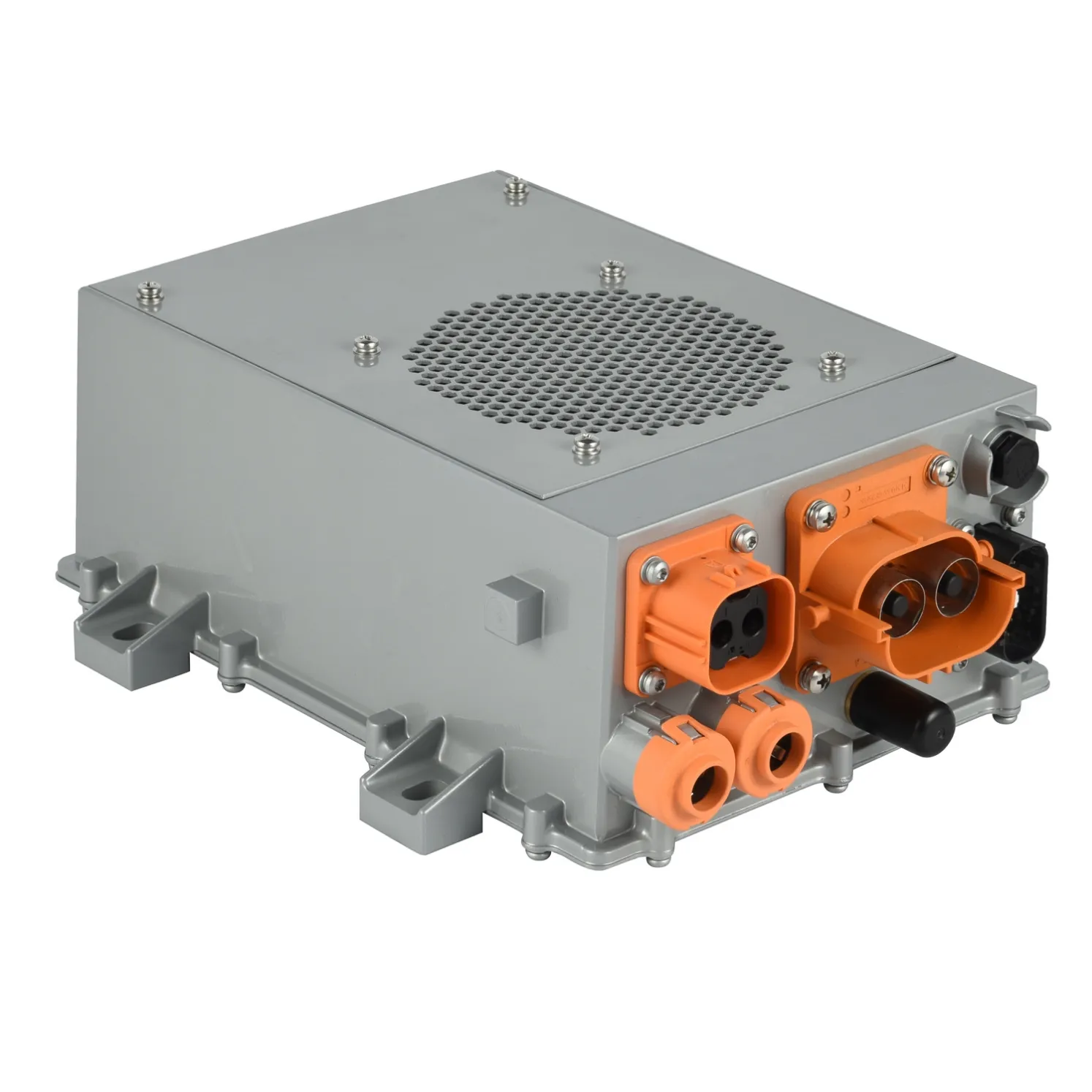
This technical guide breaks down the core power conversion design challenges for electric GSE—including On-Board Chargers (OBCs) and DC-DC converters,and provides a practical integration checklist for engineering teams.
1. Why Passenger EV Power Modules Fail on the Airport Apron
Standard automotive-grade power conversion units are often ill-equipped for off-highway and airport ground support applications. Airport apron environments introduce four brutal operating conditions:
- Sustained Low-Frequency & High-Impact Vibration: Unpaved tarmac joints, high-frequency stop-and-go movements, and rigid suspension systems subject power modules to continuous vibration. Standard surface-mount components and unpotted PCBs quickly suffer from mechanical fatigue and cracked solder joints.
- Thermal Extremes & Solar Radiation: Equipment left on open aprons must endure ambient temperatures ranging from freezing winter conditions (-20°C or below) to direct summer heat (>45°C), requiring robust thermal derating algorithms.
- Chemical Exposure: De-icing fluids (glycol), hydraulic oils, and high-pressure washdowns demand superior ingress protection (IP67 / IP69K).
- Non-Standard System Voltages: Unlike 400V/800V passenger EVs, e-GSE platforms operate across wide, lower-voltage architectures (48V, 72V, 96V, or 144V) requiring tailored step-down DC-DC conversion for 12V/24V auxiliary systems.
2. Technical Comparison: Power Conversion Requirements by GSE Type
Selecting the right On-Board Charger (OBC) and DC-DC converter depends heavily on the duty cycle, battery chemistry, and physical space constraints of the specific ground support vehicle.
Vehicle Type | Typical Battery Voltage | Recommended OBC Capacity | DC-DC Output Demand | Key Environmental Requirement |
|---|---|---|---|---|
Electric Baggage Tractors (EBT) | 48V – 96V LiFePO4 / Lead-Acid | 3.3 kW – 6.6 kW | 300W – 1.0 kW (12V) | High vibration potting, compact footprint |
Belt Loaders / Passenger Steps | 48V – 80V LiFePO4 | 3.3 kW | 300W – 600W (12V/24V) | Wide temperature range, sealed IP67 enclosure |
Light Electric Box Trucks / Utility Vehicles | 72V – 144V | 3.3 kW – 6.6 kW | 500W – 1.2 kW (12V) | CC/CV multi-stage charging, CAN bus control |
Aircraft Pushback Tugs (Heavy GSE) | 300V – 600V High Voltage | 11 kW – 22 kW (or dual 6.6kW) | 1.5 kW – 3.0 kW (24V) | Liquid-cooling options, active safety protections |
3. Key Design Considerations for e-GSE Power Hardware Integration
When sourcing power conversion modules for upcoming GSE electrification projects, consider the following technical parameters:
Full Internal Encapsulation (Potting)
To ensure long-term uptime, power units should feature complete silicone or epoxy encapsulation. Full potting isolates delicate power electronics from external shock, dissipates heat evenly across the aluminum chassis, and prevents internal condensation caused by sudden ambient temperature shifts.
Multi-Chemistry CC/CV Charging Profiles
On-board chargers must offer programmable Constant Current (CC) and Constant Voltage (CV) algorithms controlled via CAN Bus (CAN 2.0B). This enables seamless integration with various Battery Management Systems (BMS) whether utilizing LiFePO4, NMC, or traditional lead-acid battery packs.
Comprehensive Electrical Protection
Power modules deployed on aprons must integrate self-diagnostic protection functions:
- Over-Voltage Protection (OVP) & Under-Voltage Protection (UVP)
- Short-Circuit Protection (SCP) with auto-recovery
- Over-Temperature Protection (OTP) with dynamic thermal derating
4. Engineering Integration Checklist for GSE Expo Europe 2026
If your team is evaluating power conversion suppliers during GSE Expo Europe, use this 5-point checklist during technical discussions:
- Vibration Validation: Is the module validated against off-highway vibration standards (e.g., ISO 16750-3 / SAE J1455)?
- Thermal Derating: At what ambient temperature does the charger begin throttling power output, and what is its maximum continuous operating limit?
- Ingress Rating: Is the unit independently certified to IP67 or higher for washdown and glycol resistance?
- Custom CAN Protocols: Can the firmware be flashed to support custom BMS communication protocols without extensive hardware redesign?
- Physical Envelope: Does the power density allow for easy mounting within tight engine bay compartments or under-seat spaces?
Technical Consultation & Next Steps
Navigating power conversion hurdles shouldn't delay your vehicle deployment timelines. Developing ruggedized on-board chargers (3.3kW / 6.6kW) and DC-DC converters built specifically for off-highway, light electric trucks, and specialized e-GSE applications ensures high uptime on the apron.
Attending GSE Expo Europe or planning your next-generation e-GSE powertrain?
Contact our engineering team today to request detailed technical datasheets, CAD models, or to schedule a power system integration consultation.
About the Author:
This article is published by Echelon Energy Technology, a supplier of rugged on board charger and DC-DC converter for off-highway and special electric vehicles. Our engineering team offers technical consultation for e-GSE power electronics projects.