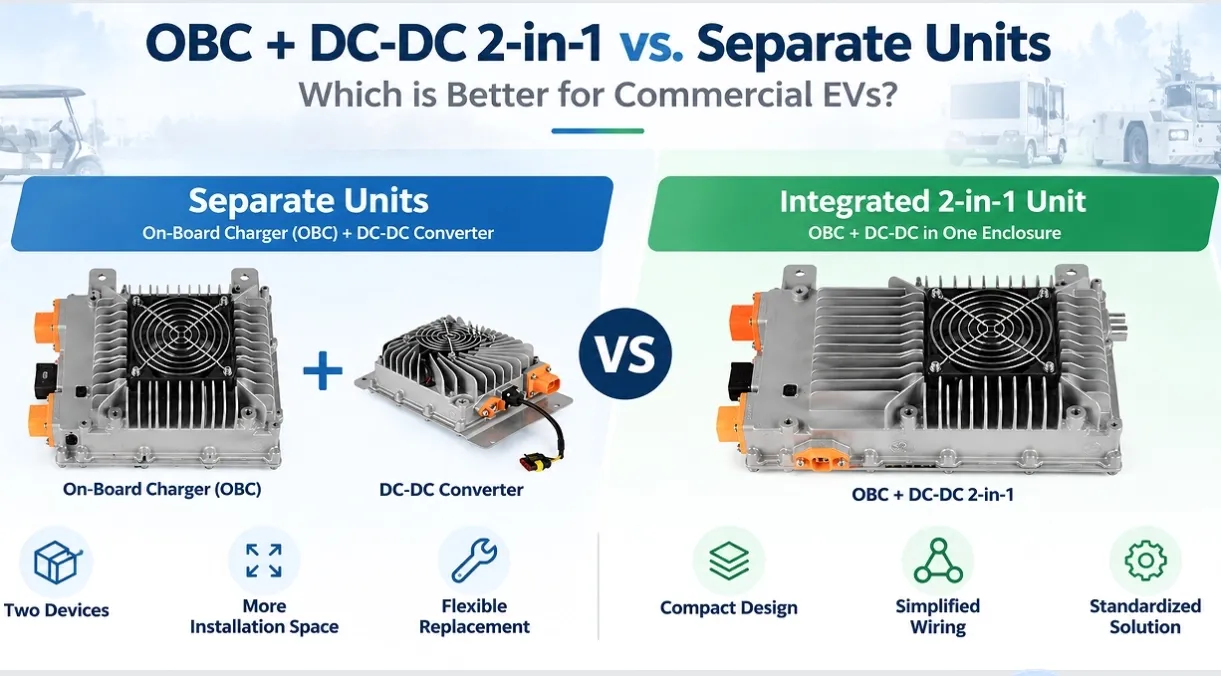
OBC + DC-DC 2-in-1 vs OBC and DC-DC Separate Units: Which Is Better for Commercial EVs?
Compare integrated OBC + DC-DC 2-in-1 systems with separate units for commercial EVs. Learn the trade-offs in wiring, thermal design, CAN, maintenance and cost.
| Technical articles, application notes and engineering insights | Vehicle platforms, thermal design, testing and reliability

Compare integrated OBC + DC-DC 2-in-1 systems with separate units for commercial EVs. Learn the trade-offs in wiring, thermal design, CAN, maintenance and cost.

Explore Echelon's OBC and integrated power lineup: 3.3-6.6 kW OBC+DC-DC units, an 11 kW bidirectional V2G charger, three-in-one power units and portable chargers.

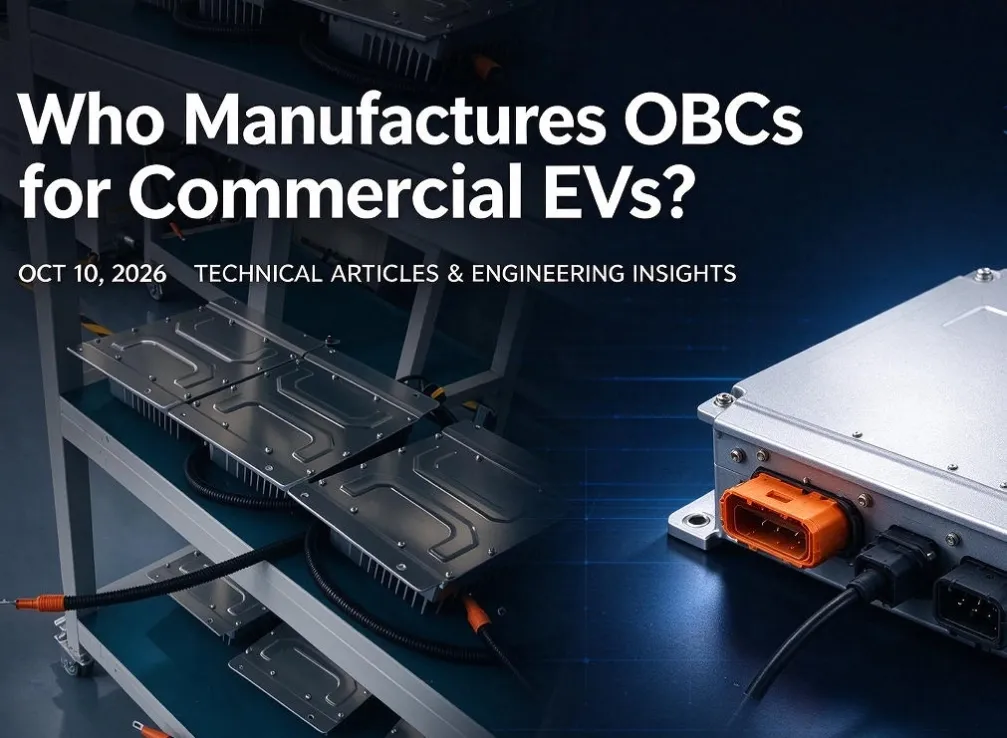
Compare the types of OBC suppliers for commercial and specialty EVs, what separates a qualified manufacturer from a trading company, and where Echelon Energy fits.

Inside Echelon Energy's OBC process: requirement review, prototypes, functional and aging tests, thermal assessment, IATF 16949 production and delivery support.

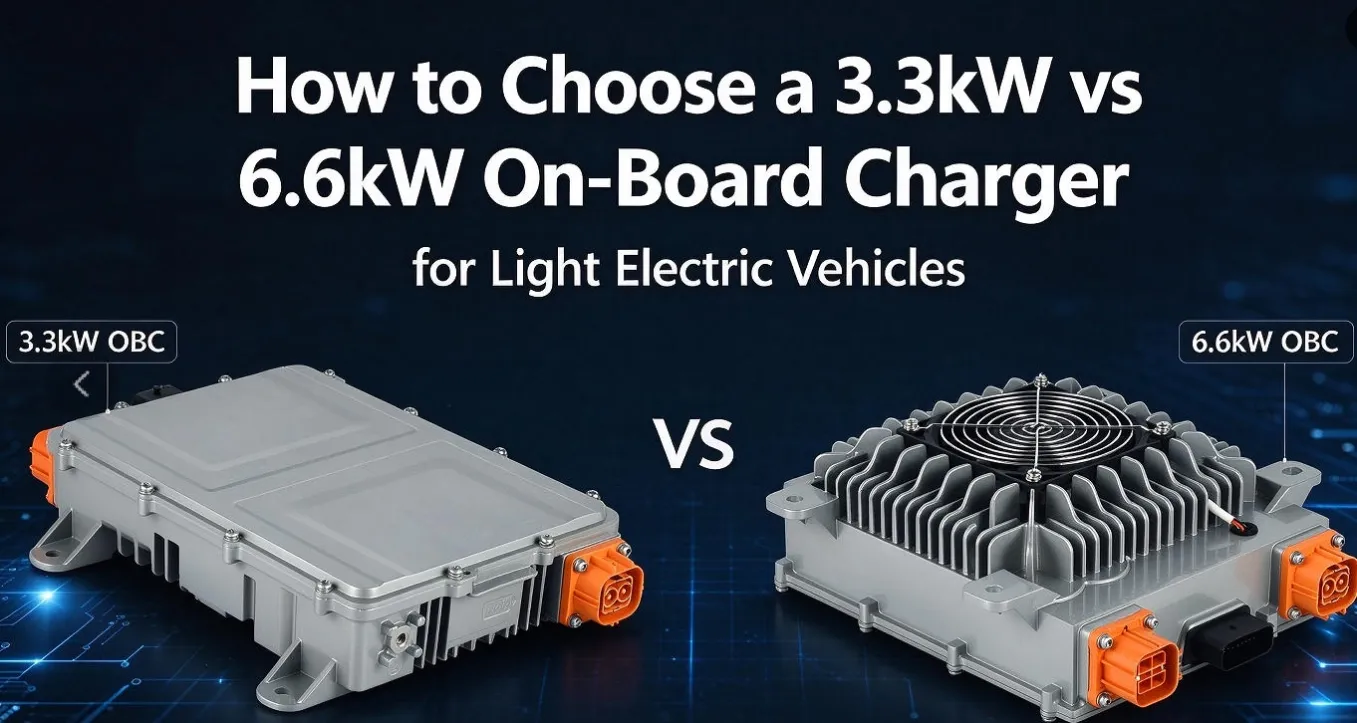
Choosing between a 3.3kW and 6.6kW on-board charger for a light electric vehicle? Compare charging time, battery limits, AC infrastructure, weight and fleet cost.

Learn what a bidirectional on-board charger is, how V2G and V2L modes work, and when commercial EV projects genuinely benefit from two-way power conversion.

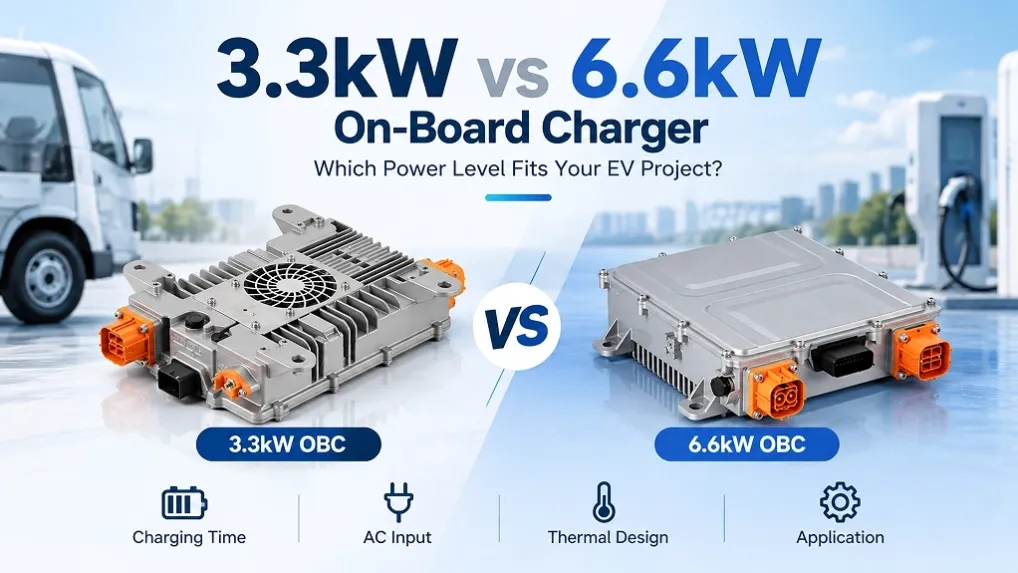
Compare 3.3kW and 6.6kW OBCs and learn how battery, AC input, charging time, thermal conditions and vehicle requirements affect charger power selection.

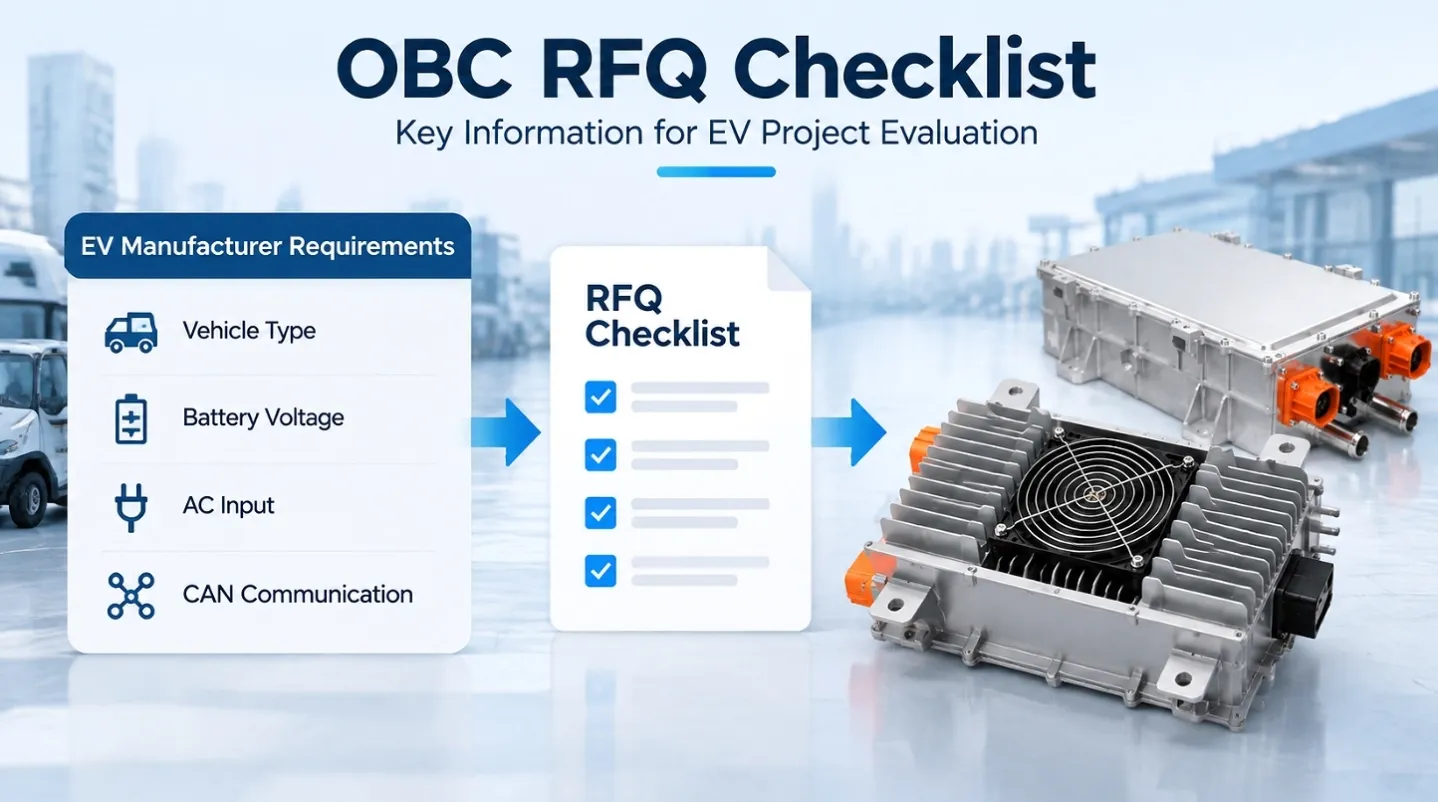
What information should EV manufacturers provide for an OBC quotation? Use this RFQ checklist covering battery, AC input, CAN, installation, quantity and project requirements.

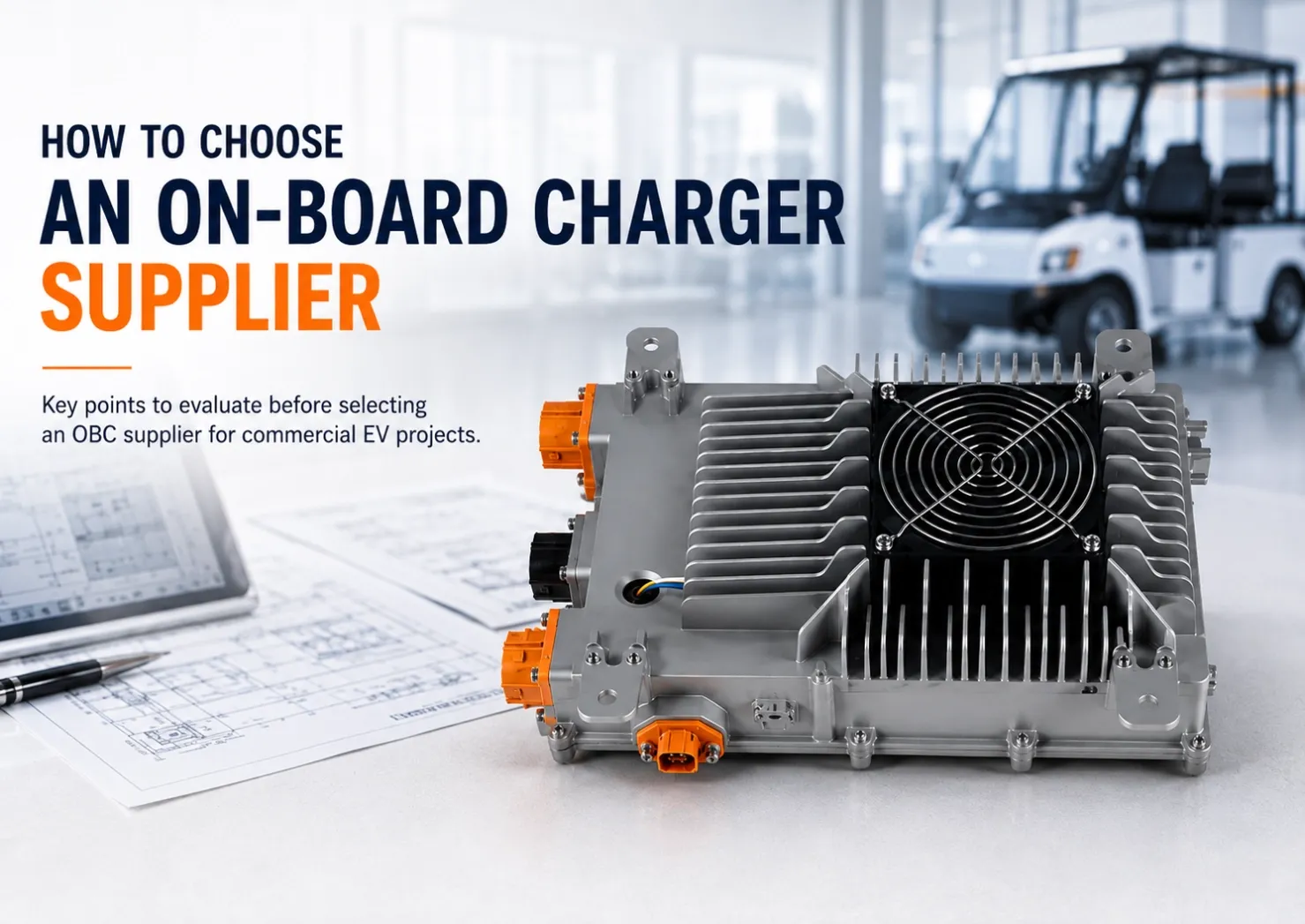
Learn how to evaluate an on-board charger supplier for commercial EV projects, including voltage compatibility, CAN communication, thermal performance, testing, customization and production support.
Recommended products
Explore onboard chargers, DC/DC converters and integrated power solutions related to the technical topics and applications covered in our articles.

Designed for 96V electric vehicle platforms, this 1.2kW DC/DC converter provides stable 9-16V DC output for vehicle low-voltage systems. Featuring high efficiency, CAN Bus communication and multiple protection functions, it delivers a reliable power solution for commercial EVs, utility vehicles and other electric vehicle applications.

Designed for 72V and 96V electric vehicle platforms, this 2-in-1 solution integrates a 2.0kW onboard charger and 1.0kW DC-DC converter into one compact unit. It helps EV manufacturers reduce wiring complexity, save installation space and improve overall power system integration. With CAN-bus communication and reliable protection functions, it is suitable for electric cargo vehicles, utility vehicles, agricultural EVs, low-speed EVs and other commercial electric vehicle applications.

For new energy vehicles, CC/CV output. Built-in reverse polarity protection for high voltage input as well as OVP, UVP, short circuit and OTP protection.

Designed for 48V, 72V light electric vehicles, this 2-in-1 solution combines onboard charging and DC-DC conversion to simplify wiring, save installation space and provide reliable power supply.