Jun 26, 2026
Choosing the Right OBC Power Level: 1.5kW, 3.3kW or 6.6kW?
A Practical Guide for Electric Three-Wheelers, Utility Vehicles, Golf Carts and Light Commercial EVs
Choosing the Right OBC Power Level: 1.5kW, 3.3kW or 6.6kW?
Selecting the right On-Board Charger (OBC) is one of the key decisions when developing an electric vehicle.
Whether it is an electric three-wheeler, utility vehicle, golf cart, ATV, electric cargo vehicle, or light commercial EV, the charging system directly affects charging time, vehicle usability, and overall operating efficiency.
One of the most common questions during vehicle development is:
Should I choose a 1.5kW, 3.3kW, or 6.6kW OBC?
The answer is not always straightforward. Higher charging power is not necessarily better. The right choice depends on battery capacity, vehicle usage, charging infrastructure, and cost considerations.
Why OBC Power Matters
The primary function of an On-Board Charger is to convert AC power from the grid into DC power that can charge the vehicle's battery pack.
The charger power level determines how quickly energy can be delivered to the battery.
In general:
- Higher power = Faster charging
- Lower power = Lower cost and simpler system design
Finding the right balance is often more important than simply selecting the highest available power level.
When Does a 1.5kW OBC Make Sense?
A 1.5kW OBC is commonly used in smaller electric vehicles where charging speed is not the highest priority.
Typical applications include:
- Electric three-wheelers
- Low-speed electric vehicles
- Golf carts
- Small utility vehicles
- Electric motorcycles
For vehicles with relatively small battery packs, a 1.5kW charger can provide an economical and practical charging solution.
Advantages include:
- Lower system cost
- Compact size
- Easier installation
- Lower thermal management requirements
For vehicles operating on predictable daily routes, overnight charging is often sufficient, making a higher-power charger unnecessary.
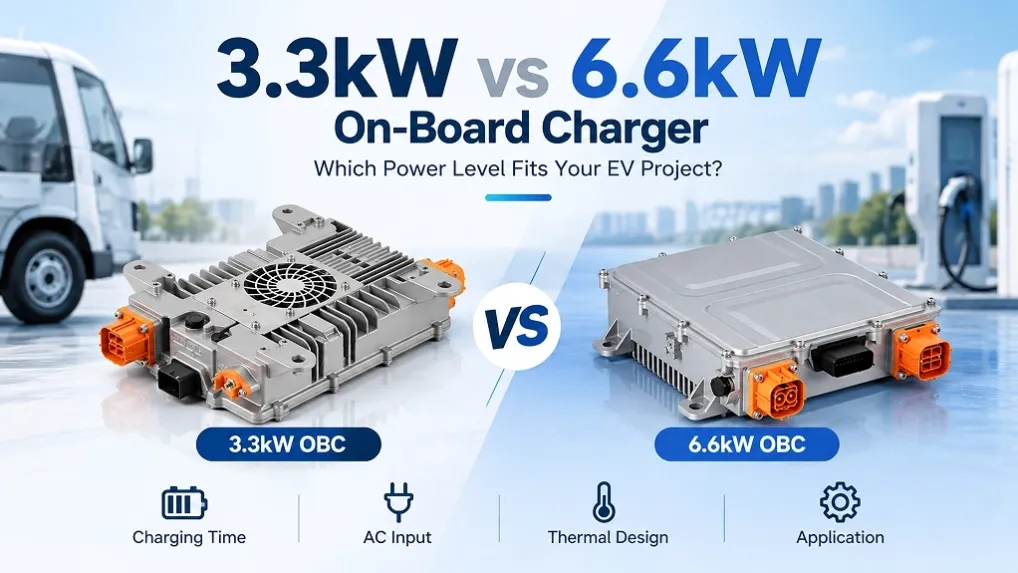
Why Is 3.3kW Often the Most Popular Choice?
For many commercial EV projects, 3.3kW represents a good balance between charging performance and cost.
It is widely used in:
- Electric cargo vehicles
- Utility vehicles
- Light commercial EVs
- Fleet vehicles
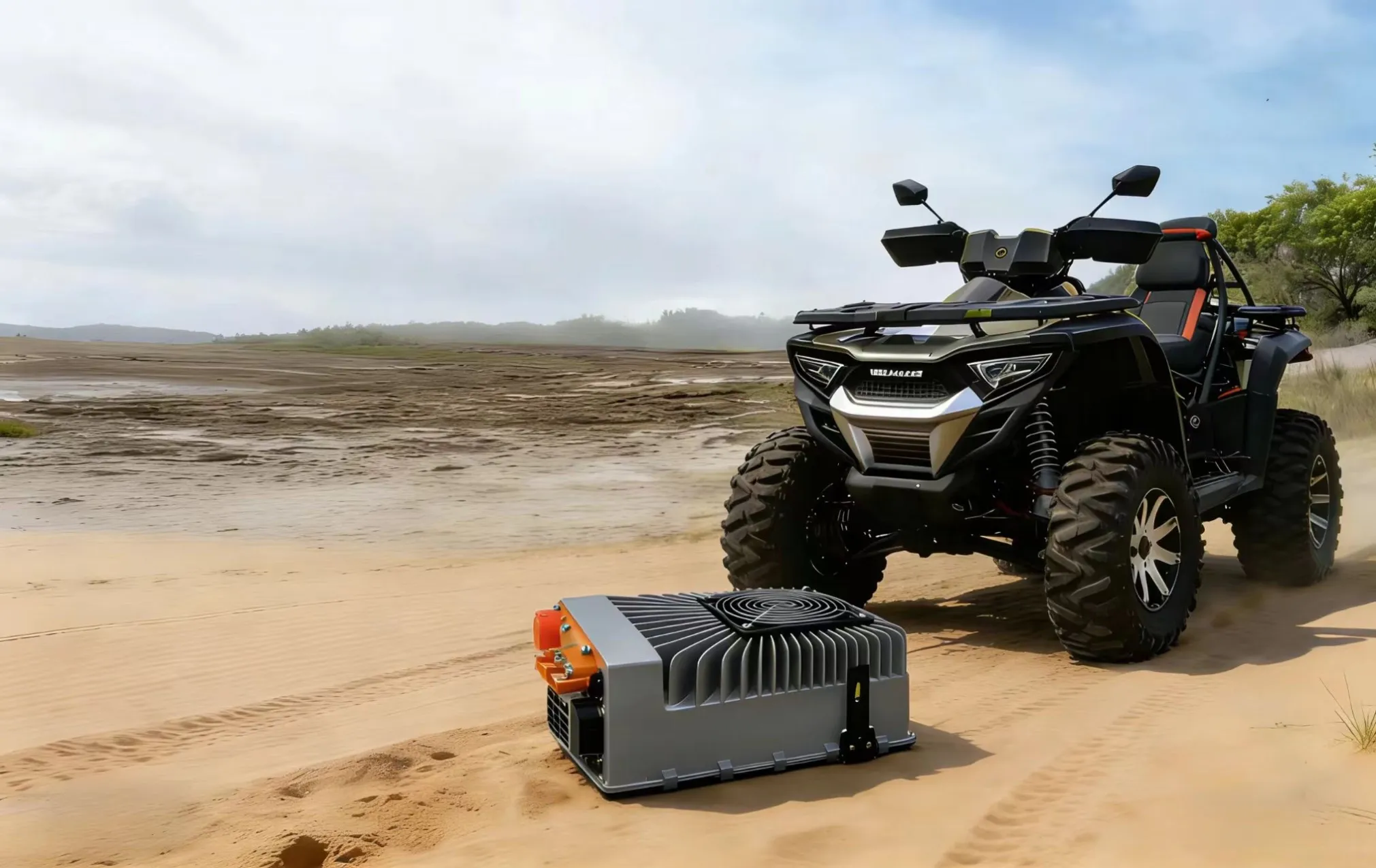
- Electric off-road vehicles
Compared with a 1.5kW charger, a 3.3kW OBC can significantly reduce charging time while maintaining reasonable system complexity.
Many vehicle manufacturers choose 3.3kW because it offers flexibility across a wide range of battery capacities and operating conditions.
For this reason, it has become one of the most common power levels in today's commercial EV market.
When Should You Consider a 6.6kW OBC?
A 6.6kW OBC is typically selected when charging speed becomes a higher priority.
Common applications include:
- Larger battery electric vehicles
- High-utilization fleet vehicles
- Electric delivery vehicles
- Commercial EVs operating multiple shifts per day
When vehicles spend more time on the road and less time parked, reducing charging time can improve operational efficiency.
A higher-power charger can help maximize vehicle availability and reduce downtime between shifts.
However, faster charging usually comes with additional considerations, including higher system cost, increased thermal requirements, and more demanding electrical design.
Bigger Is Not Always Better
A common misconception is that selecting the highest charging power automatically results in the best vehicle performance.
In reality, charger selection should be based on actual operating requirements.
For example:
If a vehicle has a small battery pack and is charged overnight, upgrading from 1.5kW to 6.6kW may provide little practical benefit while increasing system cost.
Similarly, if charging infrastructure is limited, a higher-power charger may not always be fully utilized.
The goal is not to choose the largest charger.
The goal is to choose the charger that best matches the vehicle and its daily operation.
Key Factors to Consider
When selecting an OBC power level, vehicle manufacturers should evaluate:
- Battery capacity
- Daily driving distance
- Available charging time
- Local charging infrastructure
- Vehicle operating environment
- Cost targets
- Future vehicle expansion plans
These factors often have a greater impact on charger selection than charging speed alone.
Conclusion
There is no universal answer when choosing between a 1.5kW, 3.3kW, or 6.6kW On-Board Charger.
Each power level serves different vehicle types and operating requirements.
A 1.5kW charger may be ideal for compact electric mobility platforms.
A 3.3kW charger often provides the best balance between performance and cost.
A 6.6kW charger can help improve efficiency in demanding commercial applications.
Ultimately, the best OBC is not the most powerful one—it is the one that best matches the vehicle, battery system, and real-world operating needs.