Jul 20, 2026
Key Factors to Consider When Choosing an Onboard Charger for Electric Vehicles
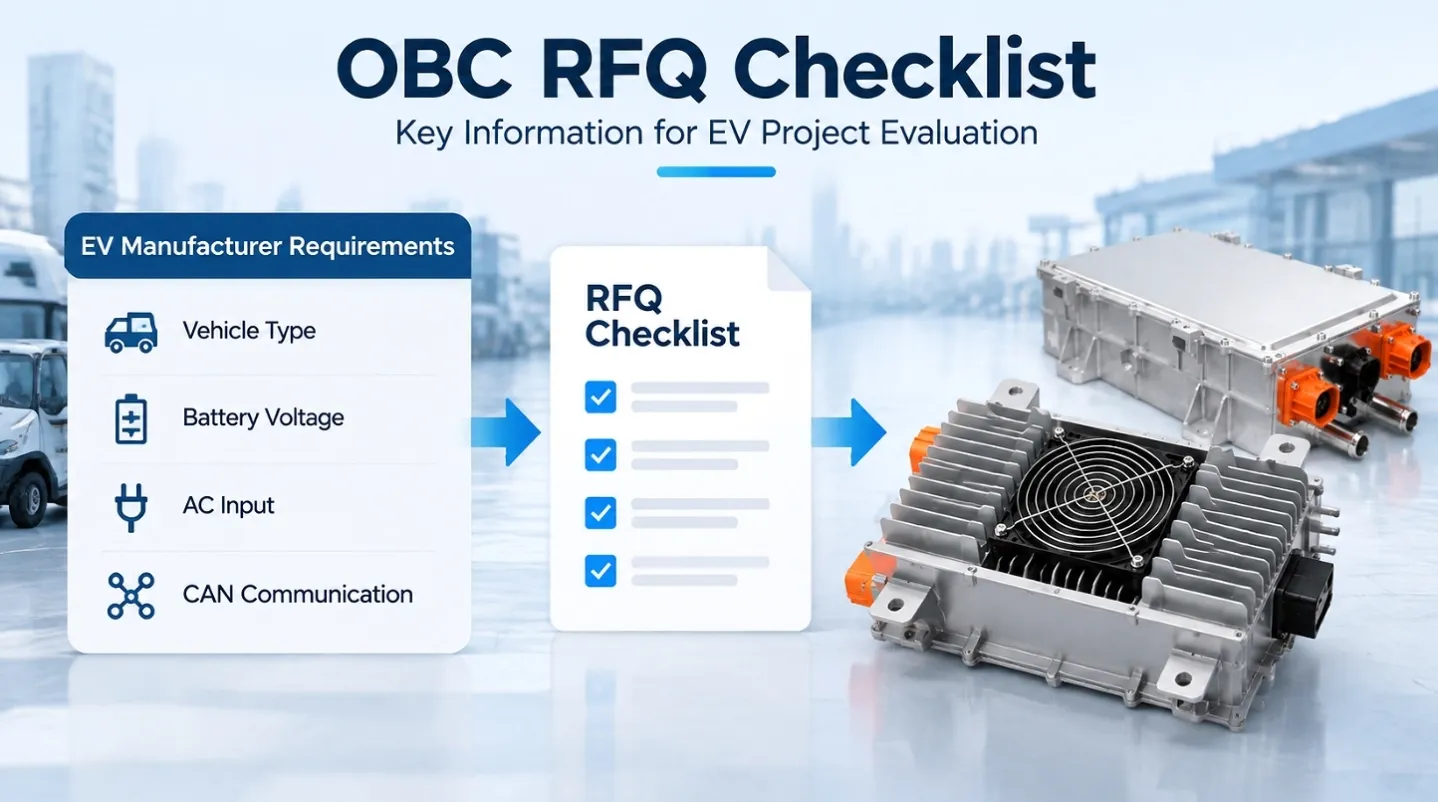
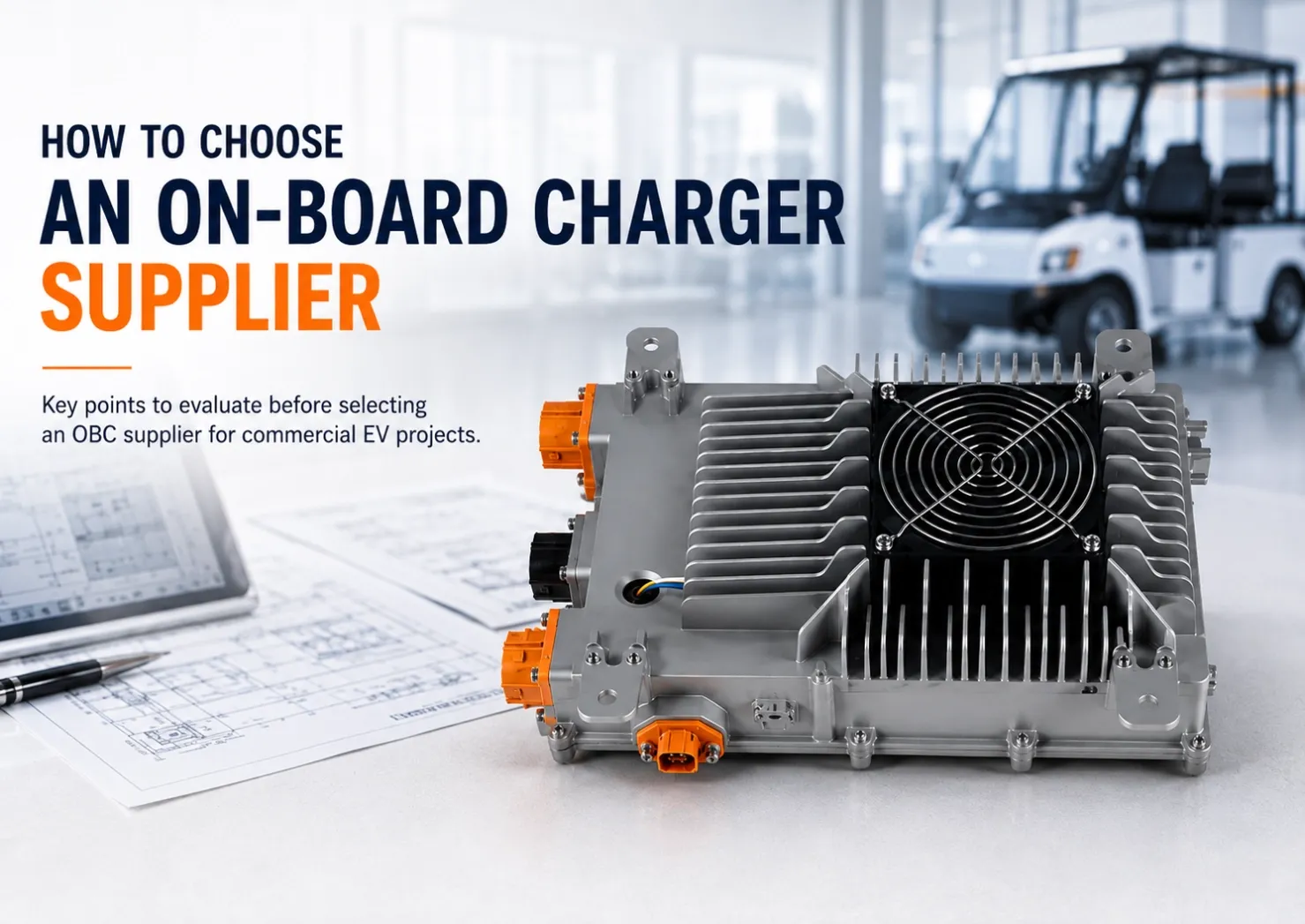
Choosing the right onboard charger is essential for electric vehicle manufacturers.
How to Choose an Onboard Charger for Electric Vehicles | OBC Selection Guide
Introduction
As electric vehicles continue to develop, selecting the right onboard charger (OBC) has become an important decision for vehicle manufacturers.
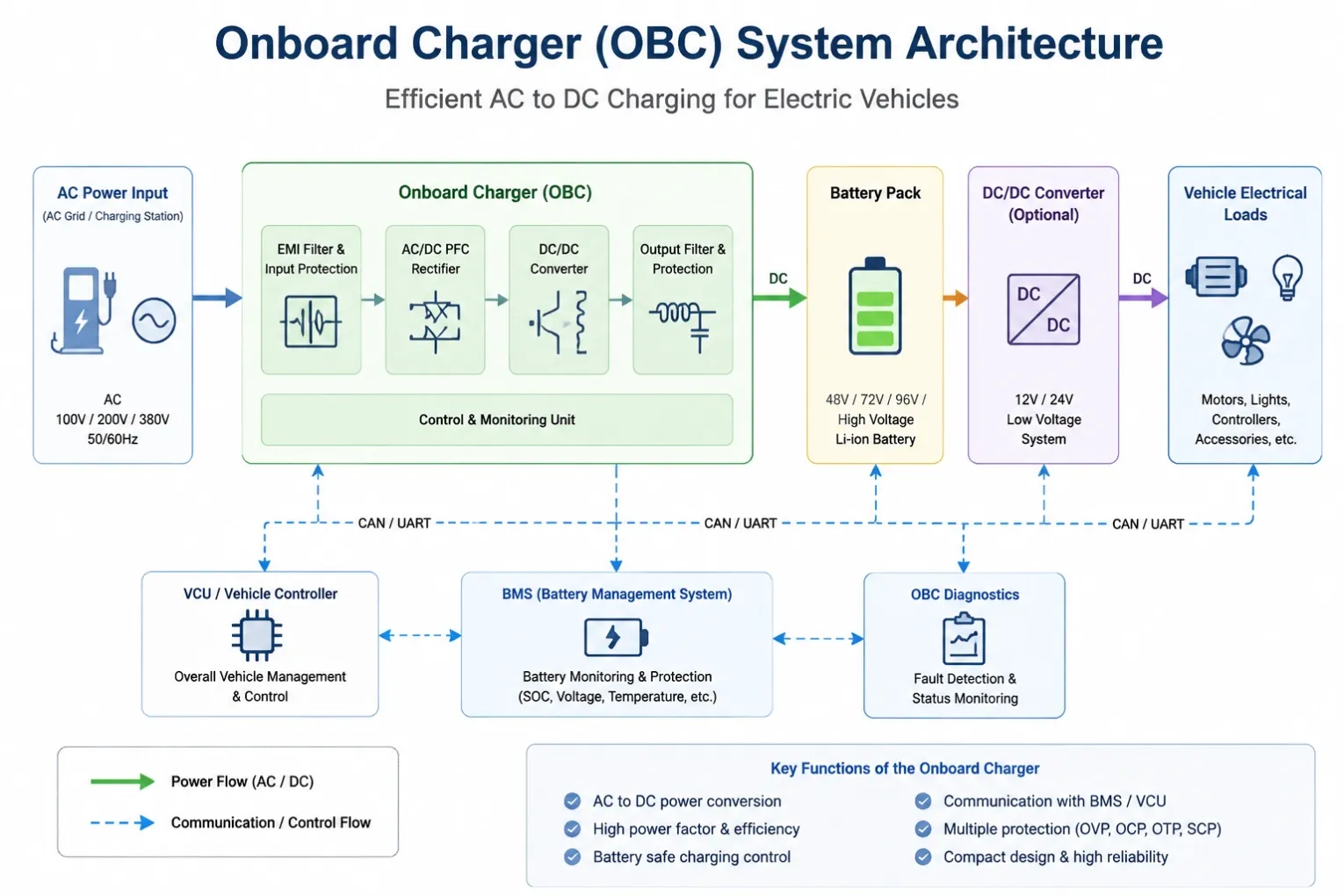
An onboard charger is not simply a device that converts AC power into DC power. It is an important part of the vehicle power system, directly affecting charging efficiency, system compatibility, reliability and overall vehicle performance.
For different electric vehicle applications, the requirements for an onboard charger can vary significantly. Electric motorcycles, three-wheelers, light commercial vehicles, utility vehicles and specialty EVs may require different power levels, voltage platforms and communication methods.
Understanding the key factors before selecting an OBC can help manufacturers build a more reliable and efficient EV system.
1. Power Rating Matching with Vehicle Requirements
The first factor to consider is whether the onboard charger power matches the vehicle application.
Different electric vehicles have different battery capacities and charging requirements.
For example:
- Small electric vehicles may require lower power charging solutions.
- Commercial EVs usually need higher charging efficiency to support daily operation.
- Utility vehicles and specialty vehicles may require customized charging solutions based on working conditions.
Common onboard charger power options include:
- 1kW class chargers
- 1.5kW–2kW chargers
- 3.3kW chargers
- 6.6kW chargers
Choosing the correct charging power helps balance charging time, vehicle cost and system design requirements.
2. Battery Voltage Compatibility
Voltage compatibility is another critical factor when selecting an onboard charger.
The charger output voltage must match the vehicle battery platform to ensure safe and efficient charging.
Common EV battery platforms include:
- 48V
- 60V
- 72V
- 96V
- Higher voltage platforms for commercial EV applications
An appropriate OBC should work together with the battery management system (BMS) to provide stable charging performance throughout the charging process.
3. Communication Between Charger and Vehicle System
Modern electric vehicles require more than basic charging functions.
Communication between the onboard charger and vehicle control system is becoming increasingly important.
Many commercial EV applications require:
- CAN communication
- BMS interaction
- Vehicle control unit (VCU) integration
Through communication protocols, the vehicle can monitor charging status, adjust charging parameters and improve overall system safety.
For OEM manufacturers, choosing an OBC with proper communication capability can simplify vehicle integration.
4. Protection and Reliability Features
Electric vehicles often operate in challenging environments, including outdoor operation, vibration, temperature changes and dust exposure.
Therefore, onboard chargers should include reliable protection features such as:
- Over voltage protection
- Over current protection
- Short circuit protection
- Over temperature protection
- Waterproof and dust-resistant design
For commercial vehicles that operate for long periods every day, charger reliability is especially important.
A stable onboard charger helps reduce maintenance requirements and improve vehicle availability.
5. Vehicle Integration and System Design
An onboard charger should not be considered as an independent component.
It needs to work together with the complete vehicle electrical architecture.
During vehicle development, manufacturers usually need to consider:
- Installation space
- Wiring layout
- Battery system compatibility
- Communication requirements
- Charging environment
For applications requiring optimized space and simplified wiring, integrated solutions combining onboard charger and DC/DC converter can provide advantages.
These solutions help reduce component complexity while improving system integration efficiency.
6. Selecting an OBC Supplier for EV Projects
For EV manufacturers, choosing an onboard charger supplier is not only about product specifications.
A reliable supplier should understand:
- Different vehicle applications
- Battery platforms
- Charging requirements
- OEM customization needs
- Long-term production support
Engineering support, testing capability and customization flexibility are also important factors during vehicle development.
Conclusion
Selecting the right onboard charger requires consideration of multiple factors, including power rating, battery voltage, communication capability, protection features and vehicle integration requirements.
For electric vehicle manufacturers, a suitable OBC solution can improve charging performance, simplify system design and support reliable vehicle operation.
As EV applications continue to expand, choosing an onboard charger designed for the specific vehicle platform is becoming increasingly important.