
Oct 15, 2026Technical Articles & Engineering Insights
Small-Volume OEM/ODM EV Charger Manufacturing in China: A Practical Guide
Large factories often turn down small orders. This guide explains how small-volume OEM/ODM EV charger manufacturing works in China, what a realistic prototype path looks like, and how to work with a m
The hardest order to place in hardware is often the smallest one. A startup or a specialty vehicle project needs fifty chargers, or a single customized prototype - and most large factories are built for volume. Their minimum order quantities, tooling investment and scheduling all assume thousands of units.
This is the gap that small-volume OEM/ODM manufacturing fills. This guide explains how it works in China for EV chargers, what a realistic prototype-to-production path looks like, and how to approach a manufacturer for a first, small order.
Why Small Orders Are Hard to Place
The friction is structural, not personal:
- Fixed costs: tooling, test fixtures and a production setup cost the same whether the order is 50 units or 5,000, so on a small order those costs dominate.
- Engineering time: a customized charger needs engineering review regardless of order size.
- Scheduling: volume customers book production capacity, and a small order competes for the gaps.
A manufacturer that accepts small volumes has to have a business model that accommodates these costs - usually by offering customization on an existing platform rather than new tooling.
How Small-Volume OEM/ODM Actually Works
The practical model for a small order is customization on a standard platform, not a from-scratch design. Start from an existing platform - a 3.3 kW or 6.6 kW charger that already exists, adapted to your voltage, connectors and CAN requirements. Customize the configuration: electrical parameters, CAN protocol, connectors, enclosure labeling and branding, using the same levers as a large order applied in small quantity. And prototype first: a small build validates fit, wiring, thermal behavior and CAN integration on the real vehicle before any volume commitment.
This is how a small order becomes economic: the platform is shared, and only the configuration is yours. The supplier landscape and how to evaluate it is covered in how to choose an OBC manufacturer in China.
OEM vs ODM: What the Difference Means for You
The two models map to different levels of design ownership:
- OEM (original equipment manufacturing): the manufacturer builds to your specification, under your brand. You own the design intent; they own the production.
- ODM (original design manufacturing): the manufacturer offers an existing design that you configure and brand. Faster and cheaper, but built on their platform.
For a small first order, ODM is usually the practical starting point - a proven platform, configured for your vehicle. OEM becomes relevant once volume justifies a design you control. Most suppliers support both; the distinction is which platform the product is built on.
What to Prepare Before Your First Inquiry
A manufacturer can move fast on a small order if you arrive with the right information:
- 1. Vehicle platform: battery voltage, nominal and maximum.
- 2. Power level: 3.3 kW, 6.6 kW, or other.
- 3. CAN requirements: protocol and any known message format.
- 4. Connectors and mounting: harness type and mounting location.
- 5. Quantity and timeline: how many, and when you need them.
- 6. Customization needed: branding, labeling, configuration.
With these six points, a manufacturer can quote a first build quickly. Without them, every exchange costs a day. For the full technical inputs, see how Echelon manufactures and tests OBCs.
A Realistic Path from One Unit to Volume
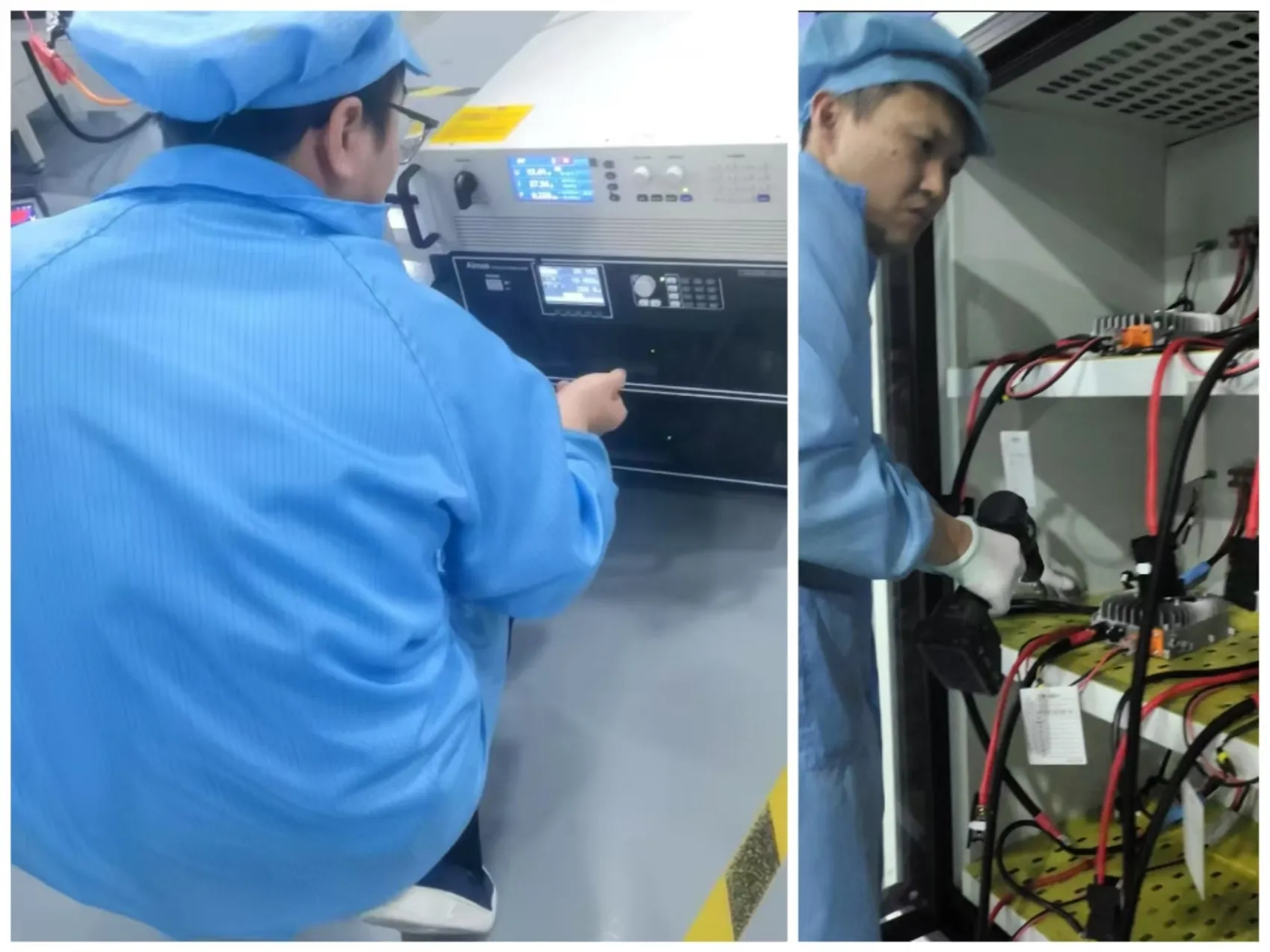
A workable sequence for a small project: requirement review with the manufacturer (platform, voltage, power, CAN); an engineering proposal covering which platform fits and what will be customized; a prototype build of one or a few units, tested against the agreed spec; vehicle validation of fit, wiring, thermal and CAN on the real machine; a pilot batch once the specification is locked; and then scale through repeat orders as the vehicle program grows. The path is the same as a large program; only the quantities differ. Following it protects you from committing to volume before the design is proven.
Where Echelon Fits
Echelon Energy Technology supports OEM and ODM cooperation on its on-board charger and DC/DC platforms, including small first orders and prototypes. The range covers 3.3 kW and 6.6 kW OBCs with integrated DC/DC options, and an 11 kW bidirectional unit, on 48 V to 320 V platforms - see the on-board charger range and a representative 3.3 kW OBC + 1 kW DC/DC unit. Customization covers electrical parameters, CAN, connectors and branding, produced under IATF 16949.
Conclusion
Small-volume OEM/ODM works when it is built on a shared platform with your configuration on top - not on a from-scratch design. Bring the six inputs, expect a prototype first, and treat the pilot batch as the bridge to volume. Starting a small EV charger project? Share your platform, power level and quantity with our engineering team to discuss a first build.
About Echelon Charger
Echelon Energy Technology specializes in onboard chargers, DC/DC converters, and integrated EV power solutions for commercial and specialty electric vehicles.
For technical discussions, product selection, or OEM/ODM cooperation:
Email: nancy@tici-energy.com
WhatsApp: +86 18114665311