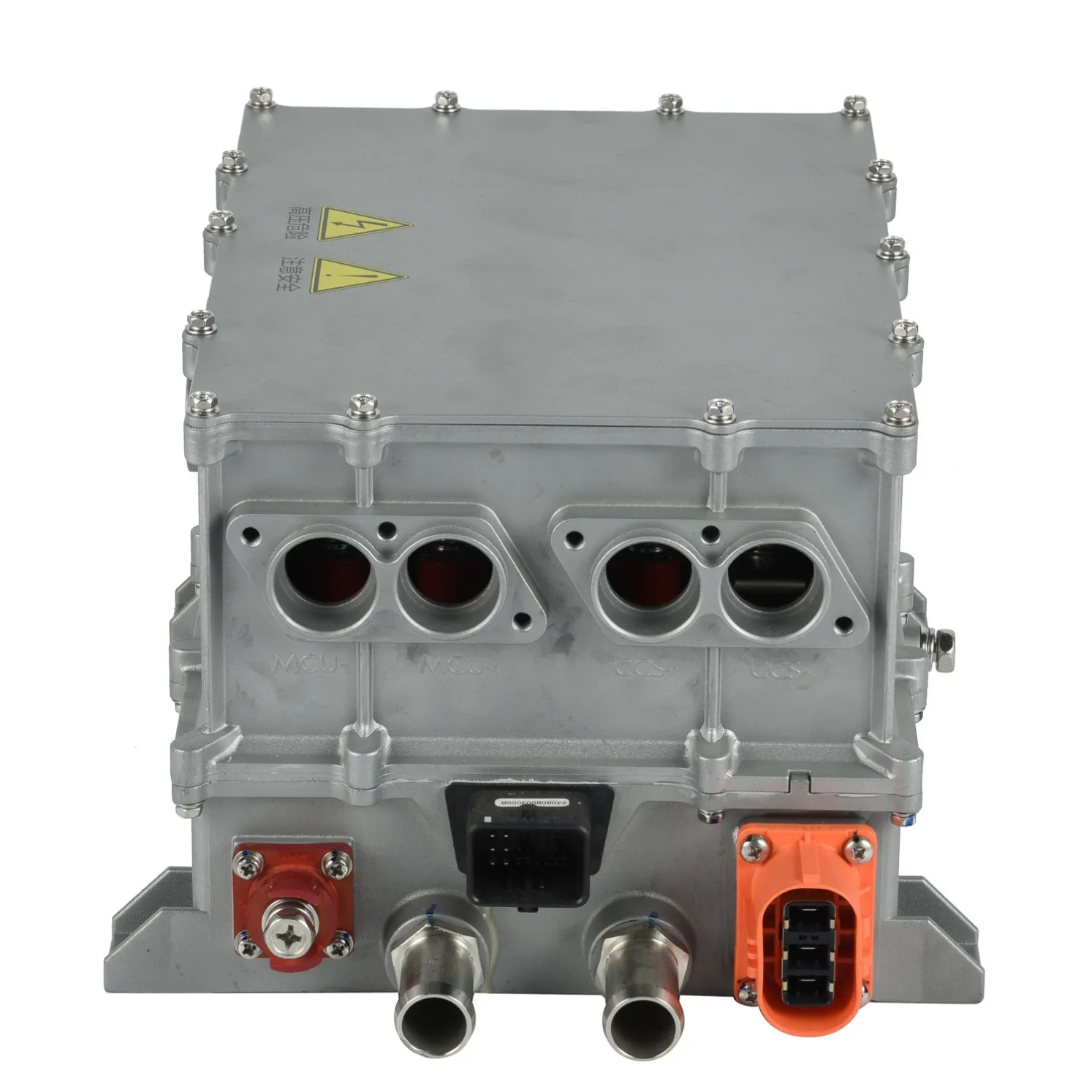
OBC + DC-DC + PDU 3-in-1 | Echelon Charger
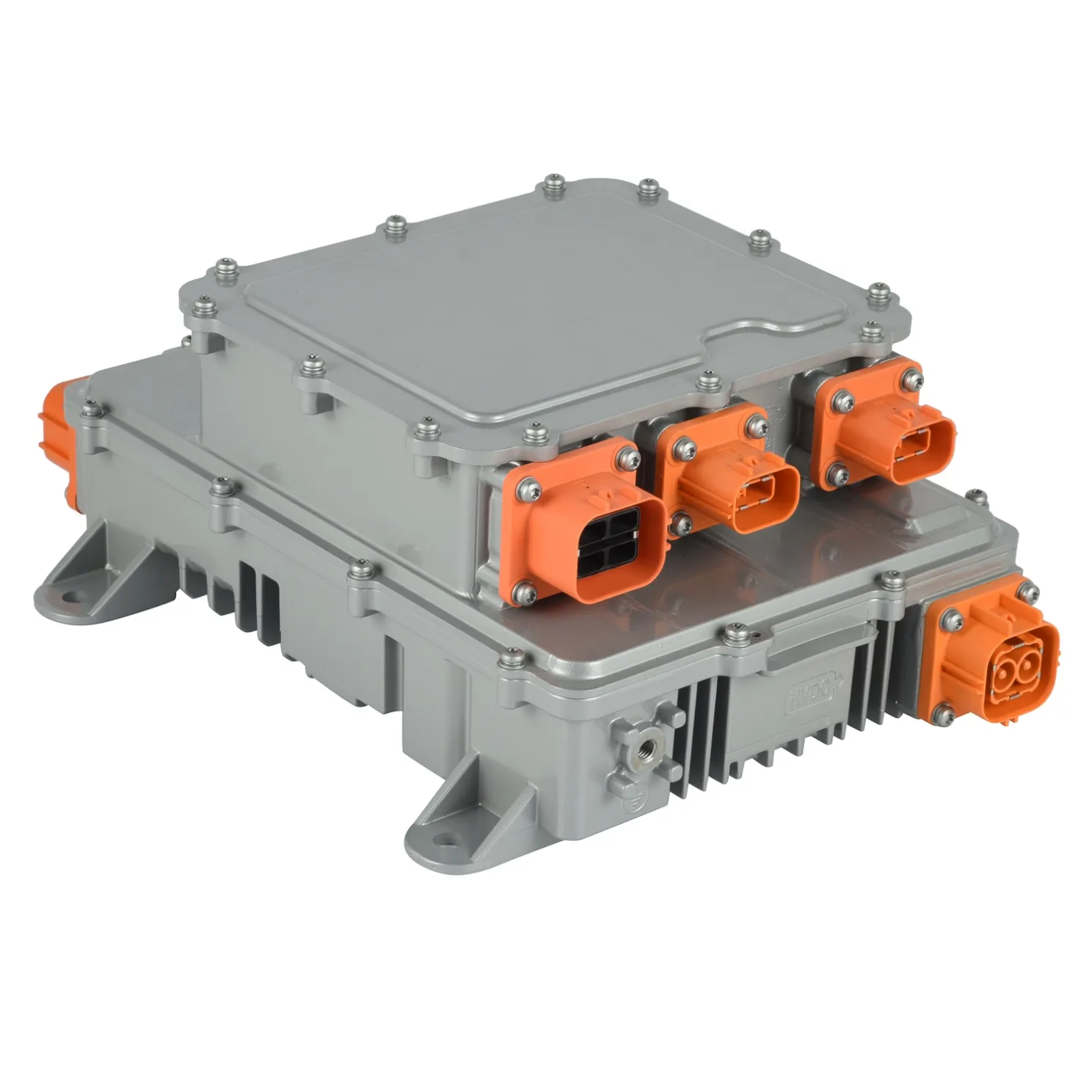
6.6kW OBC + 2.5kW DC-DC + PDU 3-in-1
6.6 kW onboard charger, 2.5 kW DC-DC converter and high-voltage PDU in one liquid-cooled unit for 320 V battery platforms, with 6 kVA AC output for vehicle auxiliary loads.
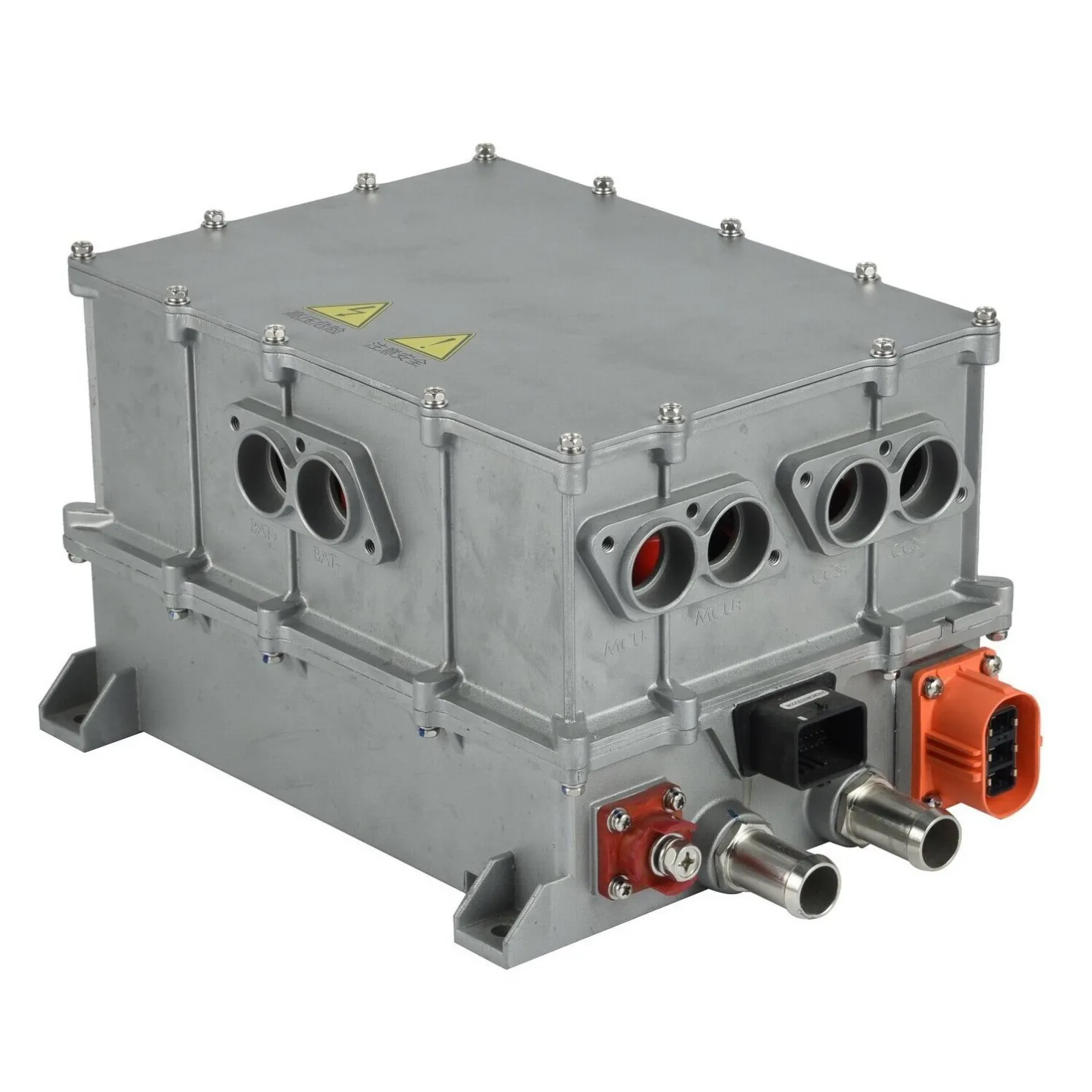
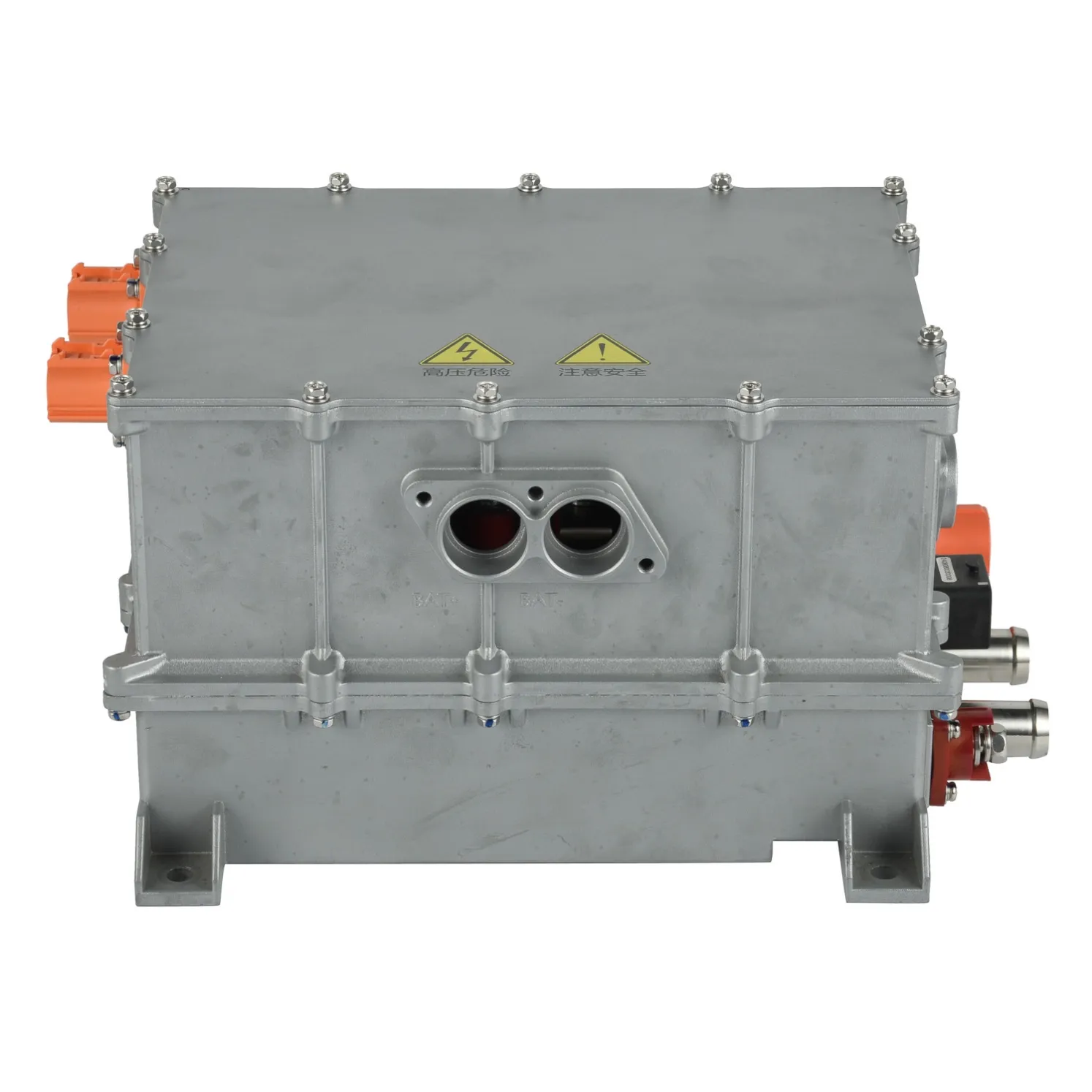
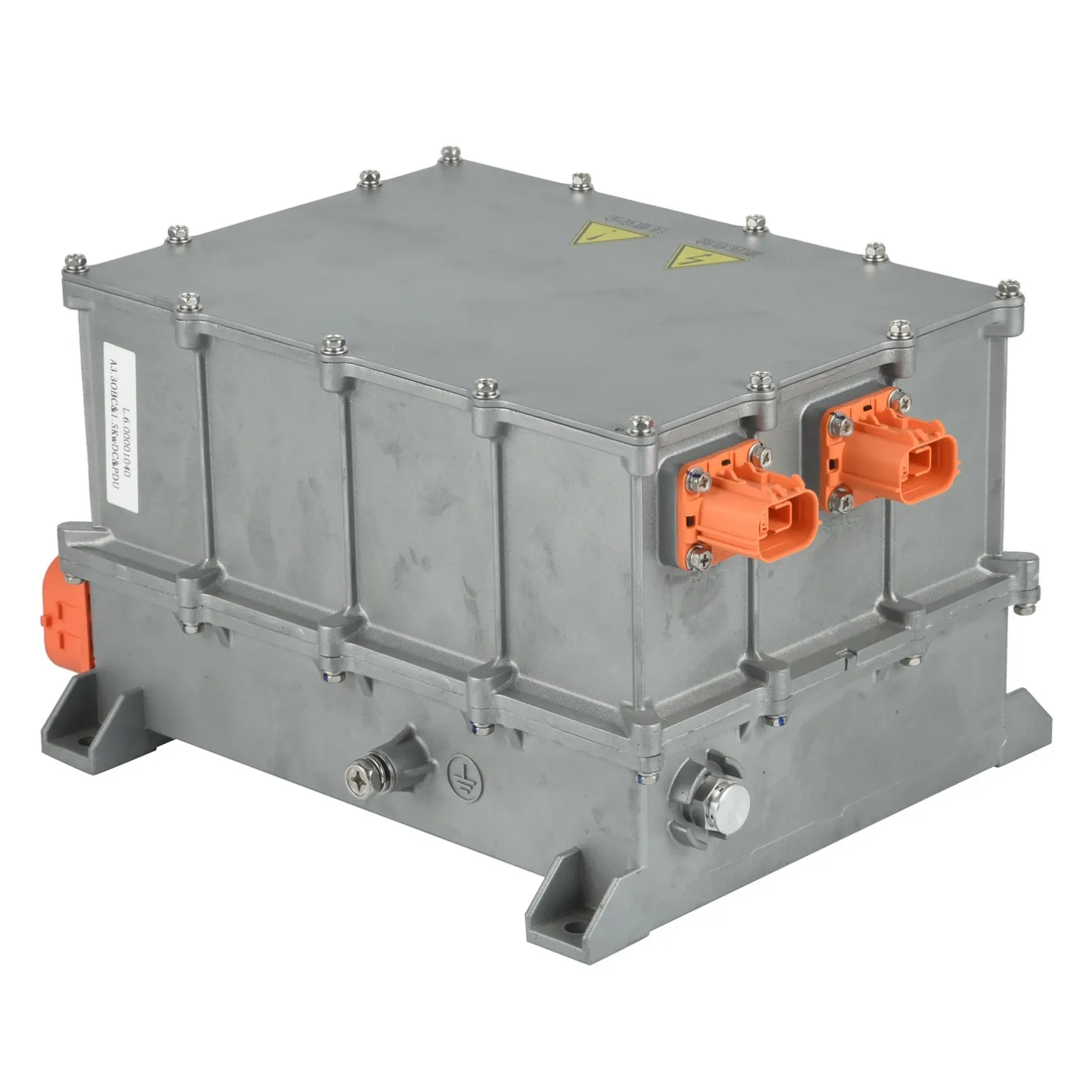
A single liquid-cooled unit that combines a 6.6 kW onboard charger, a 2.5 kW DC-DC converter, a high-voltage power distribution unit and a 6 kVA DC/AC output for 320 V battery platforms.
Model ODP-CF-6G2F-320Y. Voltage platform 320 Vdc. Cooling liquid. OBC 6.6 kW, DC-DC 2.5 kW, integrated PDU.
Why combine three functions into one enclosure
A separate charger, converter and distribution box each need their own housing, mounting points, high-voltage connectors and interlock loop. On a compact 320 V platform that volume is usually the constraint, not the electrical design.
Key features
• Three functions in one unit. A 6.6 kW OBC, a 2.5 kW DC-DC and a high-voltage PDU share one enclosure and one cooling circuit.
• Integrated high-voltage distribution. Feeds the air-conditioning compressor, PTC heater and traction branch through dedicated fused outputs.
• 6 kVA DC/AC output. 220 Vac at 50 Hz from the 300-460 Vdc bus, so the vehicle can run AC tools or export power without a separate inverter.
• 94 percent charging efficiency, measured at 220 Vac input. DC-DC conversion reaches 93 percent.
• Liquid cooling. Sustained full-power operation without the derating that air-cooled units impose in a closed compartment.
• CAN bus communication with a full protection set: over and under voltage, over-current, short circuit and over-temperature on each converter stage.
OBC electrical parameters
The charger stage accepts single-phase 90-264 Vac and delivers 6.6 kW at 220 Vac into a 200-460 Vdc battery bus.
Parameter | Specification |
Input voltage | 90-264 Vac |
Input frequency | 47-63 Hz |
Maximum input current | 32 A |
Power factor | 0.98 or higher above half load |
Standby power | 5 W or less |
Starting impulse current | 1.5x maximum input current |
Output voltage | 200-460 Vdc |
Output current | 0-24 A |
Output power | 6600 W at 220 Vac |
Constant voltage accuracy | plus or minus 1 percent |
Constant current accuracy | plus or minus 2 percent |
Maximum efficiency | 94 percent or higher |
Shutdown response | Current below 10 percent within 300 ms, 0 A within 500 ms |
DC-DC converter parameters
The converter stage runs from the same 200-460 Vdc bus and holds the low-voltage rail at 9-16 Vdc with 2.5 kW continuous and 3 kW for six minutes.
Parameter | Specification |
Input voltage | 200-460 Vdc |
Input current | 16 A max |
Output voltage | 9-16 Vdc |
Rated output current | 178 A |
Peak current | 210 A |
Rated power | 2500 W |
Peak power | 3000 W for 6 minutes |
Voltage and load regulation | 1 percent or better each |
Voltage and current control accuracy | 1 percent and 2 percent |
Maximum efficiency | 93 percent or higher |
Ripple voltage coefficient | 2 percent or less at rated working status |
DC/AC output for auxiliary loads
A 6 kVA inverter branch shares the high-voltage bus, giving the vehicle a 220 Vac supply for job-site tools, refrigeration or exported power.
Parameter | Specification |
Input voltage | 300-460 Vdc |
Output voltage | 220 Vac plus or minus 5 percent |
Output frequency | 50 plus or minus 0.5 Hz |
Rated power | 6000 VA maximum |
Maximum efficiency | 92 percent or higher |
PDU interface definition
The distribution block provides fused high-voltage feeds to the vehicle subsystems. Each outlet uses a shielded high-voltage connector with a high-voltage interlock loop, so the vehicle can drop the contactors if any branch is opened.
Interface | Connector | Wire | Terminals |
Battery (BAT) | CL-HVC80021A-S socket, CL-HVC80024A-50 plug | 50 mm2 | plus, minus, HVIL |
Quick charge (QC) | CL-HVC80021B socket, CL-HVC80024B-35 plug | 35 mm2 | plus, minus, HVIL |
Motor controller (MCU) | CL-HVC80021A-S socket, CL-HVC80024A-50 plug | 50 mm2 | plus, minus, HVIL |
Air conditioning (A/C) | CL-HVC280-21A-06 socket, CL-HVC280-23A-06 plug | 6 mm2 | plus, minus, HVIL |
A/C and PTC heater | CL-HVC280-21B-06 socket, CL-HVC280-23B-06 plug | 6 mm2 | plus, minus, HVIL |
AC input and output | EVH2-N4ZJ-TA socket, EVH2-N4TK-TDA plug | 6 mm2 | L and N in, L and N out, HVIL |
DC-DC output | M8 stud | not applicable | DC plus and DC minus, M8x14 bolts recommended |
Signal control | Molex 0643340100 socket, 0643193211 plug | not applicable | CAN and control signals |
This unit is one of two 3-in-1 platforms Echelon builds. Compare the 3-in-1 range and when to integrate, or see where a 2-in-1 or a standalone charger fits better.
Typical applications
• Electric light commercial vehicles and delivery vans on 320 V platforms
• Electric sanitation and municipal utility vehicles
• Ground support equipment and airport fleets
• Electric construction and off-highway machines
• Specialty commercial EVs where installation volume is the limiting factor
FAQ
What is the difference between a 2-in-1 and a 3-in-1 power unit?
A 2-in-1 combines the onboard charger and the DC-DC converter. A 3-in-1 adds the high-voltage power distribution unit, so the same enclosure also feeds the air-conditioning compressor, PTC heater and motor controller branch instead of those circuits being distributed from a separate box.
Can the AC output run equipment while the vehicle is charging?
The DC/AC stage draws from the high-voltage bus, not from the AC input. Whether charging and discharging can run at the same time depends on the vehicle contactor strategy and the total load on the battery, so the sequence is agreed during integration.
Is liquid cooling mandatory at this power level?
For sustained 6.6 kW charging plus 2.5 kW conversion plus 6 kVA AC output inside one enclosure, yes. The three stages share the same thermal path, and a sealed compartment without a coolant circuit would force aggressive derating.
Can the CAN interface be adapted to our vehicle?
Yes. CAN message content, addressing and the way the unit reports state to the BMS or VCU are part of the project specification, and are defined together from your DBC file or communication matrix.
Which 320 V platforms does this unit suit?
It is specified for a 200-460 Vdc battery bus, which covers the common 320 V nominal class used by light commercial and specialty EVs. If your pack falls outside that window, the platform can be reviewed against your voltage range before a sample is built.
For full test reports, 3D models or a quotation against your platform, contact the Echelon Energy Technology engineering team.