Oct 12, 2026Technical Articles & Engineering Insights
OBC + DC-DC 2-in-1 vs OBC and DC-DC Separate Units: Which Is Better for Commercial EVs?
Compare integrated OBC + DC-DC 2-in-1 systems with separate units for commercial EVs. Learn the trade-offs in wiring, thermal design, CAN, maintenance and cost.
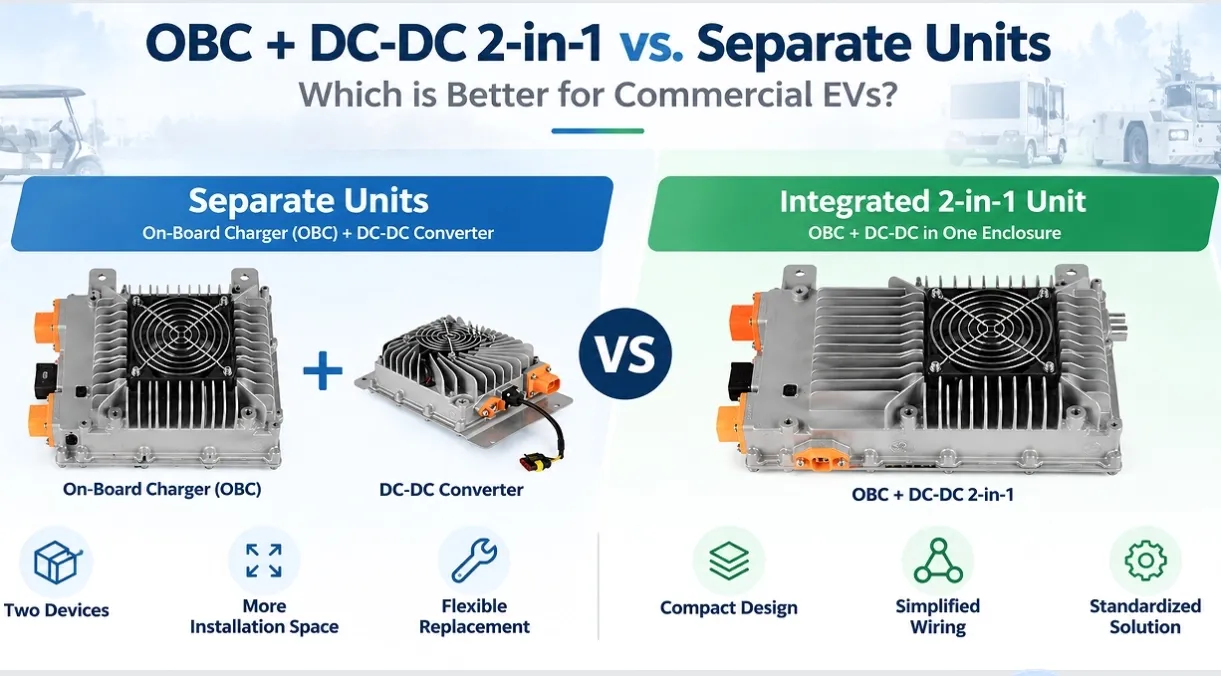
When designing a commercial electric vehicle, manufacturers often face a choice: should the on-board charger (OBC) and DC-DC converter be installed as two separate units, or combined into one integrated power system?
At first, the decision may seem straightforward. An integrated unit can reduce the number of enclosures and simplify installation. Separate units offer greater flexibility in component selection and replacement.
But the right choice depends on more than packaging.
For electric utility vehicles, last-mile delivery vehicles, airport ground support equipment (GSE) and other specialty EVs, the decision can affect electrical architecture, thermal management, serviceability, validation work and long-term production costs.
Here is how EV manufacturers can compare the two approaches before selecting a power system.
1. Understanding the Two Architectures
An on-board charger converts AC power into controlled DC power to charge the vehicle's traction battery.
A DC-DC converter supplies the required lower-voltage power for auxiliary systems, such as lighting, controllers, displays and other electrical equipment.
In a separate architecture, the OBC and DC-DC converter are independent products, each with its own enclosure, mounting arrangement and electrical interfaces.
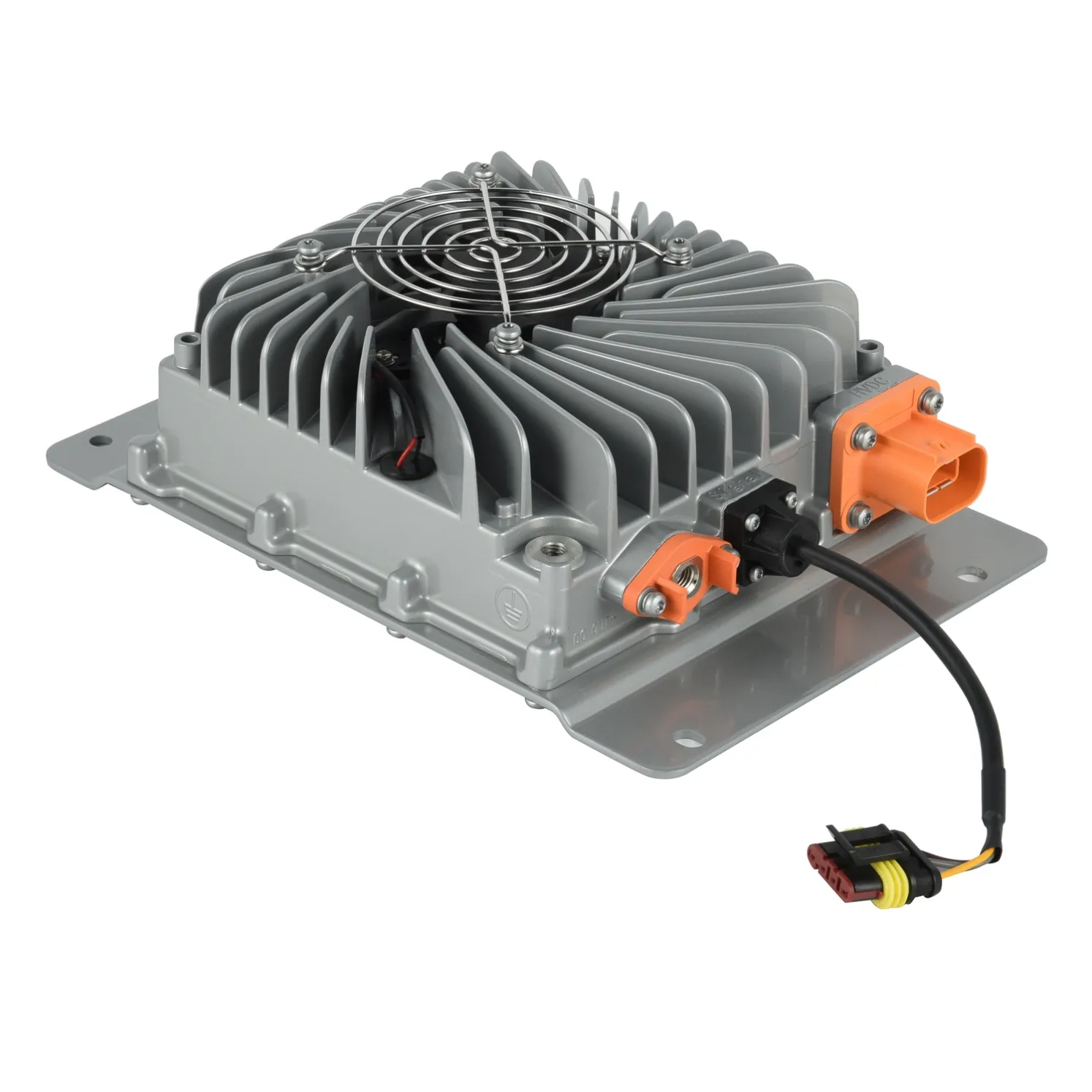
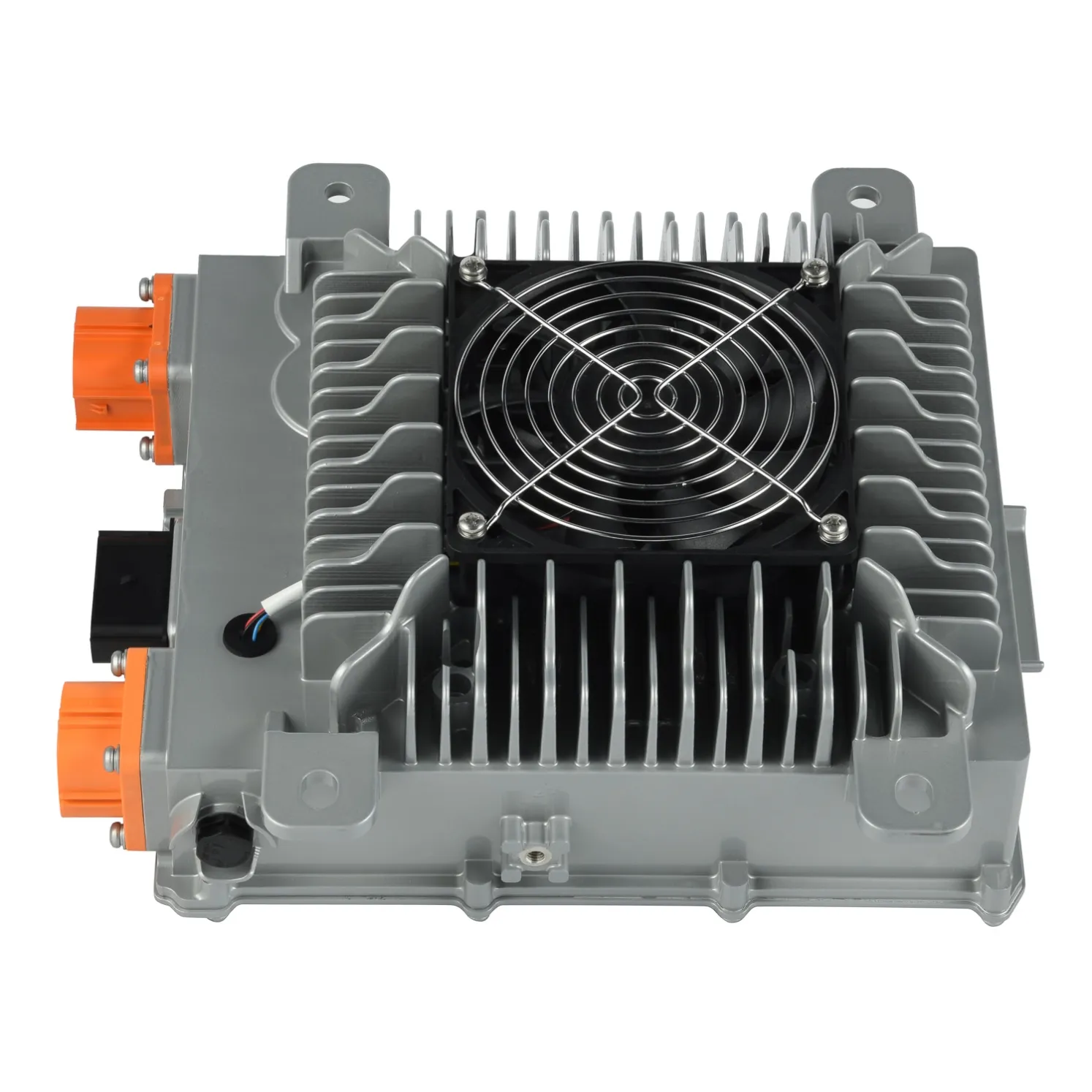
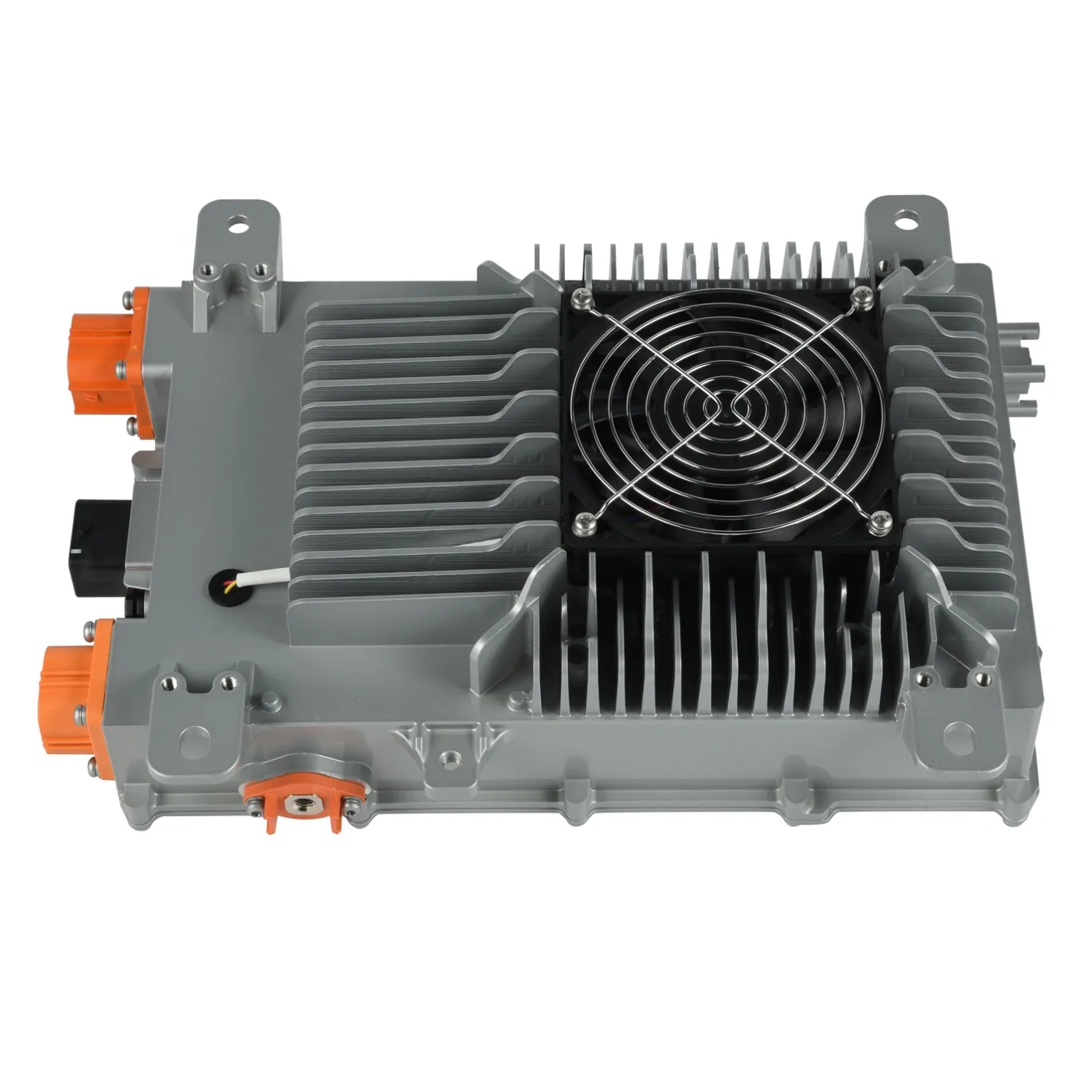
The electrical functions remain distinct, even though the hardware is integrated. The OBC and DC-DC sections may still have different operating conditions, control requirements and protection thresholds.
Neither approach is automatically better for every vehicle.
2. Installation Space and Wiring: Where Integration Can Help
Packaging is often the first reason an EV manufacturer considers a 2-in-1 solution.
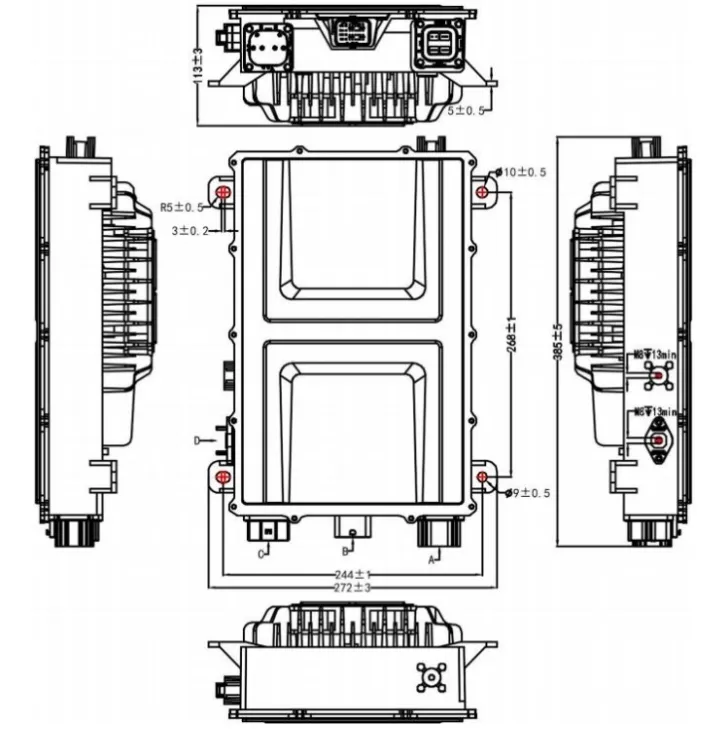
Commercial and specialty EVs may have limited space for power electronics. A compact utility vehicle, for example, must accommodate the traction battery, motor controller, wiring, mechanical components and auxiliary equipment.
Using separate units means finding suitable mounting positions for both the OBC and DC-DC converter.
An integrated unit may reduce the number of independent enclosures and mounting locations. Depending on the design, it may also reduce some external wiring and connectors.
However, one enclosure does not automatically mean the smallest possible installation.
The integrated unit still needs suitable clearance, connector access, cable routing and cooling. Its overall dimensions must be checked against the actual vehicle layout.
For OEMs, the useful comparison is not simply the number of boxes. It is the total installed space, including mounting brackets, harnesses and required cooling clearance.
3. Thermal Management: Two Functions, Different Operating Conditions
Thermal design deserves particular attention in integrated power systems.
The OBC generates heat during battery charging. The DC-DC converter generates heat while supplying auxiliary loads.
When both functions share an enclosure, their thermal interaction must be evaluated.
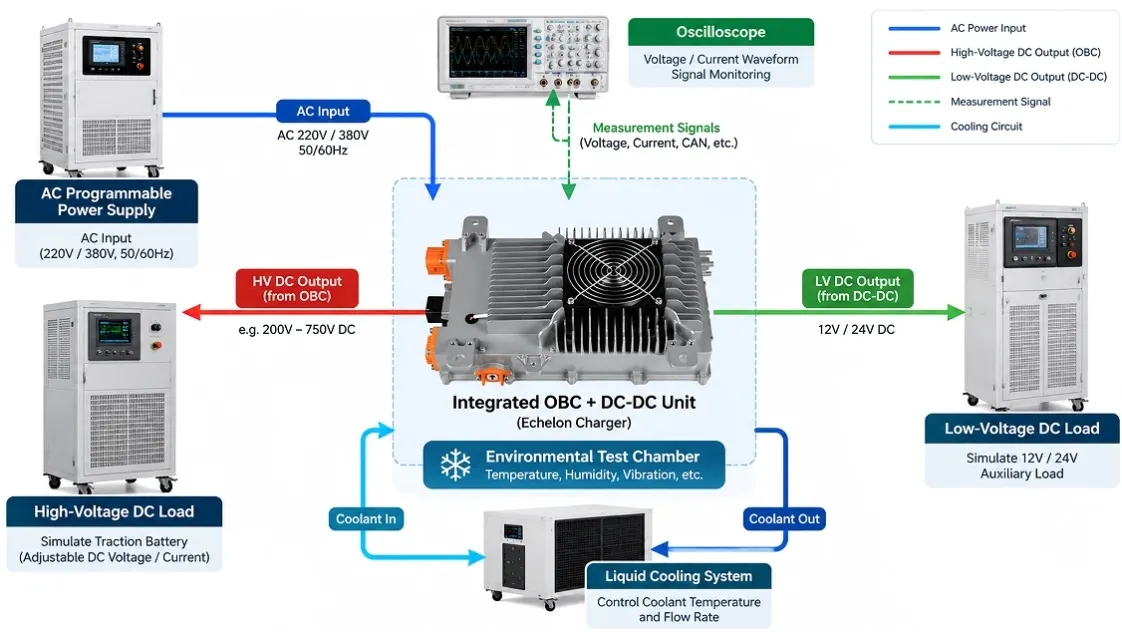
Important questions include:
- Can the OBC and DC-DC converter operate simultaneously?
- What are the permitted power levels during simultaneous operation?
- Does heat from one section affect the other?
- When does each function begin reducing power?
- What happens if the cooling airflow is restricted?
These questions cannot be answered by looking only at the rated power printed on the product label.
For example, Echelon offers a 6.6kW OBC + 1.5kW DC-DC integrated configuration for a 96V vehicle platform.
The two functions have different electrical and thermal operating limits. Vehicle engineers should review the applicable specification and confirm the required operating modes before integration.
Separate units may provide more freedom to position each component in a different thermal environment.
An integrated unit may simplify packaging, but its combined thermal behavior needs to be validated under the vehicle's expected operating conditions.
4. Maintenance and Replacement: An Advantage of Separate Units
Serviceability is sometimes overlooked during early vehicle development.
With separate units, a failed OBC can potentially be replaced without replacing the DC-DC converter, and vice versa.
This can be useful for fleet operators or vehicle manufacturers that maintain spare parts separately.
With an integrated 2-in-1 unit, the replacement strategy depends on the product design and available service options.
If one function fails, the service procedure may require replacing the complete integrated assembly rather than only the affected section.
That does not necessarily make the integrated architecture less reliable. Reliability depends on component design, manufacturing quality, operating conditions and validation.
However, it does mean that OEMs should consider repair procedures, replacement-unit costs, spare-parts planning and vehicle downtime before choosing the architecture.
For vehicles expected to operate for many years, service strategy should be discussed during the design stage rather than after mass production.
5. CAN Communication and Vehicle Control
Both architectures need to work with the vehicle's electrical and communication systems.
Depending on the product, an OBC may require communication with the battery management system (BMS) or vehicle control unit (VCU) for charging commands, operating status and fault information.
The DC-DC converter may have separate enable conditions, control messages and status feedback.
In a separate architecture, engineers must confirm the communication requirements of two independent devices.
In a 2-in-1 architecture, integration into one enclosure does not necessarily mean that both functions share identical CAN messages or start-up logic.
Before sample testing, OEM engineers should confirm the CAN baud rate, message IDs, enable conditions, status feedback, fault reporting and recovery behavior for each function.
A useful question to ask the supplier is:
“What happens to the DC-DC output if the OBC stops charging or reports a fault?”
The answer depends on the specific product design and control strategy.
Understanding this behavior early can prevent unnecessary troubleshooting during vehicle integration.
6. Platform Flexibility: When Separate Units Make More Sense
A manufacturer producing several vehicle models may use the same DC-DC converter across different battery or charging configurations.
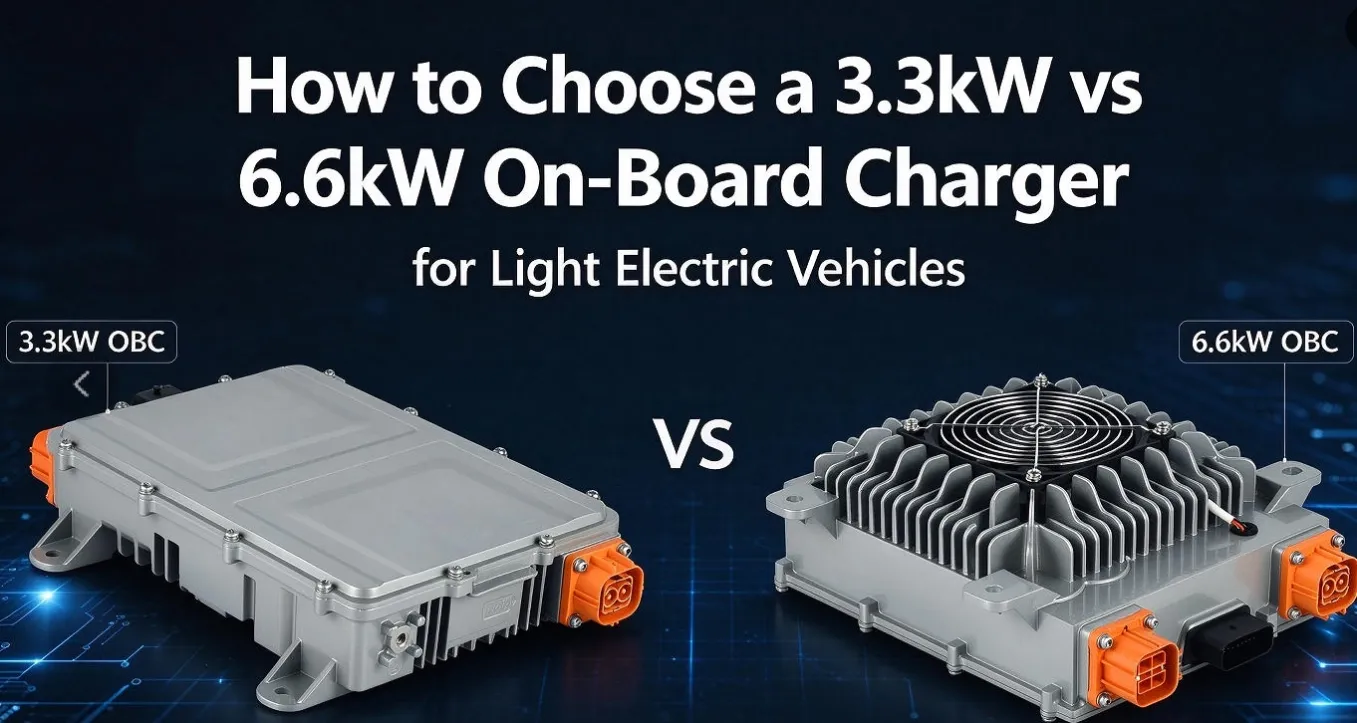
For example, one platform may require a 3.3kW OBC while another requires a 6.6kW OBC.
Separate components can make it easier to change one function without redesigning the complete power assembly, provided the electrical interfaces remain compatible.
An integrated solution may be more attractive when the vehicle platform has stable requirements and the selected combination matches the intended production program.
This is especially relevant for OEMs moving from prototype development to higher-volume production.
The key question is whether the vehicle manufacturer values maximum component interchangeability or a more standardized integrated assembly.
7. Total Cost: Compare More Than the Unit Price
An integrated OBC + DC-DC unit is not automatically cheaper than purchasing two separate products.
The total cost depends on the selected power ratings, production volume, electrical design, mechanical installation and service requirements.
A realistic comparison should include:
Cost Factor | Separate OBC + DC-DC | Integrated 2-in-1 |
|---|---|---|
Component purchasing | Two independent products | One combined assembly |
Mounting | Separate mounting arrangements | Potentially fewer mounting locations |
External wiring | May require more interconnections | May reduce some external connections |
Thermal integration | More placement flexibility | Combined thermal evaluation required |
Replacement | Individual units may be replaced | Depends on integrated service design |
Platform flexibility | Easier to mix compatible configurations | Best when configuration matches the platform |
Validation | Two devices and their interfaces | Combined operation and interactions must be verified |
The better commercial decision is the one that reduces the total cost of integration, production and service, not simply the initial purchase price.
8. Which Architecture Fits Different Commercial EV Applications?
The choice can vary by vehicle application.
Electric Utility Vehicles
Compact packaging can make integrated units attractive. However, service access and installation environment still matter.
Last-Mile Delivery and Cargo EVs
Manufacturers should consider production standardization, charging schedules, auxiliary power requirements and fleet maintenance.
Airport Ground Support Equipment (GSE)
Operating schedules, auxiliary loads, service procedures and available installation space should guide the selection. The same architecture will not necessarily suit every type of airport vehicle.
Agricultural and Specialty Electric Vehicles
Dust, vibration, temperature exposure, mounting constraints and field service requirements may influence the decision.
In each case, vehicle requirements should determine the architecture rather than the application name alone.
9. A Practical Example: 6.6kW OBC + 1.5kW DC-DC for a 96V Platform
Consider an EV manufacturer developing a 96V commercial vehicle.
The vehicle requires AC battery charging and a low-voltage supply for auxiliary equipment.
One option is to use a standalone 6.6kW OBC together with a separate DC-DC converter.
Another option is an integrated 6.6kW OBC + 1.5kW DC-DC unit.
Before choosing the integrated version, the engineering team should confirm:
- The battery's complete operating voltage range
- The available AC input and required charging power
- The DC-DC output voltage and continuous auxiliary load
- Whether simultaneous OBC and DC-DC operation is required
- CAN communication and enable conditions
- Installation dimensions, connector interfaces and cooling conditions
- Thermal derating, fault response and replacement strategy
The integrated unit may simplify the vehicle layout, but only if its electrical, thermal and communication requirements match the platform.
That is why a product specification and an actual vehicle integration review are both necessary.
10. How Should an EV OEM Make the Final Decision?
Choose an integrated OBC + DC-DC 2-in-1 architecture when packaging efficiency, reduced external connections and a standardized vehicle power configuration are important—and when the selected unit meets the electrical, thermal and service requirements.
Consider separate units when independent component replacement, flexible power combinations or different mounting locations are priorities.
Before making the final decision, request drawings, electrical specifications, CAN documentation and the applicable test information from the supplier.
For Echelon Charger, available options include standalone OBCs, DC-DC converters and integrated OBC + DC-DC configurations for commercial and specialty EV projects.
Our team can review battery voltage, charging power, auxiliary output, communication requirements and installation constraints to help identify a suitable configuration.
Conclusion
Integrated solutions can simplify packaging and reduce some external connections. Separate units can offer greater flexibility in component selection and replacement.
For commercial EV manufacturers, the right architecture is the one that fits the vehicle's electrical requirements, installation constraints, thermal conditions, maintenance strategy and production plan.
Planning a new EV platform? Share your battery voltage range, OBC power, DC-DC output requirements, CAN protocol and installation constraints with Echelon Charger for a technical evaluation.
About Echelon Charger
Echelon Charger is the brand of Echelon Energy Technology (Hangzhou) Co., Ltd., a China-based manufacturer of on-board chargers (OBC), DC-DC converters, and integrated EV power systems.
We work with commercial and specialty EV manufacturers, providing OBC, DC-DC, 2-in-1 and 3-in-1 power solutions for different vehicle platforms.
If you are evaluating an integrated OBC + DC-DC unit or separate components for your EV project, feel free to share your battery voltage range, power requirements, CAN communication needs and vehicle application with us.
Our team will be happy to review your requirements and discuss suitable options.
Contact Echelon Charger
- Company: Echelon Energy Technology (Hangzhou) Co., Ltd.
- Website: https://www.echelon-charger.com
- Email: nancy@tici-energy.com
- WhatsApp: +86-18114665311
- Location: Hangzhou, China
-