
Oct 14, 2026
OBCs for Commercial Electric Fleets and Ground Support Equipment
Commercial fleets and ground support equipment put harder demands on an OBC than passenger cars. This guide covers how to specify chargers for airport GSE and fleet duty cycles.
Commercial electric fleets and airport ground support equipment (GSE) share a property that passenger cars do not: they work defined shifts, on a schedule, and stop earning when they are not charged. A charger that is merely adequate for a passenger EV can be a bottleneck for a fleet.
This guide covers how to specify on-board chargers for commercial fleets and GSE, what makes these applications different, and how to evaluate a supplier.
Why Fleet and GSE Charging Is a Different Problem
Three characteristics separate fleet and GSE duty cycles from passenger vehicles:
- Shift-based operation: vehicles charge between shifts, not overnight at leisure. The charging window is fixed and often short.
- High utilization: a vehicle that runs two or three shifts per day needs a charger sized to refill the pack within the break, not by morning.
- Harsh environments: airport aprons and industrial sites bring vibration, temperature extremes, dust and, on aprons, de-icing chemicals.
The result: fleet and GSE programs usually need more charging power and tougher environmental specs than a passenger car platform of the same size.
Specifying an OBC for Ground Support Equipment
GSE - baggage tractors, pushback tugs, belt loaders, catering trucks - runs on 48 V to 96 V platforms in many cases, with some larger units moving higher. The specification points that matter are charging power matched to the shift window, vibration and thermal tolerance, sealed construction for apron washdown and de-icing fluid, and CAN integration with the GSE controller, since many GSE programs use CAN-based control with specific message sets.
For the full integration picture on apron equipment, see the e-GSE power electronics integration guide.
Specifying an OBC for Commercial Fleets
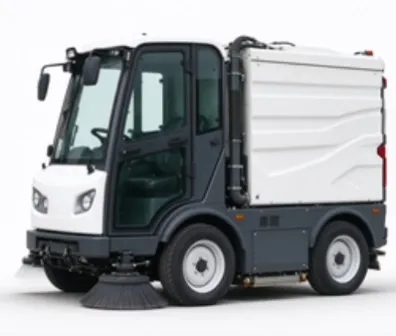
For delivery, utility and service fleets, the deciding variable is the route-to-charge ratio: how much energy the vehicle consumes per shift versus how long it can be parked. For fleets, the practical choices are usually:
- 6.6 kW OBC for single-shift vehicles that can charge overnight or during long depot breaks.
- 11 kW OBC for multi-shift operations, quick-turnaround rental fleets, or depots that want to reduce the number of vehicles per route.
- Bidirectional OBC where the depot wants to use vehicle batteries for peak shaving or backup.
The selection logic mirrors how to select an onboard charger for electric utility vehicles, extended to a full fleet.
Why Fleet Suppliers Are Judged Differently
A fleet buyer is not buying one charger - they are buying a standard they will repeat across hundreds of vehicles. That shifts the evaluation toward consistency (can the supplier deliver identical units across a multi-year program?), support (what happens when a unit fails mid-shift, and how fast can it be diagnosed?), documentation (are test reports and configuration records available per batch?), and capacity (is the production line able to absorb a large order without slipping?). A supplier with IATF 16949 certification, in-house testing and a stated monthly capacity answers all four.
Where Echelon Fits
Echelon Energy Technology manufactures on-board chargers for commercial and specialty vehicles, including airport GSE and fleet applications. For GSE and fleet programs, the relevant units are the 6.6 kW OBC + 1.5 kW DC/DC on 96 V to 320 V platforms, and the 11 kW bidirectional OBC + 3 kW DC/DC on a 360 V platform for fast turnaround and V2G/V2L. Both support CAN communication, air or liquid cooling, and OEM/ODM customization. Production runs under IATF 16949 with a capacity of 30,000 units per month.
Conclusion
Fleets and ground support equipment do not just need a charger - they need one sized to the shift window and rated for the environment. Specify charging power against the real turnaround time, confirm vibration and thermal tolerance, and choose a supplier who can deliver consistently across a fleet. Planning a fleet or GSE charging program? Share your platform voltage, shift schedule and turnaround target with our engineering team for a technical evaluation.
About Echelon Charger
Echelon Energy Technology specializes in onboard chargers, DC/DC converters, and integrated EV power solutions for commercial and specialty electric vehicles.
For technical discussions, product selection, or OEM/ODM cooperation:
Email: nancy@tici-energy.com
WhatsApp: +86 18114665311