
Oct 14, 2026Technical Articles & Engineering Insights
Retrofitting a Diesel Tractor to Electric? The Onboard Charger Nobody Plans For
Converting a diesel tractor to electric is mostly about the battery and motor - until the charger. Here is how to size an onboard charger for an electric tractor retrofit.
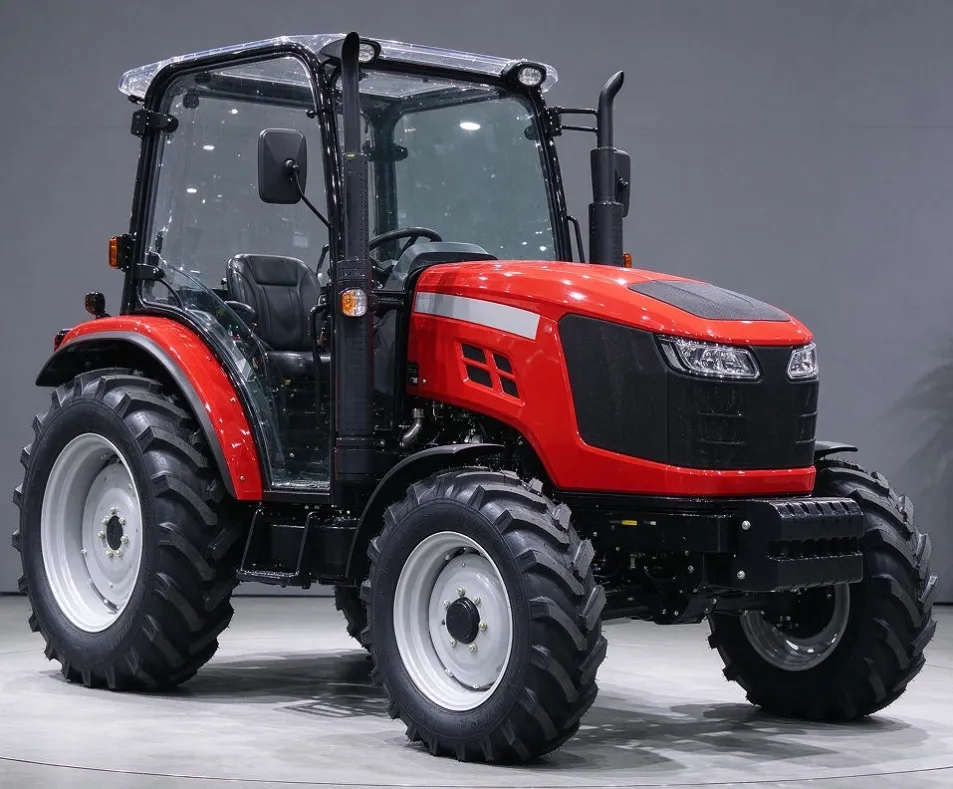
Most diesel-to-electric tractor conversions start with the drivetrain. Teams spec the motor, match the gearbox, size the battery pack, design the mounting frame, and plan the hydraulic pump drive. The running gear gets weeks of attention.
The onboard charger gets ten minutes at the end.
That is usually where the project stalls. The motor spins, the controls power up, the tractor drives around the yard - and then someone asks how it charges. A retrofit tractor has no native charging system, no OEM charging harness, and often no assumption that it will be plugged into anything more than a farm workshop socket. This article covers what retrofit teams miss, how to size an onboard charger for an electric tractor, and which power level fits which machine.
Why the Charger Is the Last Decision and the First Bottleneck
On a factory EV, charging is designed in from the start. On a retrofit, the tractor's original systems - wiring, mounting points, the space under the hood - were laid out around a diesel engine. Fitting charging means solving four constraints at once:
- Where it physically goes: retrofit tractors rarely have a spare, vibration-isolated, weather-protected compartment the size of a charger.
- What voltage it works at: small and legacy tractors often run 48 V or 72 V systems; larger retrofits move to 96 V or 320 V. The charger must match the pack, not the other way around.
- How fast it must charge: a tractor that works six-hour days cannot sit on a 3.3 kW charger overnight and be ready by morning unless the pack is small. Duty cycle decides power level.
- How it talks to the vehicle: the charger must speak the same CAN language as the BMS and vehicle controller - see what EV manufacturers should confirm before integrating an OBC with CAN communication.
Miss any one of these and the tractor drives but does not charge at a useful rate.
Matching the Charger to the Tractor's Battery Platform
The most common retrofit error is choosing charger power before confirming battery voltage and charge current limits. An onboard charger can only deliver what the pack will accept. Check three numbers first:
- Pack nominal and maximum voltage: the charger's output window must cover the full charge voltage, not just nominal.
- Maximum charge current the BMS allows: a small pack with a conservative C-rate may cap well below what a 6.6 kW or 11 kW charger can deliver.
- Single-phase or three-phase AC at the farm: many rural sites have limited single-phase supply, and a charger that needs three-phase power may be unusable where the tractor actually works.
The same voltage-window rule applies when you match an onboard charger to an EV battery pack - the charger's output range has to span the whole charge curve, not just the nominal figure.
Which Power Level Fits: 3.3 kW, 6.6 kW or 11 kW
For electric tractors and agricultural machinery, three charger classes cover almost every retrofit:
- 3.3 kW OBC: small tractors, utility and garden machines, overnight charging on a 48 V to 96 V platform. Lowest cost, standard household circuit, single-shift use.
- 6.6 kW OBC: working tractors, multi-shift or seasonal peak use on a 72 V to 320 V platform. Roughly double the charge speed; often paired with an integrated DC/DC converter.
- 11 kW OBC: larger machines, fast turnaround and farm energy management on a 320 V to 360 V class platform. Liquid-cooled, higher thermal load, and it enables bidirectional operation.
The trade-off is not abstract: it is the same power-level decision that governs 3.3 kW vs 6.6 kW on-board chargers for light electric vehicles, applied to a much heavier duty cycle and a harsher environment.
For agricultural work the duty cycle matters more than the datasheet. A tractor that runs two shifts during harvest needs a charger that refills the pack during a meal break - not one that finishes at 4 a.m.
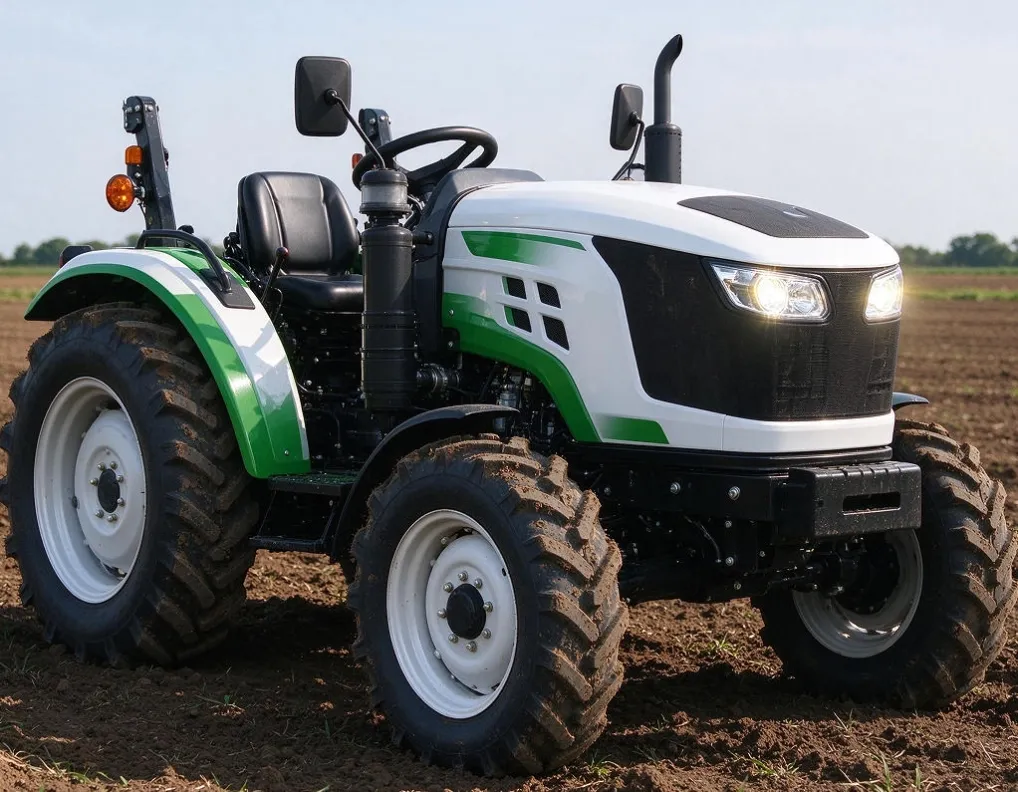
The Retrofit-Specific Challenges No Datasheet Mentions
Farm machinery is a harder environment than a road vehicle in several ways:
- Dust and moisture: field work means abrasive dust and washdown. Chargers need sealed enclosures and connectors rated for the environment.
- Vibration: engine-mount and chassis-mount locations vibrate differently from a purpose-built EV bay.
- Temperature spread: a charger on a machine working in summer heat and stored in an unheated shed in winter sees a wide operating range.
- Occasional heavy loads: unlike a delivery van on a predictable route, a tractor's power draw spikes when the implement engages.
A charger specified only on its power rating - without IP rating, temperature range and vibration tolerance - will fail first in the field, not on the bench.
Where Bidirectional Charging Changes the Economics
Bidirectional (V2L / V2G) chargers are usually discussed as an EV feature. On a farm they solve a real operational problem: a large tractor battery is effectively a mobile power station. Practical agricultural uses include running tools, pumps, lighting or an electric implement away from any fixed supply; supporting a farm building or irrigation load during outages; and using a machine that sits idle for part of the year as stored energy.
Bidirectional capability belongs on larger retrofits where the pack is big enough to both work and export - typically an 11 kW class unit on a 320 V platform. The engineering background is in what a bidirectional on-board charger is and how V2G and V2L work.
A Charging Strategy Checklist for Electric Tractor Retrofits
Before ordering drivetrain parts, settle these five points:
- Battery platform: nominal voltage, maximum charge voltage, BMS current limit.
- Duty cycle: hours per shift, how long the machine can be parked, target turnaround.
- Site power: single-phase or three-phase available where the tractor charges.
- Environment: ingress protection, temperature range, mounting location and vibration.
- Integration: the CAN protocol the charger must speak to the vehicle controller and BMS.
Answers to these five questions determine the charger - not the other way around.
Where Echelon Fits in Agricultural EV Projects
Echelon Energy Technology manufactures onboard chargers for commercial and specialty vehicles, including agricultural and utility machines. The relevant products for tractor retrofits and electric farm equipment are a 3.3 kW OBC and 6.6 kW OBC with integrated DC/DC options on 72 V to 320 V platforms, and an 11 kW bidirectional OBC with an integrated 3 kW DC/DC converter on a 360 V platform, liquid-cooled, for V2G and V2L. All units support CAN communication, liquid or air cooling, and OEM/ODM customization of electrical parameters, connectors and configuration.
Every unit is built under the IATF 16949 automotive quality system, with engineering support from requirement review through prototypes, testing and series production - see how Echelon manufactures and tests OBCs.
Conclusion
On an electric tractor retrofit, the charger is decided last and deployed first - and if it is sized wrong, the whole machine is unusable. Start from the battery platform and the duty cycle, pick the power level that matches the farm's real charging window, and account for dust, vibration and temperature from the beginning. Planning a diesel-to-electric tractor conversion? Share your battery voltage, working schedule and site power with our engineering team for a technical evaluation.
About Echelon Charger
Echelon Energy Technology specializes in onboard chargers, DC/DC converters, and integrated EV power solutions for commercial and specialty electric vehicles.
For technical discussions, product selection, or OEM/ODM cooperation:
Email: nancy@tici-energy.com
WhatsApp: +86 18114665311