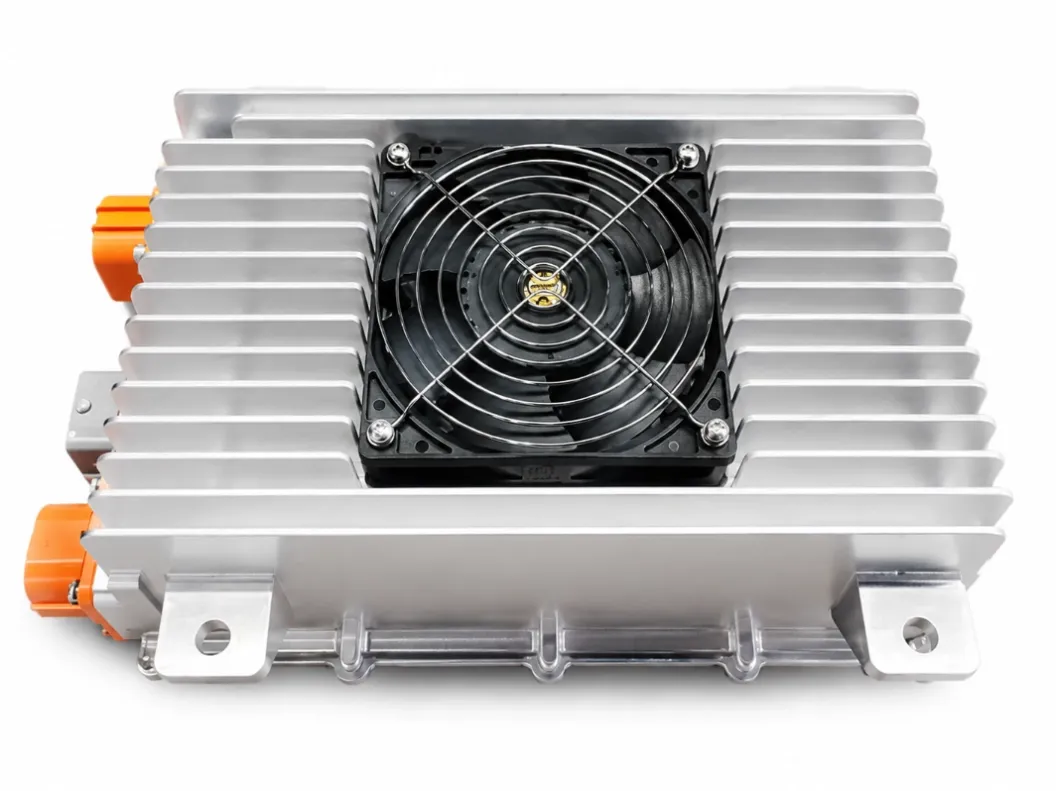
What Is a Bidirectional OBC? V2L, V2V, and V2G Explained
What is a bidirectional OBC? Learn V2L, V2V, and V2G, how bidirectional charging works, when commercial EVs need it, and what to specify. Read the full guide.
A standard on-board charger (OBC) works in one direction: AC from the grid becomes DC to charge the battery. A bidirectional OBC can also work in reverse: DC from the battery becomes AC to power external loads, another vehicle, or the grid.
For commercial EVs, bidirectional charging is not a novelty feature. It can turn a parked vehicle into a mobile power source for tools, lighting, refrigeration, or another vehicle. But it also adds complexity, cost, and system requirements that must be decided early.
This guide explains V2L, V2V, and V2G in plain terms, how a bidirectional OBC works, and when it makes sense for a commercial EV.
- A bidirectional OBC can charge the battery and discharge it as AC. A standard OBC can only charge.
- V2L powers external loads, V2V charges another vehicle, V2G feeds power back to the grid. They need different controls and approvals.
- Echelon's bidirectional example is the 6.6 kW Bidirectional OBC + 3 kW DC-DC, with V2L and V2V support and liquid cooling.
- Bidirectional use needs a defined use case, a safe discharge outlet, CAN control, and protection. Do not specify it as a generic checkbox.
- V2G in particular needs grid approval, metering, and a commercial arrangement. It is not just a hardware feature.
What Does Bidirectional Mean?
In a standard OBC, power flows one way:
Grid AC → OBC → Battery DC
In a bidirectional OBC, power can flow both ways:
Grid AC → OBC → Battery DC (charging)
Battery DC → OBC → AC output (discharging)
The OBC must therefore be able to act as both a rectifier (AC to DC) and an inverter (DC to AC), with the same power electronics controlled in reverse. It must also synchronise its AC output with the load or the grid, and shut down safely if the load is disconnected or a fault occurs.
Bidirectional does not mean the vehicle can charge and discharge at the same time. It means the same hardware can do both, in different modes, under VCU and BMS control.
V2L, V2V, and V2G: What Is the Difference?
| Mode | Full name | What it does | Typical commercial use |
|---|---|---|---|
| V2L | Vehicle-to-Load | Battery powers external AC loads through an outlet | Power tools, lighting, pumps, refrigeration, site equipment |
| V2V | Vehicle-to-Vehicle | Battery charges another EV, directly or via AC | Rescue charging, fleet-to-fleet top-up, field service |
| V2G | Vehicle-to-Grid | Battery feeds power back to the electricity grid | Grid services, peak shaving, energy arbitrage — with grid approval |
| V2H | Vehicle-to-Home | Battery powers a home or building (a form of V2L / V2G) | Backup power for a depot office or workshop — confirm local rules |
V2L is the simplest and most common for commercial vehicles. V2V is similar in hardware, but needs a defined charging protocol for the receiving vehicle. V2G is the most complex, because it involves the grid operator, metering, tariffs, and safety standards that vary by country and region.
Do not use the three terms interchangeably in a specification. Write down which mode you need, what power, what voltage and frequency, and for how long.
How a Bidirectional OBC Works
A bidirectional OBC has the same basic blocks as a standard OBC — an AC/DC stage, a DC/DC stage, and a controller — but the power flow is reversible and the control is more complex.
Key points to confirm:
- Power in each direction. The Echelon bidirectional unit is listed as 6.6 kW OBC + 3 kW DC-DC. Confirm the discharge power separately: is V2L output also 6.6 kW, or a lower figure such as 3.3 kVA? Competitor bidirectional units list V2L at 3.3 kVA and V2V at 6 kVA, for example. Do not assume charge power equals discharge power.
- AC output. What voltage, frequency, and waveform does the discharge output provide? Is it single-phase? What is the total harmonic distortion, and what loads can it support — resistive, inductive, or electronic?
- Isolation and safety. How is the AC output isolated from the vehicle chassis and from the grid? What happens if the outlet is shorted, overloaded, or unplugged under load? What protection and anti-islanding functions are included?
- Cooling. The Echelon bidirectional unit is liquid cooled. Confirm the coolant flow, inlet temperature, and pressure drop, and whether the vehicle already has a suitable loop.
- CAN control. How does the VCU enable discharge, set the discharge power limit, and stop discharge on low state of charge, high temperature, or a fault? How is the remaining range protected so the vehicle can still drive after V2L use?
When Bidirectional Makes Sense for Commercial EVs
Bidirectional makes sense when the vehicle is regularly parked with a charged battery and there is a real load to power. Examples:
- Utility and service vehicles: power tools, lighting, and diagnostic equipment at a site with no mains power, or where running a generator is noisy or impractical.
- Agricultural EVs: power pumps, fans, or tools in the field, and return to the depot with enough charge to drive.
- Refrigerated delivery: power a refrigeration unit or auxiliary load during a stop, without idling a separate engine.
- Fleet rescue: charge a stranded vehicle from a service vehicle, instead of towing it to a charger.
- Depot backup: power essential loads during a grid outage, if the local rules and the vehicle design allow it.
Bidirectional does not make sense when the vehicle is rarely parked with charge to spare, when the load is small enough for a separate inverter or generator, or when the added cost, weight, and liquid cooling would compromise the main job — driving and charging reliably.
What to Specify for V2L
If you need V2L, specify:
- Discharge power (kW or kVA) and duration, for example 3.3 kW for 2 hours.
- AC output voltage, frequency, and connector type.
- Minimum state of charge to preserve for driving, for example stop V2L at 20% SoC.
- Maximum discharge current and overload behaviour.
- Protection: short-circuit, overload, ground fault, and over-temperature.
- How the driver or operator enables and stops V2L, and what is displayed on the dashboard or app.
- Whether V2L can run while the vehicle is charging, or only when it is not charging.
Ask the supplier for a V2L test report or a demonstration with a real load, not just a datasheet line that says 'V2L supported.'
What to Specify for V2V
V2V is similar to V2L in hardware, but the load is another EV. Specify:
- Whether V2V is AC or DC, and what protocol the receiving vehicle must support.
- Discharge power and duration, and the state-of-charge limit for the donor vehicle.
- Cable and connector type, and who supplies it.
- Safety: what happens if the receiving vehicle disconnects, faults, or requests a different voltage.
- Whether both vehicles need the same supplier or standard, or whether V2V is interoperable.
V2V is still maturing as a standard. Confirm interoperability with the specific receiving vehicles in your fleet, not just in general terms.
What to Specify for V2G
V2G is a grid service, not just a vehicle feature. Before you specify it, confirm:
- Whether the local grid operator allows V2G, and what approval, metering, and certification are required.
- Which grid standard applies — for example GB/T, or a local equivalent — and whether the OBC is certified for it.
- Whether the vehicle needs a separate grid-tied inverter, a smart meter, or a cloud aggregator.
- What the commercial terms are: who pays for the energy, who controls discharge, and how the vehicle owner is compensated.
- How battery degradation from extra cycling is handled in the warranty.
If any of these items are not yet decided, do not specify V2G as a firm requirement. Specify V2L / V2V first, and note V2G as a future option to be confirmed with the grid operator and the engineering team.
Comparison: Standard vs Bidirectional OBC
| Standard OBC | Bidirectional OBC | |
|---|---|---|
| Echelon example | 6.6 kW OBC, 96 V / 320 V, forced-air cooling | 6.6 kW Bidirectional OBC + 3 kW DC-DC, liquid cooling |
| Power flow | AC → DC only | AC → DC and DC → AC |
| Modes | Charging only | Charging + V2L / V2V, and V2G if approved |
| Cooling | Forced air in the Echelon standard range | Liquid cooling in the Echelon bidirectional example |
| Complexity | Lower — charger and BMS control | Higher — inverter control, discharge protection, grid / load safety |
| Cost and weight | Lower | Higher, plus liquid loop |
| Best fit | Vehicles that only need to charge from AC | Vehicles that need to power loads or another vehicle from the battery |
Selection Checklist
- ☐ The bidirectional mode is named: V2L, V2V, V2G, or a combination.
- ☐ Discharge power, duration, voltage, and frequency are specified.
- ☐ Minimum SoC to preserve for driving is agreed with the BMS team.
- ☐ Cooling — liquid loop flow, temperature, and pressure — is confirmed.
- ☐ CAN control for enable, power limit, and stop is documented.
- ☐ Protection, isolation, and fault behaviour for discharge are listed.
- ☐ For V2G, grid approval, metering, and commercial terms are confirmed or marked as open.
- ☐ A demonstration or test with a real load is requested.
Related reading: Air Cooling vs Liquid Cooling for OBC · CAN Communication and BMS Integration Checklist for OBC · OBC RFQ Checklist: What EV Manufacturers Should Provide Before Requesting a Quotation
FAQ
Is a bidirectional OBC the same as a V2G charger?
No. A bidirectional OBC is the hardware that can discharge. V2G is a specific use of that hardware to feed the grid, with grid approval and metering. A bidirectional OBC can support V2L and V2V without supporting V2G.
Can I use V2L while the vehicle is charging?
Usually not at the same time in the same mode. Confirm with the supplier whether the unit can charge and discharge simultaneously, or whether it switches modes. Do not assume simultaneous operation.
Does V2L drain the battery too much to drive home?
It can, if there is no SoC limit. That is why a minimum SoC cut-off is essential. Set the cut-off with the BMS team, based on the distance to the next charger and the reserve the fleet needs.
Do I need liquid cooling for bidirectional?
For the Echelon bidirectional unit, yes — it is listed as liquid cooled. For other bidirectional units, check the specific model. Bidirectional operation at full power generates heat in both directions, so cooling is more demanding than for charging alone.
What should I ask the supplier for?
Ask for the discharge power and AC output specification, the V2L / V2V test data, the CAN messages for discharge control, the liquid cooling requirements, and the list of standards and approvals for the specific model. Confirm V2G separately — it is not included by default.
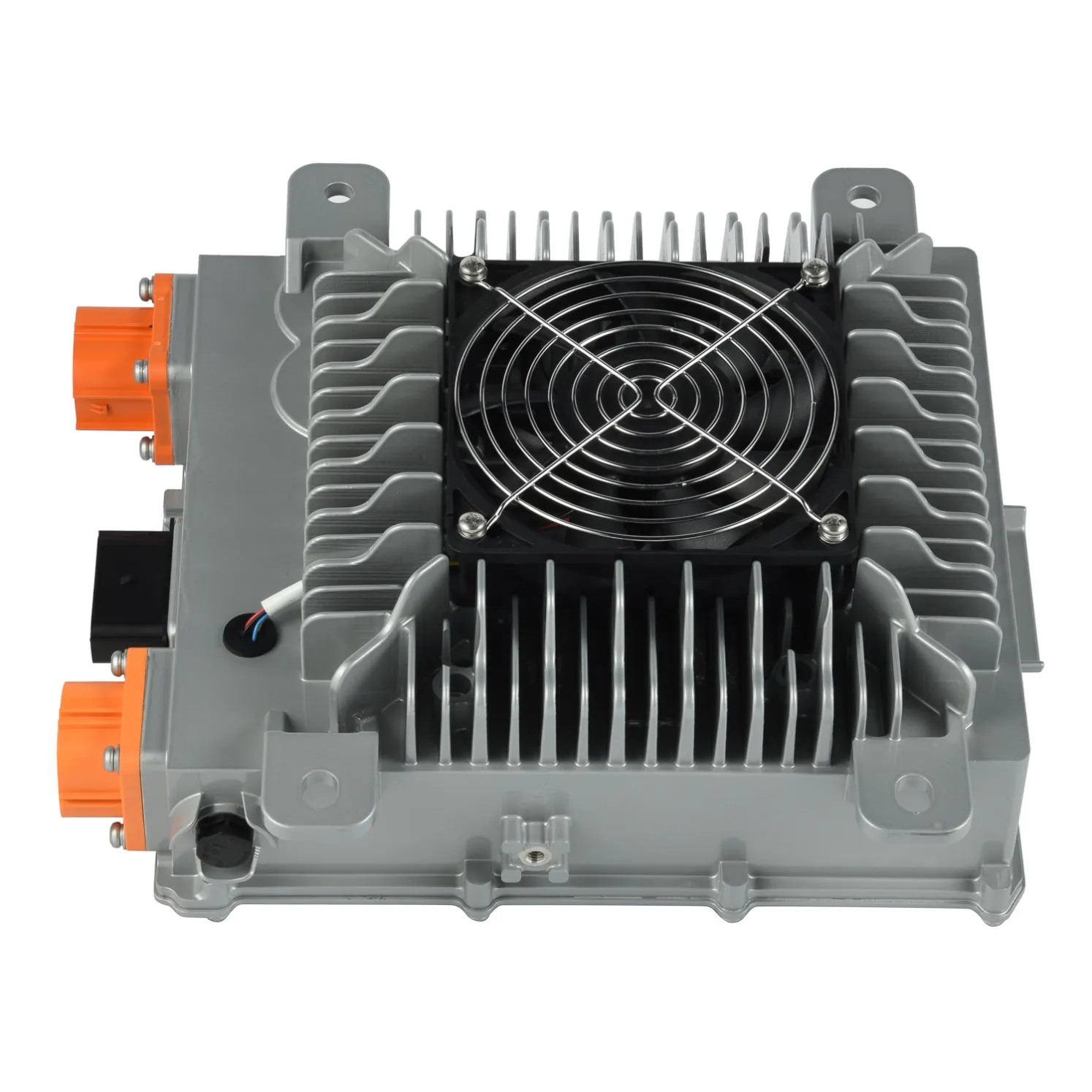
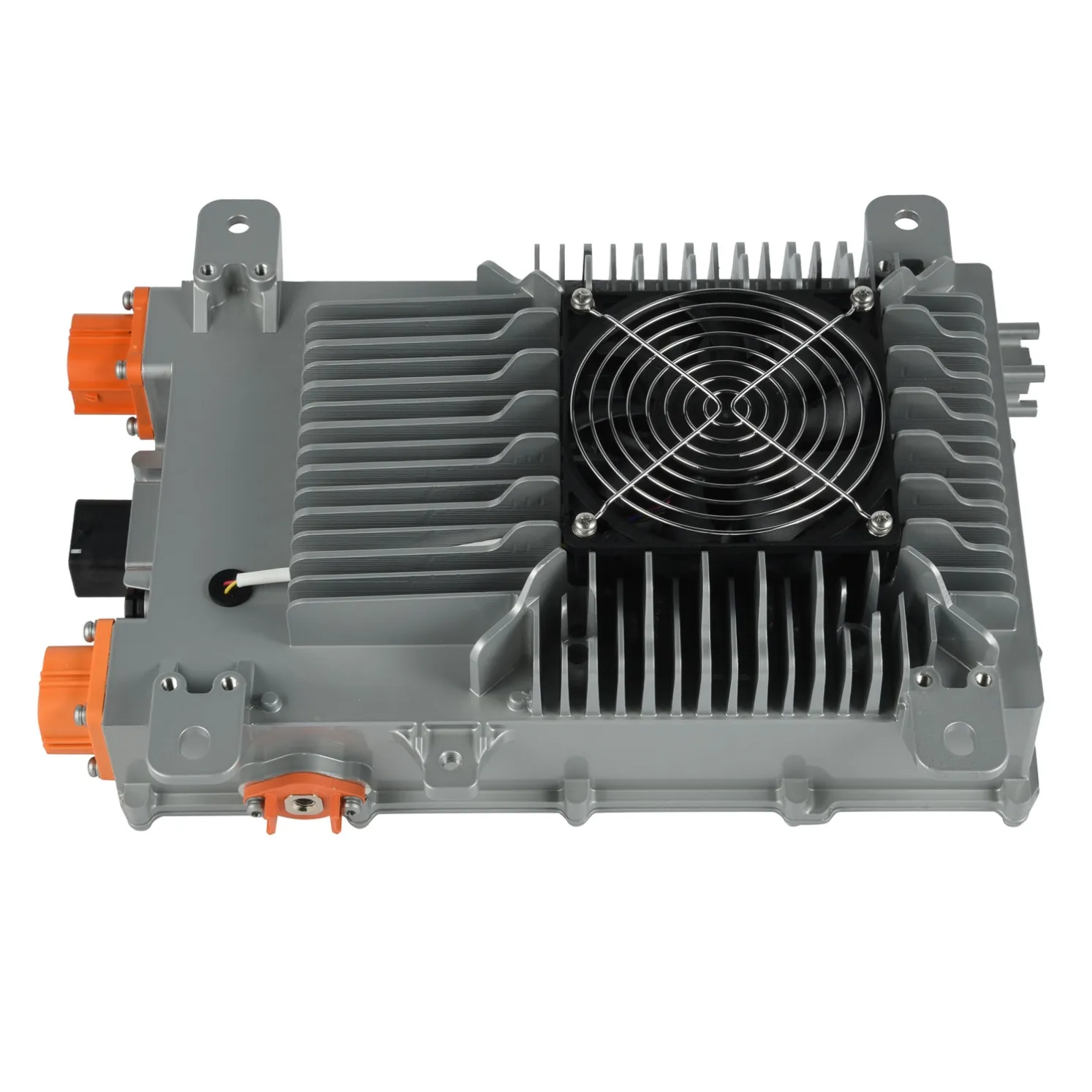
Related Echelon Products
See the full range on the products page.

Next Step
Define your use case in one sentence — for example, 'power 3 kW of tools for 2 hours from a 96 V utility vehicle, preserving 20% SoC for driving' — and send it to the Echelon engineering team with a request for the bidirectional datasheet, discharge specification, and RFQ. That sentence is the starting point for a correct specification.
To start, share your vehicle and battery requirements through our contact page, and see how a custom programme is scoped on our OEM/ODM page. Before requesting a quotation, the OBC RFQ checklist lists the inputs that let Echelon quote accurately in one pass.
About Echelon Charger
Echelon Energy Technology specializes in onboard chargers, DC/DC converters, and integrated EV power solutions for commercial and specialty electric vehicles.
For technical discussions, product selection, or OEM/ODM cooperation:
Email: nancy@tici-energy.com
WhatsApp: +86 18114665311