IP67, -40°C, and Automotive Validation Explained
IP67, -40°C, and automotive validation explained for OBCs: what IP ratings, temperature, vibration, and salt spray really mean for commercial EVs. Read more.
Datasheets for commercial EV chargers are full of short codes: IP67, -40°C to +55°C, automotive vibration, 48-hour salt spray. Those codes are useful, but only if you know what they actually test — and what they do not test.
This guide explains IP ratings, temperature ratings, and automotive validation for on-board chargers (OBCs), using Echelon's confirmed specifications as examples, and gives you the questions to ask before you accept a rating at face value.
- IP67 means dust-tight and protected against temporary immersion. It does not mean the unit is waterproof under pressure washing or permanent submersion.
- -40°C to +55°C is the operating range for Echelon units in this guide. Check what happens above +55°C — derate, shutdown, or continued operation.
- Automotive vibration, salt spray, and EMC are system tests, not just component tests. Ask which standard was used and on what configuration.
- A rating for the housing is not a rating for the connectors, fan, or mounting. Check each part separately.
- Ask for the test report or a summary with the standard, test conditions, and result — not just a code on a datasheet.
What IP67 Actually Means
IP stands for Ingress Protection. The first digit is dust protection, the second is water protection.
| IP code | Dust (first digit) | Water (second digit) |
|---|---|---|
| IP67 | 6 = dust-tight | 7 = temporary immersion, 1 m for 30 min |
| IP65 | 6 = dust-tight | 5 = water jets |
| IP66 | 6 = dust-tight | 6 = powerful water jets |
| IP68 | 6 = dust-tight | 8 = continuous immersion, depth and time specified |
| IP69K | 6 = dust-tight | 9K = high-pressure, high-temperature jets |
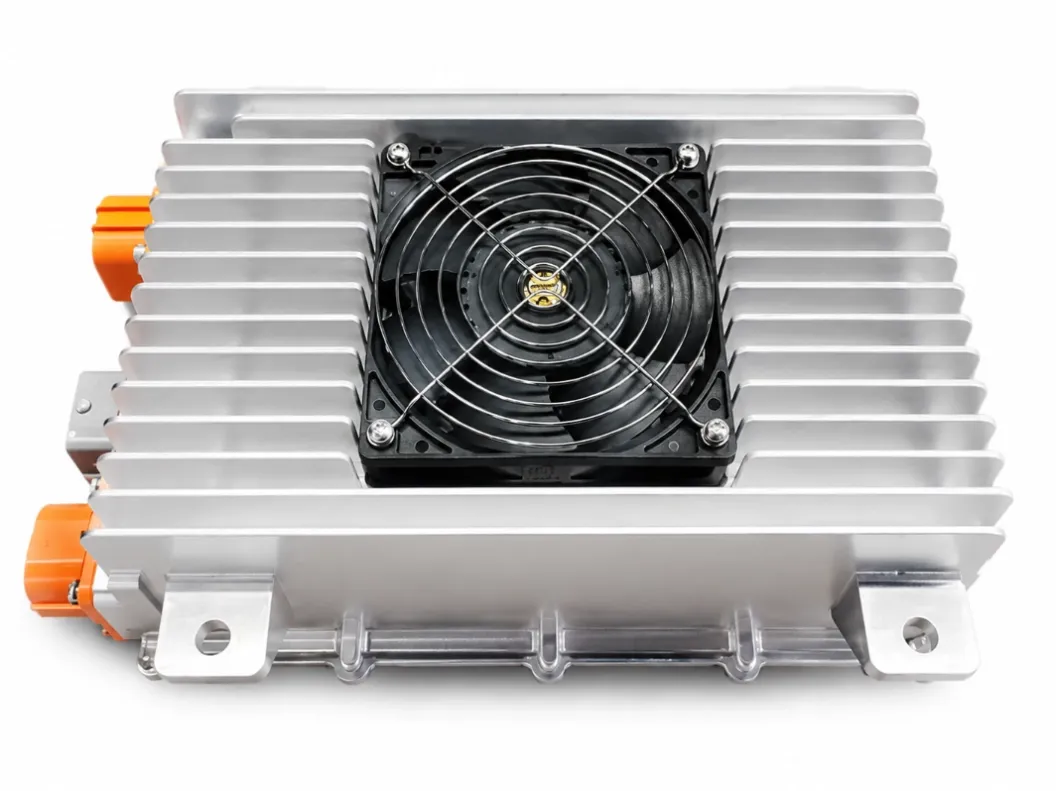
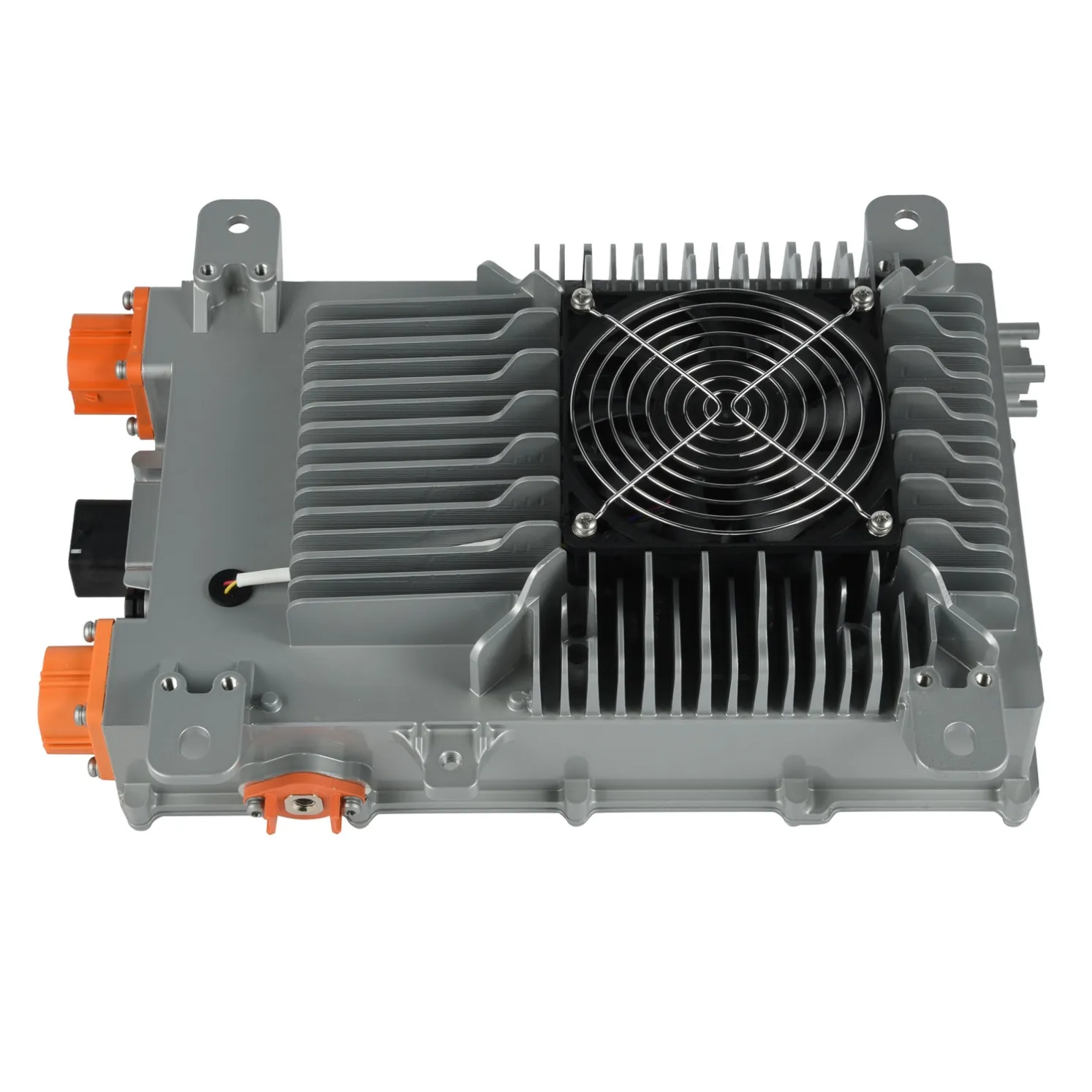
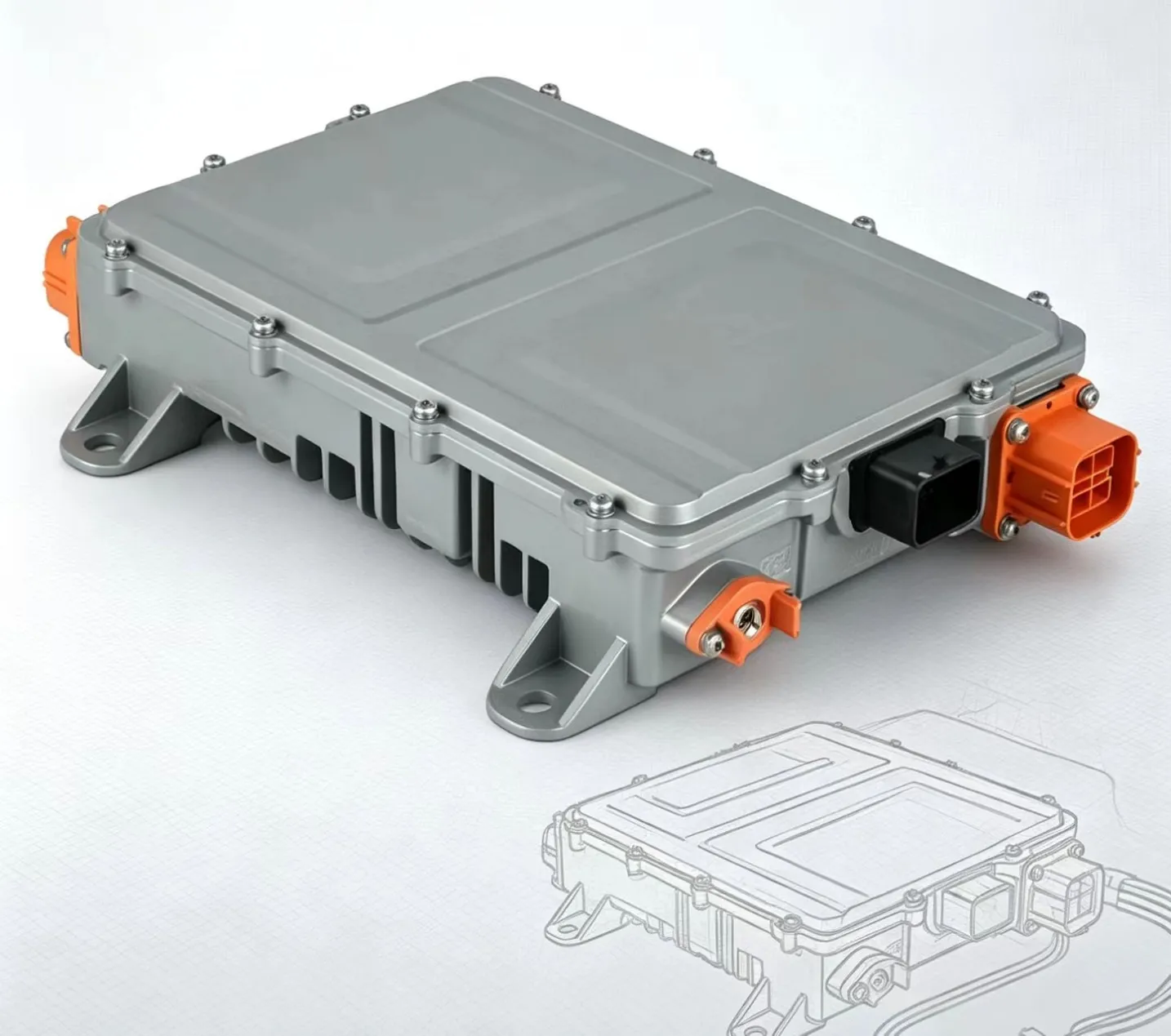
Echelon OBCs in this guide, including the 6.6 kW OBC and the 6.6 kW OBC + 1.5 kW DC-DC 2-in-1, are rated IP67. That means the housing is dust-tight and can survive temporary immersion up to 1 m for 30 minutes under test conditions.
What IP67 does not mean:
- It does not mean the unit can be pressure-washed at close range. High-pressure water can force past seals that pass a 1 m immersion test at low pressure.
- It does not mean the unit can be permanently submerged. That is IP68, with the depth and time specified by the manufacturer.
- It does not mean the connectors, fan, or mounting points are IP67. Each part has its own rating and needs its own check.
- It does not mean the unit is protected against steam cleaning, chemicals, or corrosive fluids. Those need separate testing.
Ask: was the IP test done on the complete unit, with connectors mated, in its normal mounting orientation? Was it done after vibration or temperature cycling, or only on a new unit on a bench? A seal that passes when new can fail after vibration or thermal cycling in the vehicle.
Temperature: -40°C to +55°C
Echelon units in this guide are rated for -40°C to +55°C operating temperature. That is a wide range, and it is appropriate for commercial vehicles that work outdoors in winter and summer.
What to check:
- Operating vs storage temperature. The operating range is the range in which the unit can charge. The storage range may be wider. Confirm both.
- Derating above +55°C. What happens at +60°C or +70°C? Does the unit derate to a lower power, shut down, or continue at full power? Ask for the derating curve: power vs ambient temperature.
- Cold start at -40°C. Can the unit start charging at -40°C, or does it need to warm up first? What is the start-up time, and does the BMS need to heat the battery before charging can start?
- Temperature of what? Is +55°C the ambient air temperature, the heatsink temperature, or the internal component temperature? The answer changes the meaning of the rating.
- Combined conditions. A unit that passes at -40°C on a bench may behave differently at -40°C with vibration, or at +55°C with dust on the heatsink. Ask whether the temperature test was combined with other stresses.
For the 6.6 kW 2-in-1, the public specification lists -40°C to +55°C, IP67, forced-air cooling, and automotive vibration and 48-hour salt spray. Confirm the same range and the derating for the specific model you select.
Vibration and Shock: Automotive Validation
Commercial vehicles vibrate. A unit mounted on a chassis rail, a frame, or a body panel experiences a different vibration spectrum from a unit on a bench or in a passenger car.
Ask:
- Which standard was used? For example, was vibration tested to an automotive standard, and which one? What were the frequency range, acceleration, duration, and axes?
- What was tested? Was it the complete unit, with connectors and mounting brackets, or just the housing? Was it tested in its normal mounting orientation?
- What was the result? Did the unit continue to operate during vibration, or only survive it? Did any connectors loosen, any fasteners back off, or any solder joints crack?
- Shock: what shock level was tested, and for how many shocks? A single pothole shock is different from repeated shocks on an unpaved road.
A vibration test that passes on a bench with a rigid mount may not represent a flexible mount on a vehicle. If your mounting is different from the test mounting, note that as a risk and consider a vehicle-level vibration test.
Salt Spray: 48 Hours
Salt spray testing exposes the unit to a salt fog for a stated time — 48 hours in the Echelon 6.6 kW 2-in-1 example — to check corrosion resistance of the housing, fasteners, connectors, and heatsink.
What to check:
- What was exposed? The complete unit, or just a housing sample? Were connectors mated or unmated?
- What was the result? Was there corrosion, and if so, where? Did the unit still meet its IP rating and electrical performance after the test?
- What does 48 hours mean? Salt spray hours do not translate directly to years in service. They are a comparative test, not a lifetime prediction. A unit that passes 48 hours is more corrosion-resistant than one that fails, but it is not guaranteed for a stated number of years in a coastal or winter-road environment.
- Other chemicals: salt is not the only corrosive agent. Agricultural EVs may be exposed to fertilisers, chemicals, or mud. GSE vehicles may be exposed to de-icing fluids. Ask whether those exposures were considered.
EMC and Electrical Safety
Temperature, vibration, and IP are not the only validation. For a commercial OBC, also ask about:
- EMC: electromagnetic compatibility — emissions and immunity. Which standard was used, and was the unit tested with its normal harness and load? A unit that passes EMC on a bench with a short harness may fail in a vehicle with a long harness.
- Electrical safety: insulation, creepage and clearance distances, and high-voltage safety. Which standard applies, and was the unit tested as a complete system?
- Power quality: power factor and harmonics, as discussed in the OBC selection guide. Depots with many vehicles are sensitive to these.
The Echelon 6.6 kW AC/DC Dual-input OBC lists GB/T 20234 compliance, CAN 2.0, AUTOSAR, and UDS diagnostics. Confirm the full list of standards and certifications for the specific model you select — do not assume a standard listed for one model applies to another.
Comparison Table: What Each Test Proves
| Test | What it proves | What it does not prove |
|---|---|---|
| IP67 | Dust-tight, temporary immersion to 1 m for 30 min | Pressure washing, permanent submersion, chemical resistance |
| -40°C to +55°C operating | Unit can operate in that ambient range under test conditions | Full power at the extremes, or operation after thermal cycling |
| Automotive vibration | Unit survives / operates under the tested vibration spectrum | Operation on a different mount or a different vehicle spectrum |
| 48-hour salt spray | Comparative corrosion resistance of the tested parts | A stated lifetime in coastal or winter-road service |
| EMC / safety standards | Compliance with the stated standard under test conditions | Compliance in every vehicle installation or harness layout |
Use the table in design reviews: for each rating, write down the standard, the test conditions, and the result, and note what is still untested for your vehicle.
Selection Checklist
- ☐ IP rating is confirmed for the housing, connectors (mated and unmated), and fan intake, separately.
- ☐ Operating and storage temperature ranges are confirmed for the specific model.
- ☐ Derating curve — power vs ambient temperature — has been requested.
- ☐ Cold-start behaviour at -40°C is documented.
- ☐ Vibration standard, axes, duration, and result are documented.
- ☐ Salt spray duration, parts exposed, and result are documented.
- ☐ EMC, electrical safety, and power-quality standards are listed for the specific model.
- ☐ Any test that was done on a bench, not in the vehicle, is marked as a remaining risk.
Common Mistakes
- Reading IP67 as 'waterproof.' It is not. It is dust-tight and protected against temporary immersion. Pressure washing and permanent submersion need different ratings and tests.
- Assuming -40°C to +55°C means full power at both extremes. It usually means the unit can operate in that range, often with derating. Ask for the curve.
- Accepting a code without a standard. 'Automotive vibration' without a standard number, axes, and duration is not a specification. Ask for the standard.
- Forgetting the connectors. A housing that passes IP67 with sealed connectors can fail if the connectors in your harness are a different type or are left unmated.
- Testing only when new. Seals, fasteners, and coatings age. Ask whether the IP and vibration tests were done after temperature cycling or ageing, or only on a new unit.
Related reading: Air Cooling vs Liquid Cooling for OBC · How to Choose an On-Board Charger (OBC) for Commercial EVs · What Drives OBC Development Cost: NRE, Prototypes, Tooling and Validation
FAQ
Is IP67 enough for an agricultural EV?
For dust and temporary immersion, IP67 is a strong rating. For agricultural use, also check chemical resistance, pressure washing, and mud on the fan intake and connectors. Those are not covered by IP67 alone.
Can an IP67 OBC be mounted underneath the vehicle?
It can be, if the mounting, airflow, and connector protection are designed for that location. Underbody mounting increases exposure to water, mud, and stone impact. Confirm the mounting, the connector IP rating, and the vibration test for that orientation with the engineering team.
What happens if the OBC gets hotter than +55°C?
Confirm the derating or shutdown behaviour for the specific model. Do not assume it will continue at full power. The derating curve is the document that answers this question.
Does 48-hour salt spray mean the unit will last 10 years by the sea?
No. Salt spray is a comparative test, not a lifetime prediction. It shows relative corrosion resistance. Lifetime in a coastal environment depends on many other factors, including washing, coating, and maintenance.
What documents should I ask for?
Ask for a test summary or report that lists, for the specific model: IP test standard and result, temperature range and derating curve, vibration standard and result, salt spray duration and result, and the EMC and safety standards. If a full report is not available, ask for a written summary with the standard numbers.
Related Echelon Products
See the full range on the products page.

Next Step
Request the validation summary for the specific model you are considering — IP, temperature derating, vibration, salt spray, and EMC — and compare it to your vehicle environment: mounting location, highest and lowest temperatures, vibration spectrum, and exposure to water, dust, and chemicals. Any gap is an open item for the engineering team, not a detail to assume away.
To start, share your vehicle and battery requirements through our contact page, and see how a custom programme is scoped on our OEM/ODM page. Before requesting a quotation, the OBC RFQ checklist lists the inputs that let Echelon quote accurately in one pass.
About Echelon Charger
Echelon Energy Technology specializes in onboard chargers, DC/DC converters, and integrated EV power solutions for commercial and specialty electric vehicles.
For technical discussions, product selection, or OEM/ODM cooperation:
Email: nancy@tici-energy.com
WhatsApp: +86 18114665311