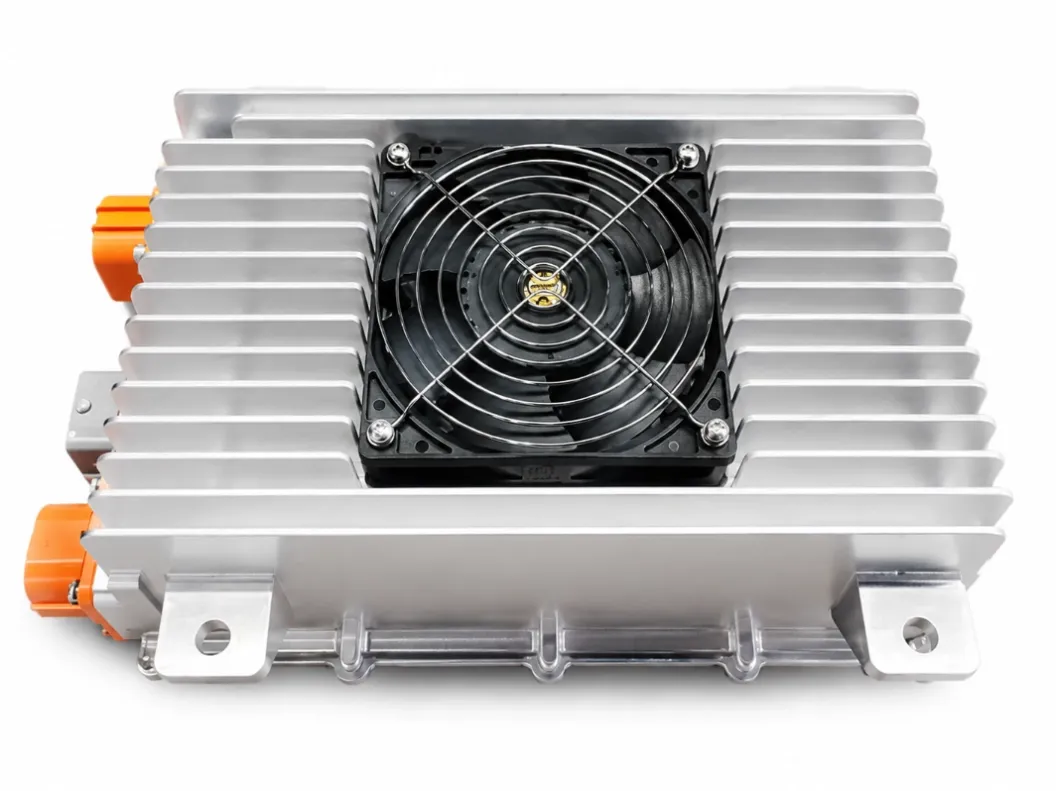
3.3kW vs 6.6kW vs 11kW OBC: Which One Do You Need?
Compare 3.3kW, 6.6kW and 11kW onboard chargers for commercial EVs — charging time, battery size, AC supply, and how to choose the right power. Read more.
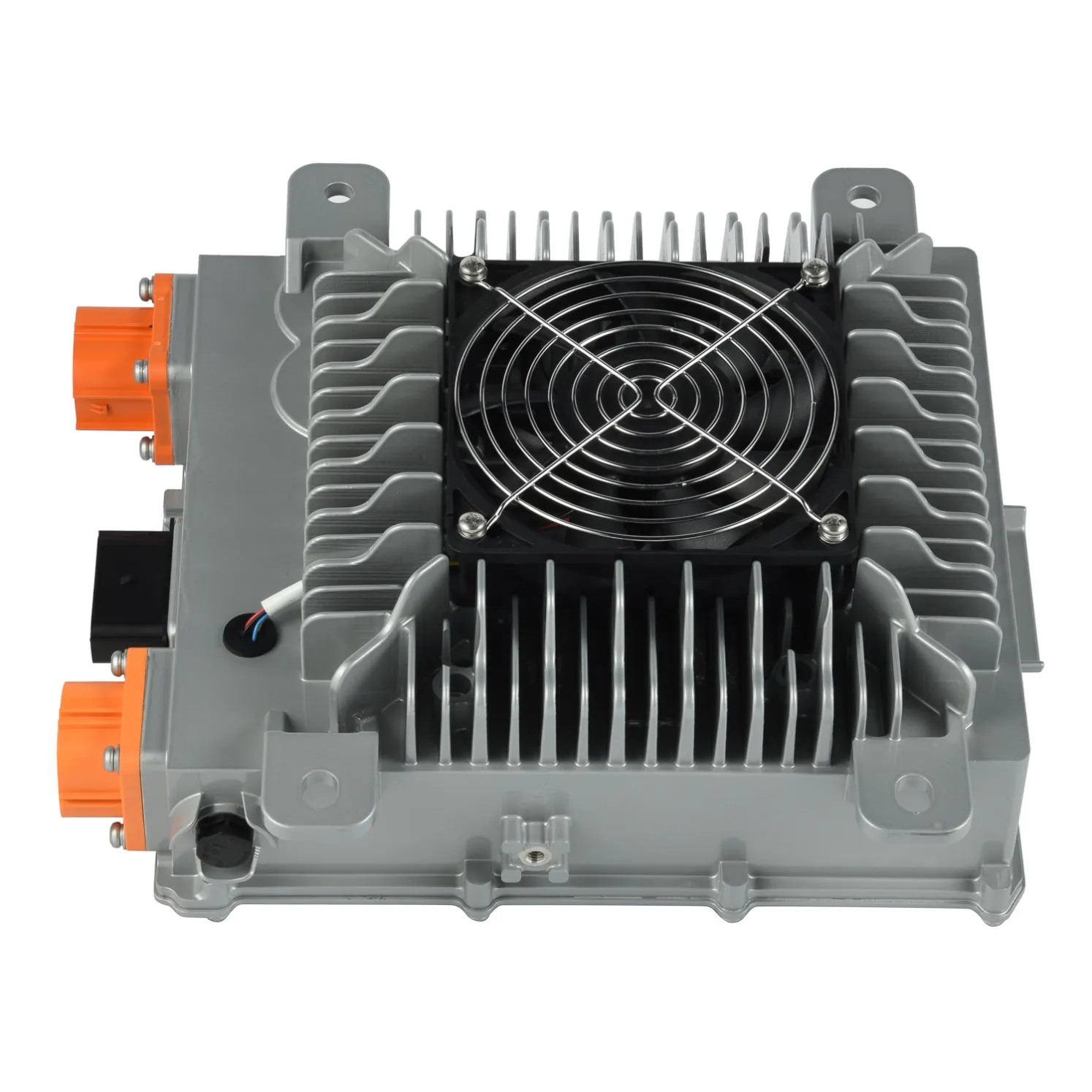
Power is the first number most buyers compare, and the easiest to get wrong. A higher-power OBC charges faster, but it is also larger, heavier, more expensive, and harder to feed from the available AC supply. A lower-power OBC is cheaper and easier to install, but it can leave a vehicle parked for longer than the fleet can afford.
This guide compares 3.3 kW, 6.6 kW, and 11 kW on-board chargers (OBCs) for commercial and specialty EVs, with worked charging-time examples, so you can choose on duty cycle rather than on headline power.
- Charging time is set by usable battery energy divided by effective power, not by the OBC label alone.
- For a 40 kWh pack, 3.3 kW takes about 13 hours, 6.6 kW about 6.5 hours, and 11 kW about 3.9 hours, before CC-CV taper.
- 11 kW usually needs three-phase AC. Many depots and light commercial vehicles do not have it.
- Echelon's current confirmed range covers 1.5 kW, 2 kW, 3.3 kW, and 6.6 kW. An 11 kW option is discussed here for comparison only — confirm availability with the engineering team before specifying it.
- Choose the smallest power that reliably meets the charging window, with margin. Oversizing wastes space, weight, and cost.
What the Power Rating Actually Means
An OBC rating is the maximum AC-to-DC power it can deliver under stated conditions, usually at a stated AC voltage and temperature. It is not the power it delivers at every battery voltage, at every temperature, or at every AC input.
Three conditions change the real power:
- AC input voltage. Echelon's 6.6 kW OBC is rated at 6,600 W at 220 Vac and 3,300 W at 110 Vac. A 3.3 kW unit can show the same pattern at lower voltages. Always check the power at the AC voltage your depot actually provides.
- Battery voltage. Power equals voltage multiplied by current. At the low end of the pack range, the OBC may be current-limited and deliver less than rated power. For the Echelon 6.6 kW 2-in-1, output is 0-60 A on the 96 V platform and 0-20 A on the 320 V platform.
- Temperature and taper. Near full charge, the BMS reduces current in the CV phase. Near the temperature limits, the OBC may derate. Both add time beyond the simple formula below.
Efficiency also matters. At ≥93% efficiency, a 6.6 kW OBC delivers about 6.1 kW to the battery. The rest is lost as heat that the cooling system must remove.
Comparison Table
| 3.3 kW OBC | 6.6 kW OBC | 11 kW OBC | |
|---|---|---|---|
| Typical Echelon form | 3.3 kW OBC + 1 kW or 1.5 kW DC-DC 2-in-1, 72 V / 96 V / 320 V | 6.6 kW OBC, or 6.6 kW + 1.5 kW DC-DC 2-in-1, 96 V / 320 V | Not in the confirmed Echelon range — comparison only |
| AC supply | Single-phase, commonly 220 Vac | Single-phase, 220 Vac for full power; 3,300 W at 110 Vac | Usually three-phase; confirm supply and connector |
| Best fit | Smaller packs, long overnight windows, light duty | Medium packs, overnight or between-shift charging | Larger packs, short windows, three-phase depots |
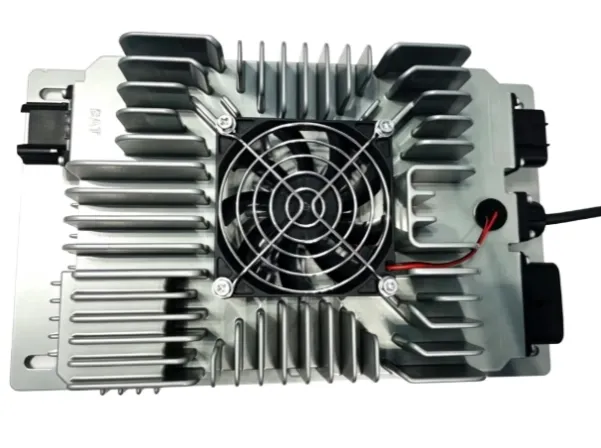
| Size, weight, cooling | Smallest, easiest to package, forced-air cooling in the Echelon range | Larger, forced-air cooling; check airflow and mounting | Largest, often liquid cooling; check space and plumbing |
| Cost driver | Lowest hardware and installation cost | Mid-range; needs a 30 A-class AC feed at 220 Vac | Highest; AC infrastructure and cooling add cost |
| Risk if wrong | Vehicle not ready in the morning | AC feed or cooling undersized | Three-phase not available, or unit derated on single-phase |
Worked Example: Charging Time
Charging time (hours) = Battery energy (kWh) ÷ (OBC power × efficiency)
Use 93% efficiency for the Echelon 6.6 kW example, and the same factor for comparison. Add 10-20% for CC-CV taper in real use.
For a 40 kWh usable pack:
- 3.3 kW: 40 ÷ (3.3 × 0.93) = about 13.0 hours
- 6.6 kW: 40 ÷ (6.6 × 0.93) = about 6.5 hours
- 11 kW: 40 ÷ (11 × 0.93) = about 3.9 hours
For a 20 kWh usable pack, the same calculation gives about 6.5 hours at 3.3 kW, 3.3 hours at 6.6 kW, and 2.0 hours at 11 kW. For a 60 kWh pack, it gives about 19.6 hours at 3.3 kW, 9.8 hours at 6.6 kW, and 5.9 hours at 11 kW.
Read the table this way: if your vehicle uses 25 kWh per day and parks for 8 hours, 3.3 kW is enough for the daily energy, even if a full 0-100% charge would take longer. If it uses 40 kWh per day and parks for 7 hours, 3.3 kW is not enough, and 6.6 kW is the minimum that fits.
Decision Framework
Answer these five questions in order:
- How much energy do you need per day? Use daily kWh, not pack size. A 60 kWh pack that uses 20 kWh a day needs less power than a 40 kWh pack that uses 38 kWh a day.
- How long is the charging window? Count only the time the vehicle is actually plugged in. Subtract time for parking, plug-in, and departure.
- What AC supply is available? Single-phase 220 Vac, single-phase 110 Vac, or three-phase? What current can the site sustain continuously, not just as a breaker rating?
- What is the battery voltage platform? 48 V, 72 V, 96 V, 320 V, or another platform. A power level is only useful if the OBC output range covers the pack.
- What are the space, cooling, and weight limits? A larger OBC needs more airflow or liquid cooling, more mounting strength, and more high-voltage cable capacity.
If the answer to question 1 divided by the answer to question 2 is less than 3 kW, 3.3 kW is a strong candidate. If it is between 3 kW and 6 kW, 6.6 kW is usually the right choice. If it is above 6 kW, check whether 11 kW and three-phase are realistic, or whether a DC charging option should be considered instead. Confirm 11 kW availability and the AC and cooling requirements with the supplier before you specify it.
When 3.3 kW Is the Right Choice
Choose 3.3 kW when the daily energy is low, the overnight window is long, and the vehicle is light. Examples in the Echelon range are 72 V / 96 V / 320 V cargo vehicles, utility vehicles, and low-speed EVs using the 3.3 kW OBC + 1 kW or 1.5 kW DC-DC 2-in-1. The unit is compact, the AC feed is modest, and forced-air cooling is usually sufficient. The risk is a fleet change — longer routes, a second shift, or a larger pack — that makes the window too short. If that change is likely within the vehicle life, consider 6.6 kW now rather than retrofitting later.
When 6.6 kW Is the Right Choice
Choose 6.6 kW when the pack is 30-60 kWh usable, the window is 6-9 hours, or the vehicle must be ready after a short between-shift charge. The Echelon 6.6 kW OBC and the 6.6 kW + 1.5 kW DC-DC 2-in-1, for 96 V and 320 V platforms, fit this case. Check that 220 Vac is available at the depot, that the AC feed can sustain about 30 A, and that the mounting location has airflow for forced-air cooling. The 6.6 kW unit is also the point where the DC-DC side matters: the 2-in-1 provides 1,500 W at 9-16 Vdc, 110 A rated, which suits many commercial low-voltage loads, but confirm the 12 V load list separately.
When 11 kW Makes Sense — and When It Does Not
11 kW makes sense for larger packs, short windows, and depots with three-phase AC. It does not make sense if the depot has only single-phase AC, if the vehicle has no space or cooling for a larger unit, or if the battery cannot accept 11 kW for most of the charge. It also does not make sense if the daily energy is low — the extra power will sit unused, and the extra cost and weight will not pay back.
Because 11 kW is not in the confirmed Echelon product list in this guide, treat it as a comparison point only. Ask the engineering team whether an 11 kW option, or a parallel / dual-unit approach, is available for your platform, and what AC, cooling, and CAN changes it would require.
Common Mistakes
- Comparing labels, not effective power. A 6.6 kW unit at 110 Vac is a 3.3 kW unit in practice. Check the power at your AC voltage.
- Sizing for 0-100% instead of daily use. Most fleets charge from 20% to 80% or 90%, not from empty. Size for daily energy plus margin, not for a full charge you rarely need.
- Forgetting taper. The last 10-20% of charge is slower. If the vehicle must leave at 100%, add time. If it can leave at 80-90%, the simple formula is closer to reality.
- Ignoring the AC infrastructure. A 6.6 kW OBC needs a suitable breaker, cable, and connector. A depot with ten vehicles needs ten times that capacity, plus diversity and power-factor considerations.
Selection Checklist
- ☐ Daily energy use (kWh) and charging window (hours) are written down.
- ☐ Required power is calculated as daily energy ÷ window, with 10-20% taper margin.
- ☐ AC supply — voltage, phases, and continuous current — is confirmed.
- ☐ Battery voltage platform is matched to the OBC output range.
- ☐ Power at 110 Vac vs 220 Vac is checked for the specific model.
- ☐ Space, weight, cooling, and mounting are checked for the chosen power.
- ☐ DC-DC power is checked separately, especially for 2-in-1 units.
- ☐ Future route or shift changes that could shorten the window are noted.
Related reading: How to Choose an On-Board Charger (OBC) for Commercial EVs · OBC + DC-DC Integration: When Does a 2-in-1 Make Sense? · OBC RFQ Checklist: What EV Manufacturers Should Provide Before Requesting a Quotation
FAQ
Is 6.6 kW always twice as fast as 3.3 kW?
In the simple formula, yes — about 6.5 hours versus 13.0 hours for a 40 kWh pack. In practice, both are limited by the CC-CV taper near full charge and by the BMS current limit, so the ratio is approximate.
Can I use an 11 kW OBC on single-phase AC?
Usually not at full power. 11 kW normally needs three-phase AC. Confirm the input requirement, connector, and whether the unit derates on single-phase before specifying it.
Does a bigger OBC damage the battery?
Not if the BMS controls the charge. The OBC follows the BMS current and voltage limits. A larger unit does not force more current into the battery than the BMS allows.
What if my depot only has 110 Vac?
Then a 6.6 kW OBC will deliver about 3,300 W in the Echelon example. Size the system on the power at the actual AC voltage, not on the headline rating.
Should I choose 6.6 kW just to be safe?
Only if the duty cycle may grow. If the daily energy and window are stable and 3.3 kW fits with margin, the smaller unit saves space, weight, and cost.
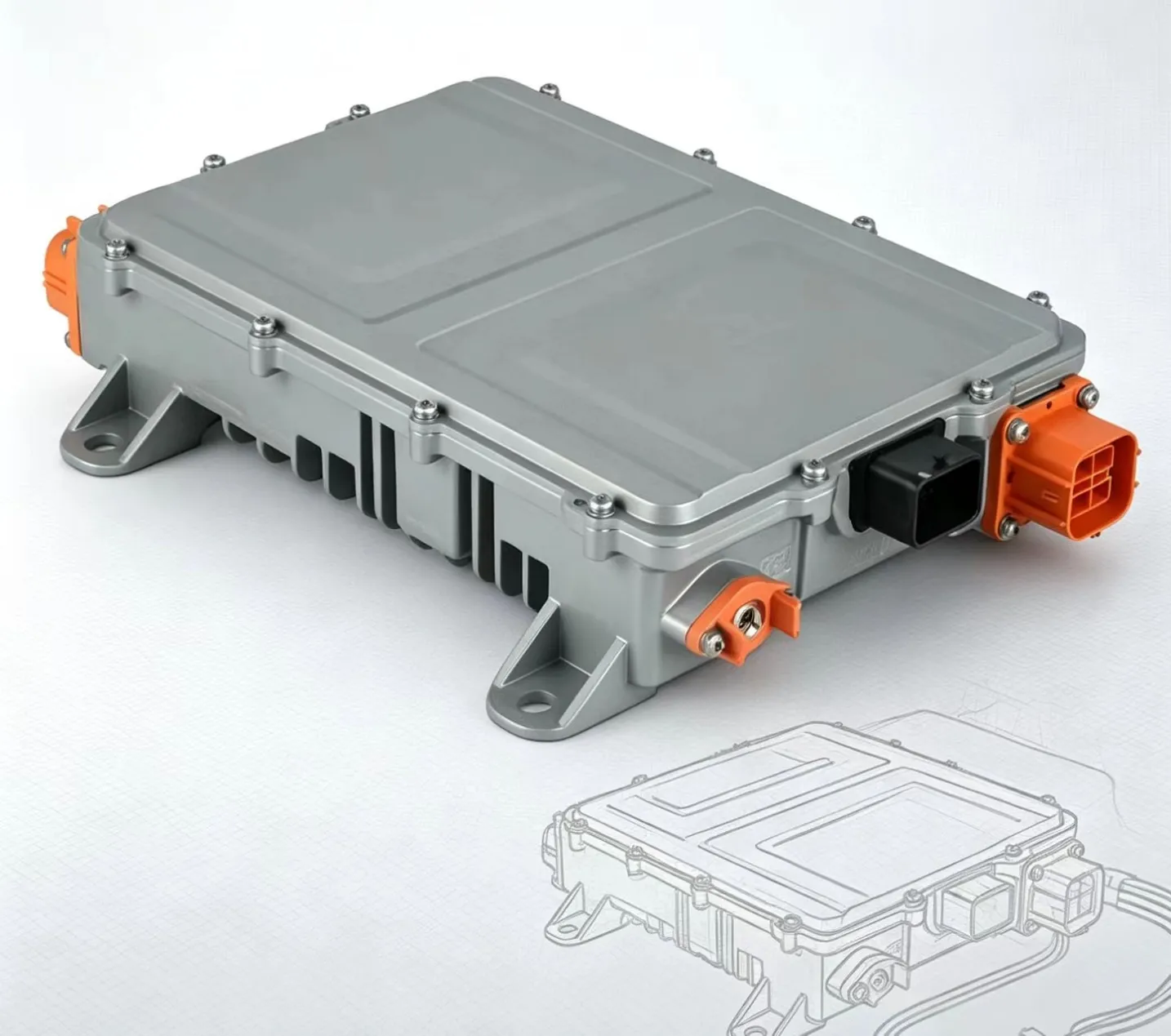
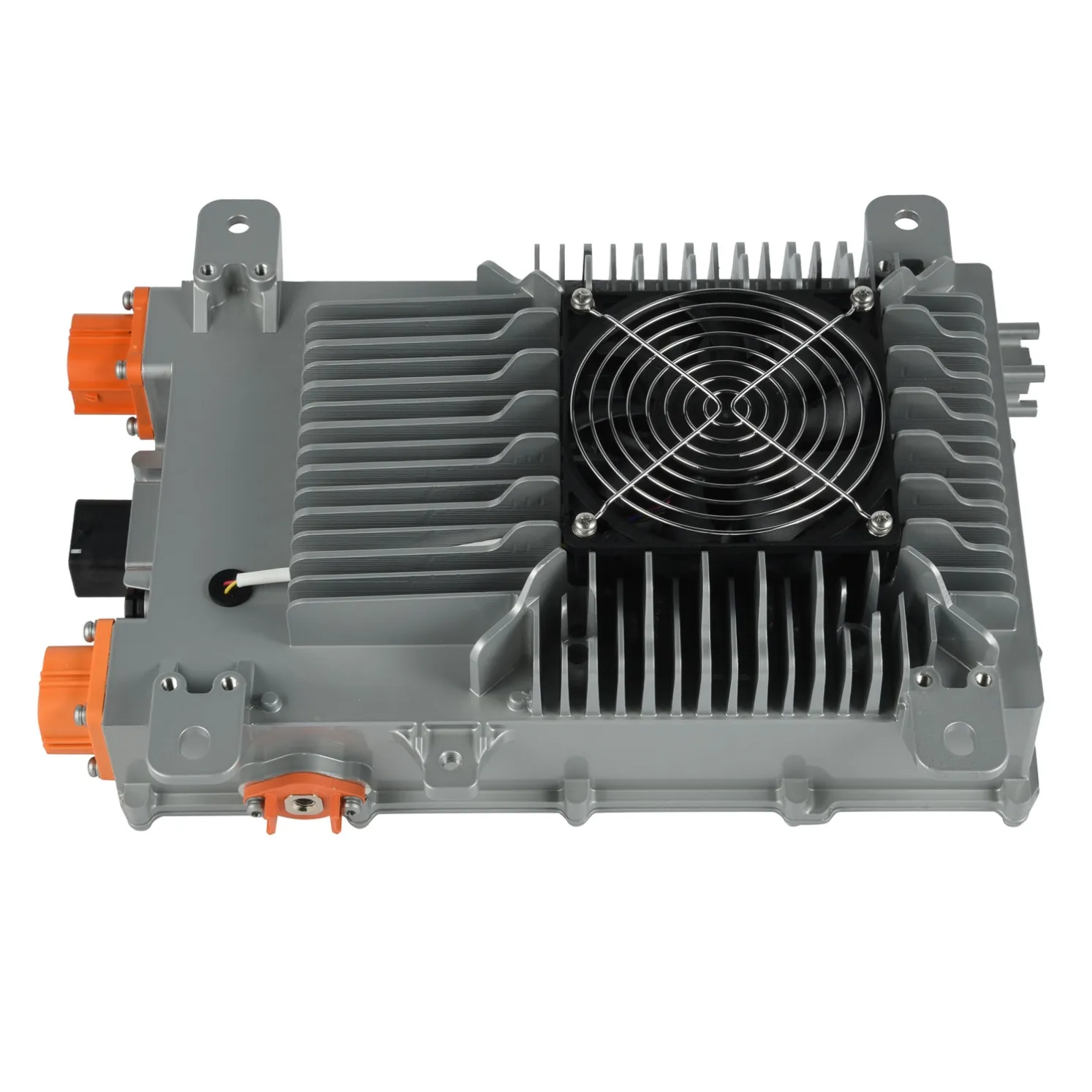
Related Echelon Products
See the full range on the products page.

Next Step
Calculate your daily energy and charging window, then request a datasheet and RFQ from the Echelon engineering team for the power level that fits — 3.3 kW or 6.6 kW in the confirmed range — and confirm 11 kW availability separately if your duty cycle needs it.
To start, share your vehicle and battery requirements through our contact page, and see how a custom programme is scoped on our OEM/ODM page. Before requesting a quotation, the OBC RFQ checklist lists the inputs that let Echelon quote accurately in one pass.
About Echelon Charger
Echelon Energy Technology specializes in onboard chargers, DC/DC converters, and integrated EV power solutions for commercial and specialty electric vehicles.
For technical discussions, product selection, or OEM/ODM cooperation:
Email: nancy@tici-energy.com
WhatsApp: +86 18114665311