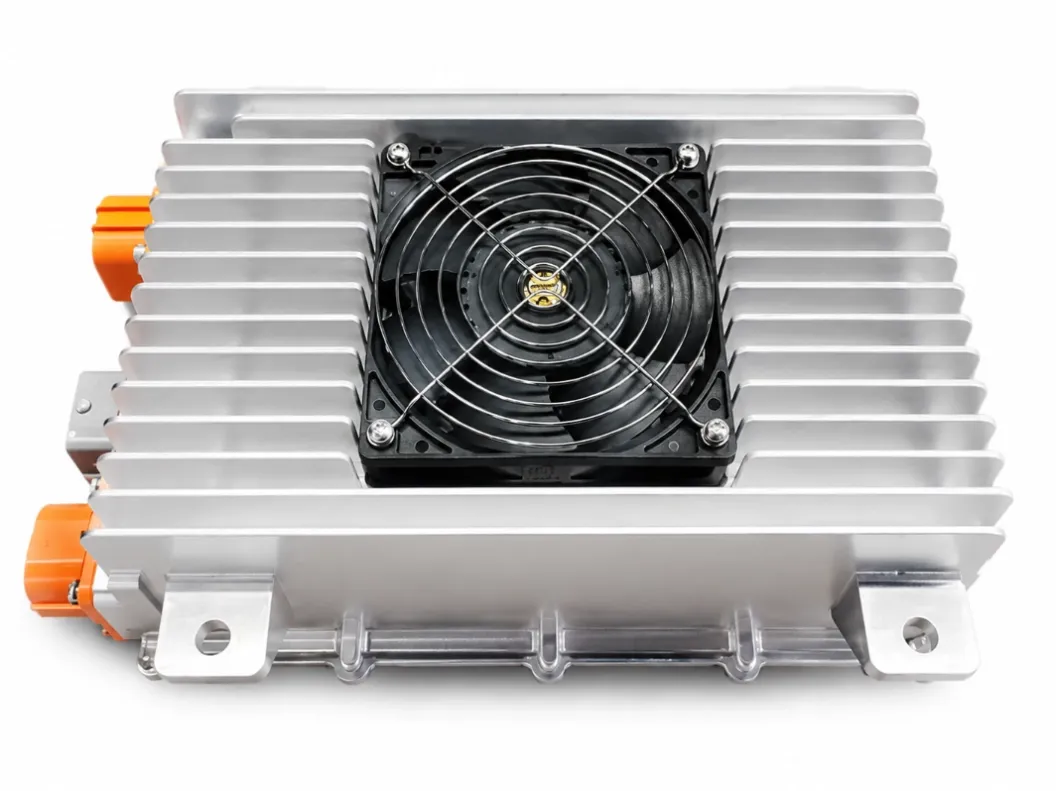
How to Choose an On-Board Charger (OBC) for Commercial EVs
Learn how to choose an on-board charger for commercial EVs: power, voltage, cooling, CAN, IP67, and integration. A practical OBC guide for EV OEM engineers.
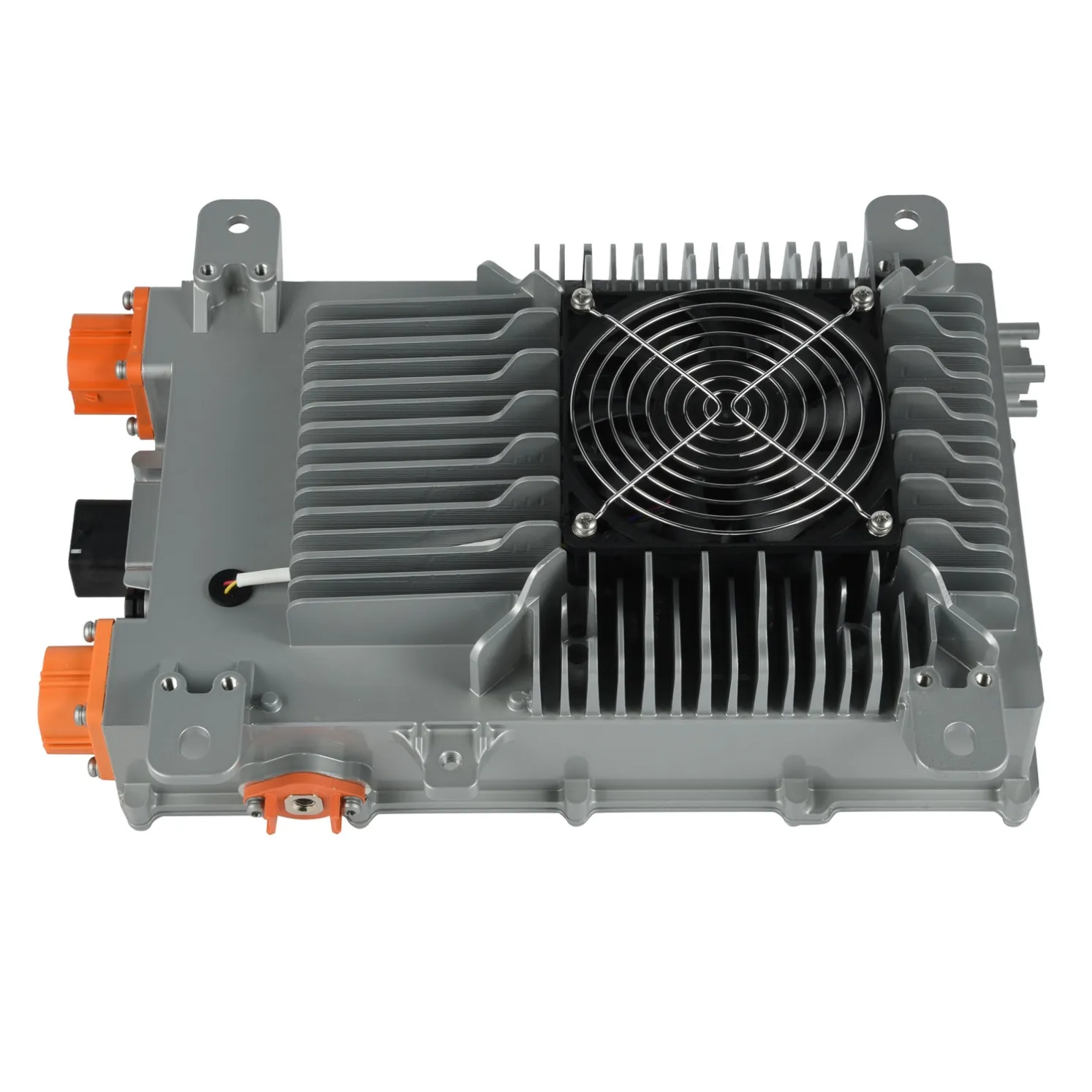
Choosing an on-board charger (OBC) for a commercial electric vehicle is different from choosing one for a passenger car. A delivery van, utility vehicle, agricultural EV, or ground support vehicle runs longer duty cycles, works in dust, rain, and vibration, and must be serviced in the field. The wrong choice shows up later as slow charging, overheating, CAN errors, or a unit that does not fit.
This guide covers the decisions an EV OEM engineer or procurement lead has to make, in the order that matters, with a worked charging-time example you can reuse.
- Start with the battery, not the charger: voltage, usable energy, and the charging window determine the power you need.
- Match power to the real duty cycle. Overnight charging and short between-shift charging need very different power.
- Voltage platform matters more than headline power. A 6.6 kW unit for 96 V is not automatically right for a 320 V pack.
- Cooling, IP67 protection, and vibration decide whether the unit survives vehicle life.
- Agree CAN communication, charging control, and protection with the VCU and BMS before you lock the hardware.
- A 2-in-1 OBC + DC-DC unit can save space and wiring, but only if both sides meet the specification.
What Is an On-Board Charger?
An on-board charger converts AC from the grid into DC to charge the traction battery. It lives on the vehicle, unlike an off-board DC fast charger, which sits outside the vehicle and delivers DC directly.
A typical OBC takes single-phase AC input, for example 90-264 Vac, rectifies it, corrects power factor, and provides a controlled DC output with a constant-current / constant-voltage (CC-CV) profile. It also communicates with the BMS to respect voltage, current, temperature, and state-of-charge limits.
For commercial EVs the OBC is part of the vehicle power system, not a standalone accessory. It shares space, cooling air, high-voltage wiring, low-voltage supply, and CAN traffic with the rest of the vehicle. Selection is therefore a system decision.
Step 1: Define the Battery and the Charging Window
Write down four numbers before you look at any datasheet:
- Nominal battery voltage and operating range. Echelon platforms cover 48 V, 72 V, 96 V, and 320 V. A 6.6 kW OBC + 1.5 kW DC-DC 2-in-1 is offered for 96 V and 320 V, with outputs of 64-128 Vdc and 240-480 Vdc. A 3.3 kW 2-in-1 is offered for 72 V, 96 V, and 320 V. If your pack voltage falls outside the OBC output range, the unit cannot charge it.
- Usable battery energy in kWh. Use the energy the BMS will actually allow, not the nameplate energy.
- Available charging time. A last-mile van may have 8-10 hours overnight. A utility vehicle on two shifts may have only 2-3 hours between shifts.
- Available AC supply. A 6.6 kW OBC at 220 Vac needs roughly 30 A at full power, before losses. At 110 Vac, the same Echelon 6.6 kW unit is rated at 3,300 W, not 6,600 W. That difference is often missed.
Worked Example: Charging Time
Use this estimate for first-pass sizing. It ignores CC-CV taper, so treat it as a minimum time:
Charging time (hours) = Battery energy (kWh) ÷ Effective charging power (kW)
Effective power = rated power × efficiency. For a 6.6 kW OBC at ≥93% efficiency, effective power is about 6.1 kW.
For a 40 kWh usable pack:
- With 3.3 kW: 40 ÷ (3.3 × 0.93) = about 13.0 hours
- With 6.6 kW: 40 ÷ (6.6 × 0.93) = about 6.5 hours
The 6.6 kW unit fits an overnight window for a 40 kWh vehicle. The 3.3 kW unit does not, unless daily energy use is much less than the full pack. Add 10-20% margin for taper near full charge. If the result is longer than the parking window, you need more power, a larger AC supply, or a different strategy.
Step 2: Choose the Power Level
Power affects size, weight, cooling, cost, and AC infrastructure, not just speed.
| Power level | Typical use | Check first |
|---|---|---|
| 1.5 kW OBC + 500 W DC-DC | Light EVs, 48 V / 72 V, low daily energy | Is the window long enough? Is 500 W enough for 12 V loads? |
| 2 kW OBC + 1 kW DC-DC | 72 V / 96 V cargo and utility vehicles | Can the AC supply sustain 2 kW continuously? |
| 3.3 kW OBC + 1-1.5 kW DC-DC | 72 V / 96 V / 320 V cargo vans, utility, low-speed EVs | Does output cover the full pack range, cold and aged? |
| 6.6 kW OBC or 6.6 kW + 1.5 kW DC-DC | 96 V / 320 V commercial EVs, larger packs | Is 220 Vac available? Is forced-air cooling acceptable? |
| 6.6 kW Bidirectional + 3 kW DC-DC | Vehicles needing V2L / V2V | Is liquid cooling available? Is the V2L use case defined? |
Do not oversize by default. A larger unit is heavier, larger, and more expensive, and may need liquid cooling or a bigger AC feed. Do not undersize either. A charger that is too small reduces fleet availability and pushes operators toward inappropriate off-board charging.
Step 3: Check Voltage, Current, and Control
Confirm with the datasheet:
- Output voltage range: must cover the pack from its lowest allowed voltage to its highest charge voltage, at the expected temperature extremes.
- Output current: for the 6.6 kW 2-in-1, output is 0-60 A on the 96 V platform and 0-20 A on the 320 V platform. Check the current is high enough at your nominal voltage to reach rated power.
- CC-CV control: the OBC should follow the BMS profile, not impose a fixed profile. Ask how current is derated with temperature and state of charge.
- Input range and power at 110 Vac vs 220 Vac: confirm both, and ask for power factor and harmonic data, which matter when many vehicles charge at one depot.
- Missing numbers: if a number is not in the public datasheet, ask for the full specification before committing. Do not assume a missing number is favourable.
Step 4: Cooling, Protection, and Environment
Echelon units in this range are rated IP67, forced-air cooled, and rated for -40°C to +55°C, with automotive vibration and 48-hour salt spray testing noted for the 6.6 kW 2-in-1. Confirm the rating for the specific model you select; do not treat it as a guarantee for every model.
Ask where cooling air comes from and where hot air goes, whether the fan intake can be blocked by mud or a bracket, and what happens above +55°C — derate, shutdown, or reduced power. Check the connector IP rating separately: IP67 on the housing does not guarantee the same for connectors under pressure washing. List the protection functions — over-voltage, over-current, over-temperature, short-circuit, input under-voltage — and ask what happens after a fault: automatic recovery, CAN reset, or power cycle.
Step 5: CAN and System Integration
An OBC that charges on a bench but does not talk to the vehicle is not usable. Confirm CAN version and baud rate — Echelon units use CAN-bus, and the dual-input 6.6 kW OBC lists CAN 2.0 — and whether CAN FD is required. Confirm the message set, charge enable, fault codes, wake-up and sleep behaviour, and standby current. The dual-input unit lists AUTOSAR and UDS diagnostics; ask whether UDS is available on your model. Confirm who controls charge termination — OBC, BMS, or both — and what happens if CAN is lost during charging. Get the CAN database and protocol document before design freeze.
Step 6: DC-DC — Separate or Integrated?
Every EV needs a low-voltage supply, typically 12 V. Options are a separate converter, such as the 10 kW DC-DC module for 96 V platforms (250-350 V DC input, 70-150 V DC output), or a 2-in-1. Echelon offers 1.5 kW + 500 W, 2 kW + 1 kW, 3.3 kW + 1 kW or 1.5 kW, and 6.6 kW + 1.5 kW combinations. In the 6.6 kW example the DC-DC output is 9-16 Vdc, 110 A rated, 132 A peak, 1,500 W, at ≥94% efficiency.
A 2-in-1 saves space and wiring and reduces high-voltage connections. It makes sense when both sides match the vehicle need. Size both sides independently, then decide.
Selection Checklist
- ☐ Battery voltage, range, and usable energy are written down.
- ☐ Charging window and AC supply are confirmed with the depot or customer.
- ☐ Required power is calculated with the charging-time formula, with margin for taper.
- ☐ OBC output voltage and current cover the full pack range.
- ☐ Efficiency and power at 110 Vac vs 220 Vac are confirmed.
- ☐ Cooling, mounting, airflow, IP rating, temperature, vibration, and protection are agreed for this vehicle.
- ☐ CAN version, message set, wake-up, and diagnostics are documented.
- ☐ DC-DC power is sized separately, and the 2-in-1 vs separate decision is recorded.
- ☐ Full datasheet, CAN database, and connector details have been requested.
Related reading: 3.3kW vs 6.6kW vs 11kW OBC: Which One Do You Need? · OBC + DC-DC Integration: When Does a 2-in-1 Make Sense? · OBC RFQ Checklist: What EV Manufacturers Should Provide Before Requesting a Quotation
FAQ
What is the difference between an OBC and a DC fast charger?
An OBC is on the vehicle and converts AC to DC. A DC fast charger is off the vehicle and delivers DC directly to the battery. The two solve different problems and are specified differently.
How do I know if I need 3.3 kW or 6.6 kW?
Calculate charging time with the formula above, using usable energy and the real parking window. If 3.3 kW does not fit the window, step up. Do not choose based on cost alone.
Does OBC voltage have to match the battery exactly?
It must cover the battery voltage range, not just the nominal voltage. A 96 V pack may charge up to 115 V, and may discharge to 80 V or lower at the end of its range. Check the output range at temperature extremes and at end of life.
Can I use the same OBC for different vehicle models?
Sometimes, if voltage, power, cooling, mounting, and CAN are the same. In practice, different vehicles usually need different compromises. Check each model against the checklist above.
What should I ask the supplier for before I decide?
Ask for the full datasheet, CAN protocol, connector part numbers, dimensional drawing, weight, cooling requirements, protection functions, and validation evidence: IP, temperature, vibration, salt spray, and EMC.
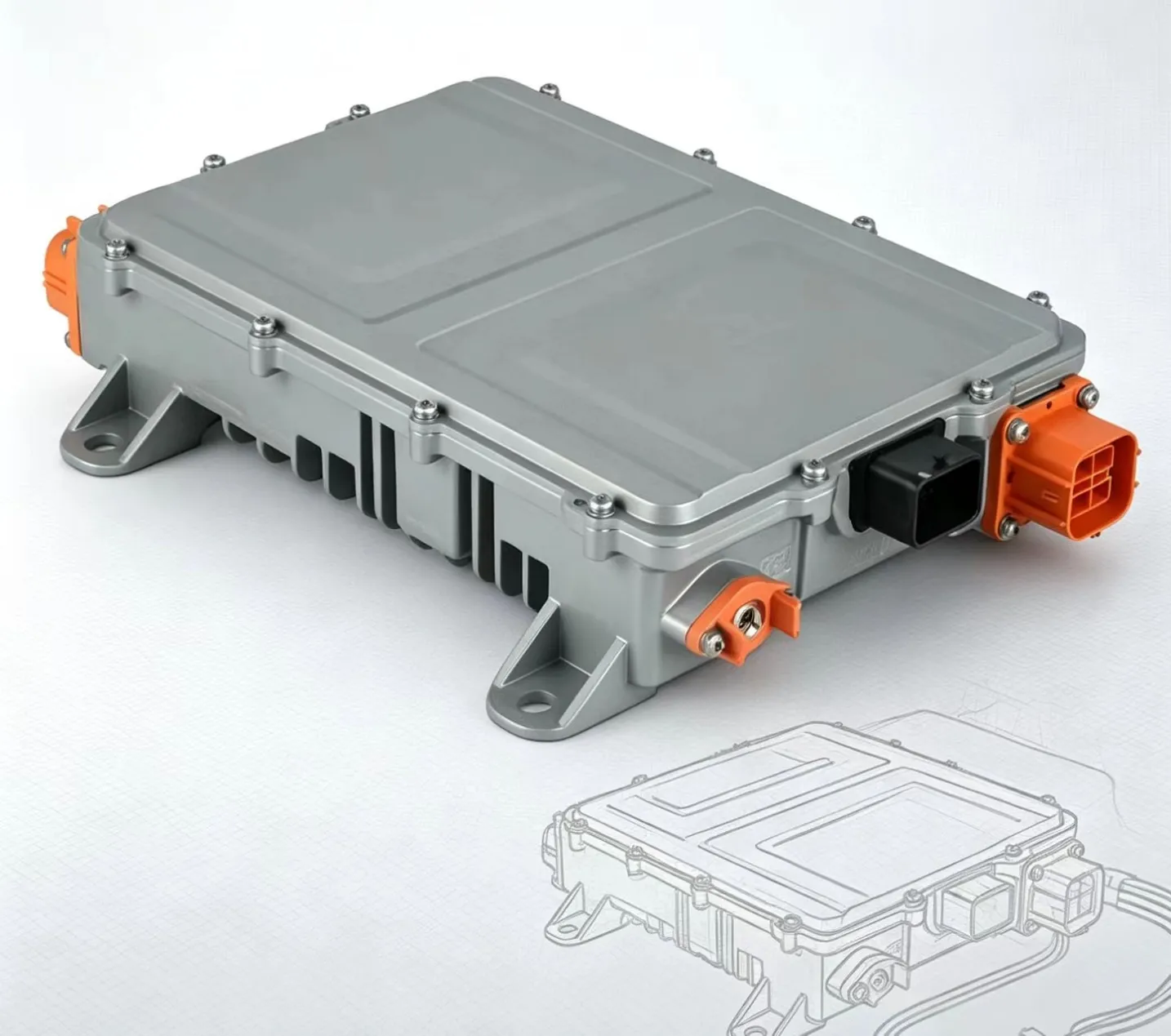
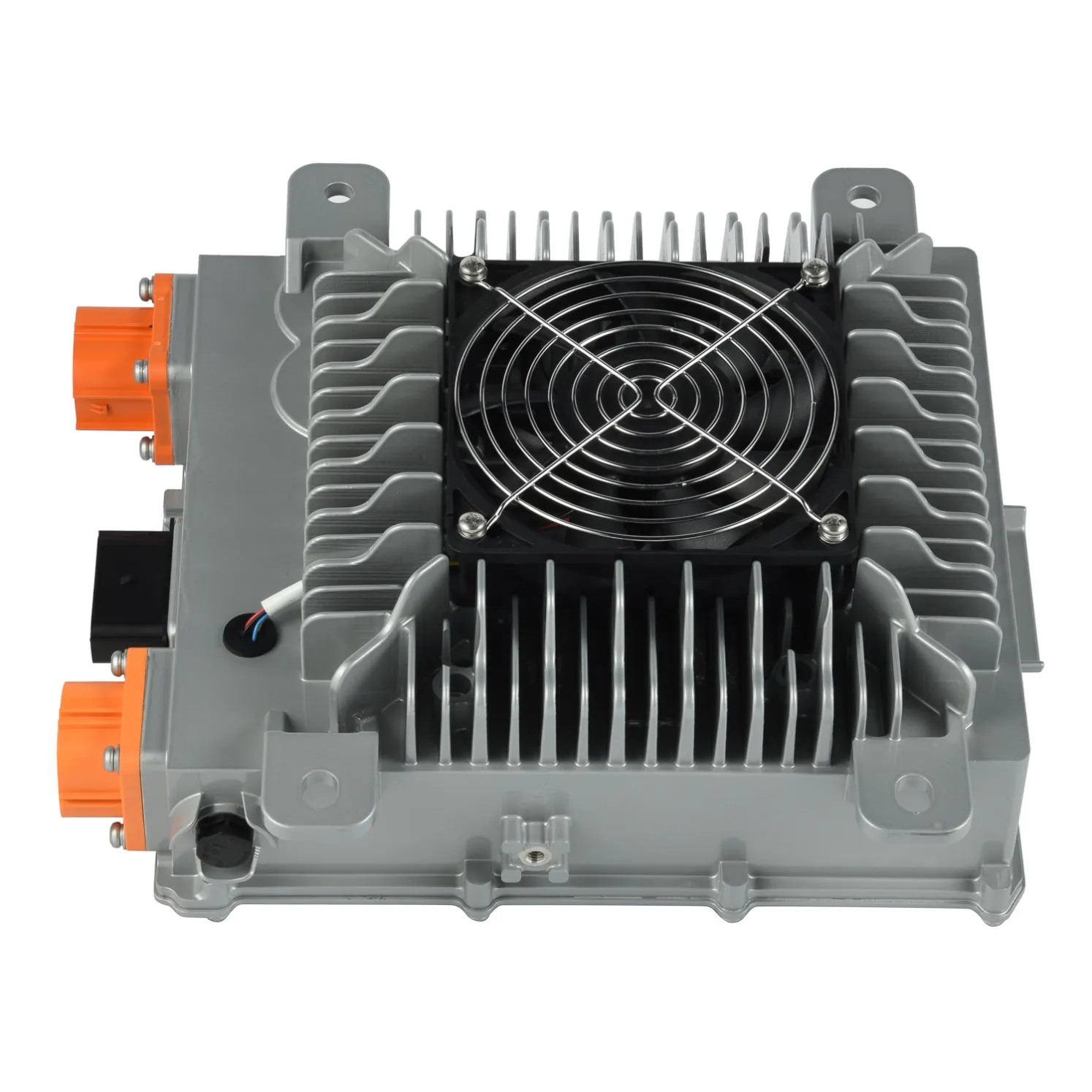
Related Echelon Products
See the full range on the products page.


Next Step
Send the Echelon engineering team four numbers — battery voltage, pack energy, charging window, and target vehicle — and request a datasheet and RFQ for the matching OBC. That is the fastest way to move from a shortlist to a confirmed selection.
To start, share your vehicle and battery requirements through our contact page, and see how a custom programme is scoped on our OEM/ODM page. Before requesting a quotation, the OBC RFQ checklist lists the inputs that let Echelon quote accurately in one pass.
About Echelon Charger
Echelon Energy Technology specializes in onboard chargers, DC/DC converters, and integrated EV power solutions for commercial and specialty electric vehicles.
For technical discussions, product selection, or OEM/ODM cooperation:
Email: nancy@tici-energy.com
WhatsApp: +86 18114665311