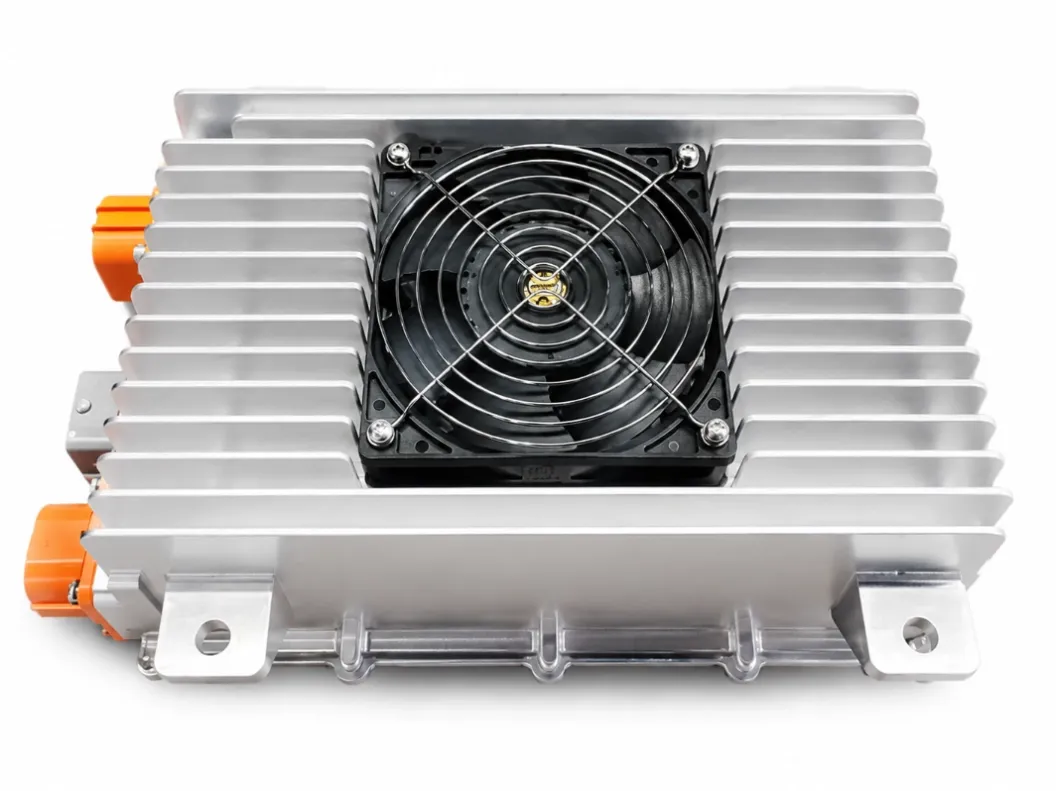
OBC vs DC-DC Converter vs 2-in-1 Integrated Power Unit
OBC vs DC-DC converter vs 2-in-1 integrated power unit: what each does, when to use separate units, and when integration saves space and wiring. Read more.
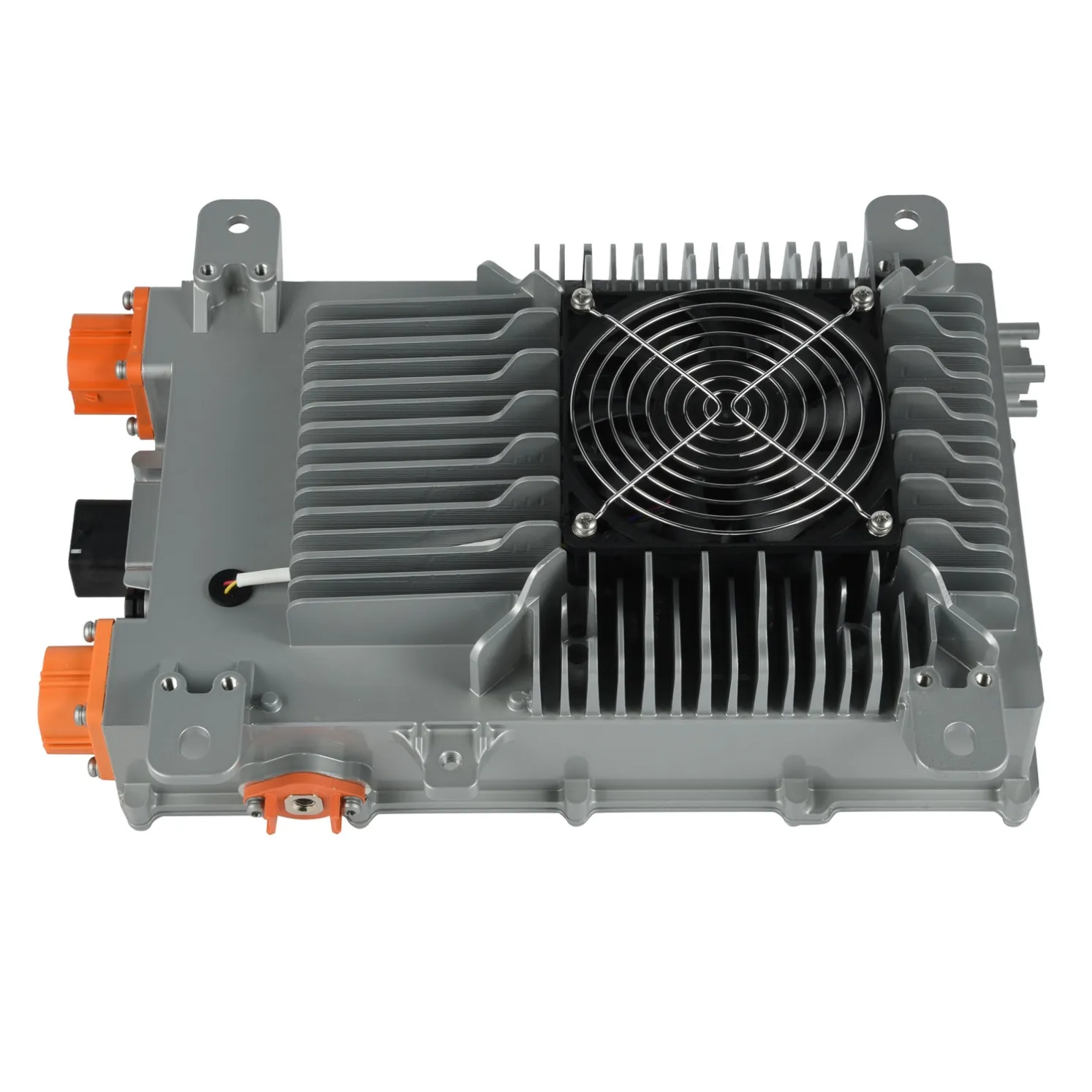
An EV power system has two different jobs that are often confused: charging the traction battery, and powering the low-voltage system. The first is done by the on-board charger (OBC). The second is done by a DC-DC converter. A 2-in-1 integrated power unit does both in one housing.
Choosing between separate units and a 2-in-1 is a packaging, wiring, and sizing decision, not a question of which technology is better in general. This guide explains what each unit does, how they interact, and when integration makes sense for a commercial EV.
- An OBC charges the traction battery from AC. A DC-DC converter powers the 12 V system from the traction battery. They do different jobs.
- A separate DC-DC gives you independent sizing. A 2-in-1 saves space, wiring, and high-voltage connections.
- Size the OBC side and the DC-DC side separately first, then decide whether one housing can meet both.
- A 2-in-1 is a poor fit if one side is oversized and the other is undersized for your vehicle.
- Check cooling, CAN, and fault behaviour for both functions, not just for the OBC.
What Each Unit Does
On-Board Charger (OBC)
The OBC converts AC from the grid into DC to charge the traction battery. Echelon OBCs in this guide range from 1.5 kW to 6.6 kW, for 48 V, 72 V, 96 V, and 320 V platforms. The OBC follows a CC-CV charge profile under BMS control, communicates over CAN, and is rated IP67 with forced-air cooling in the confirmed range.
The OBC only runs when the vehicle is charging from AC. It does not power the 12 V loads while driving, unless the system is designed that way and the DC-DC side is active.
DC-DC Converter
The DC-DC converter takes high voltage from the traction battery and steps it down to low voltage, typically 12 V, for lights, controllers, pumps, fans, and accessories. It runs while the vehicle is driving, and often while charging as well.
Echelon's standalone example is the 10 kW DC-DC Charging Module for 96 V platforms, with 250-350 V DC input and 70-150 V DC output. That is a high-power DC-DC for a specific use: enabling a low-voltage EV to connect to a high-voltage DC charging station. Most vehicle low-voltage loads need far less power, which is why 2-in-1 DC-DC outputs are typically 500 W to 3 kW.
2-in-1 Integrated Power Unit
A 2-in-1 combines the OBC and the DC-DC converter in one housing, sharing the high-voltage input, cooling, and often the control board. Echelon offers:
- 1.5 kW OBC + 500 W DC-DC, 48 V / 72 V
- 2 kW OBC + 1 kW DC-DC, 72 V / 96 V
- 3.3 kW OBC + 1 kW DC-DC, 72 V / 96 V / 320 V
- 3.3 kW OBC + 1.5 kW DC-DC, 72 V / 96 V / 320 V
- 6.6 kW OBC + 1.5 kW DC-DC, 96 V / 320 V
- 6.6 kW Bidirectional OBC + 3 kW DC-DC, liquid cooled
In the 6.6 kW 2-in-1, the DC-DC output is 9-16 Vdc, 110 A rated, 132 A peak, 1,500 W rated, at ≥94% efficiency. The OBC side in the same unit is 6,600 W at 220 Vac, 3,300 W at 110 Vac, at ≥93% efficiency.
Comparison Table
| OBC only | DC-DC only | 2-in-1 OBC + DC-DC | |
|---|---|---|---|
| Main job | Charge traction battery from AC | Power 12 V system from traction battery | Both, in one housing |
| Runs when | Plugged into AC | Driving, and often while charging | Both modes, depending on design |
| Typical power | 1.5-6.6 kW in the Echelon range | 500 W-10 kW, depending on use | OBC 1.5-6.6 kW + DC-DC 500 W-3 kW |
| Sizing freedom | Independent | Independent | Linked — both must fit one product |
| Wiring | Separate HV input, separate LV output | Separate HV input, separate LV output | Shared HV input, fewer HV connections |
| Space and weight | Two housings, two mounts | Two housings, two mounts | One housing, one mount, usually lighter overall |
| Cooling | Forced air in the Echelon range; liquid for bidirectional | Depends on power and model — confirm | Shared cooling; check both sides at full load |
| Failure mode | OBC fault stops AC charging only | DC-DC fault stops 12 V supply | One housing fault can affect both — check isolation and diagnostics |
| Best fit | When DC-DC is already solved, or needs very different power | When OBC is already solved, or DC-DC is high-power / special | When both powers match a standard combination and space is tight |
How to Size Each Side
Size the OBC side
Use the charging-time formula from the OBC selection guide:
Charging time = Battery energy (kWh) ÷ (OBC power × efficiency)
For a 40 kWh pack, 3.3 kW takes about 13.0 hours and 6.6 kW about 6.5 hours, before taper. Size for daily energy and the real charging window, not for a full 0-100% charge you rarely need. Check the output voltage range, the power at 110 Vac vs 220 Vac, and the CC-CV control with the BMS.
Size the DC-DC side
List every 12 V load, its continuous current, and its peak current, then add them up. Include lights, VCU, BMS, displays, pumps, fans, wipers, and any auxiliary equipment. Do not guess the total — a 500 W DC-DC delivers about 35-40 A at 13-14 V, a 1 kW unit about 70 A, a 1.5 kW unit about 110 A, and a 3 kW unit about 220 A, before losses and derating.
Check the DC-DC output voltage range. The 6.6 kW 2-in-1 output is 9-16 Vdc, which covers normal 12 V system voltages, but confirm the range covers your lowest and highest system voltages, including cold cranking and load dumps. Check peak vs continuous ratings: a 132 A peak rating does not mean the unit can deliver 132 A continuously.
If the DC-DC must also support DC fast charging, as in the 10 kW module example, that is a separate requirement from powering 12 V loads. Do not size a vehicle DC-DC on the basis of a charging-module specification, or vice versa.
When a 2-in-1 Makes Sense
A 2-in-1 makes sense when all three conditions are true:
- Both powers match a standard combination. For example, a 96 V cargo vehicle that needs 6.6 kW of AC charging and about 1,500 W of 12 V power fits the 6.6 kW + 1.5 kW unit well. A 72 V light EV that needs 1.5 kW charging and 500 W of 12 V power fits the 1.5 kW + 500 W unit.
- Space and wiring are tight. One housing, one mount, one high-voltage input, and one cooling path save installation space and simplify the harness. This matters most in UTVs, ATVs, agricultural EVs, and compact utility vehicles.
- The thermal design works at full load on both sides. The OBC and DC-DC share cooling. Confirm the unit can deliver full OBC power and full DC-DC power at the same time, at the highest expected ambient temperature, or confirm the derating that applies when both run together.
When these conditions hold, the 2-in-1 also reduces the number of suppliers, part numbers, and CAN nodes to integrate, which can shorten development time.
When Separate Units Are Better
Separate units are better when:
- The powers do not match. You need 6.6 kW of charging but only 500 W of DC-DC, or 3.3 kW of charging but 3 kW of DC-DC. No standard 2-in-1 fits, and forcing a fit wastes cost or leaves a shortfall.
- One side is special. The DC-DC needs a different input voltage, a different output voltage, liquid cooling while the OBC is air cooled, or a special function such as the 10 kW DC-DC charging module. Separate units let you optimise each side.
- Service and redundancy matter more than packaging. A separate DC-DC can be replaced without removing the OBC, and vice versa. A fault in one does not necessarily take the other offline, depending on the system design.
- The vehicle platform will change. If a future variant needs a larger OBC but the same DC-DC, or vice versa, separate units let you change one side without re-qualifying the other.
In these cases, the extra housing and wiring are a fair price for flexibility.
Integration Questions to Ask
Whether you choose separate or integrated, ask these questions before design freeze:
- CAN: Does each function have its own CAN messages, fault codes, and status? Can you diagnose the OBC and the DC-DC separately?
- Wake-up and sleep: How does the DC-DC wake when the vehicle is turned on, and how does the OBC wake when AC is plugged in? What is the standby current for each?
- Protection and isolation: Are the OBC and DC-DC outputs isolated? What happens if one side faults — does the other continue, shut down, or require a reset?
- Cooling at combined load: What is the continuous rating when both sides run at full power at +55°C? What is the derating curve?
- Connectors and mounting: How many high-voltage and low-voltage connectors are there in total? What are the part numbers, and what is the mounting footprint and weight?
- Customisation: Can voltage, connector, CAN protocol, or mounting be customised? Confirm what is standard and what requires engineering review — do not assume customisation is free or fast.
Selection Checklist
- ☐ OBC power is calculated from daily energy and charging window.
- ☐ DC-DC power is calculated from a real 12 V load list, continuous and peak.
- ☐ Both output voltage ranges cover the vehicle system.
- ☐ The 2-in-1 combinations are compared against the two independent requirements.
- ☐ Cooling, mounting, weight, and wiring are compared for separate vs integrated.
- ☐ CAN, diagnostics, wake-up, and fault behaviour are documented for both functions.
- ☐ The full datasheet for the specific model — not just the family summary — has been requested.
Related reading: OBC + DC-DC Integration: When Does a 2-in-1 Make Sense? · How to Choose an On-Board Charger (OBC) for Commercial EVs · Understanding OBC+DC-DC+PDU Integration. When Does an EV OEM Need a 3-in-1 Power System?
FAQ
Do I always need a DC-DC converter if I have an OBC?
Yes, in almost every EV. The OBC charges the traction battery. The DC-DC powers the 12 V system. They are different functions, and a vehicle without a DC-DC cannot run its lights, controllers, and accessories from the traction battery.
Can a 2-in-1 charge the battery and power the 12 V system at the same time?
It depends on the design. Some 2-in-1 units can run both sides together; others prioritise one side. Confirm this in the datasheet — “2-in-1” does not guarantee simultaneous full power on both sides.
Is a 2-in-1 less reliable than two separate units?
Not necessarily. Integration can reduce connectors and wiring, which are common failure points. But a single housing also means a fault in one function can affect the other. Ask how faults are isolated.
What if I need more DC-DC power later?
With a separate DC-DC, you can usually upsize that unit alone. With a 2-in-1, you may need to change the whole unit, which can affect OBC sizing, mounting, and cooling.
Which Echelon 2-in-1 should I start with?
Start from your two numbers — OBC power and DC-DC power — not from the product name. Match them to a combination in the guide, then confirm voltage, cooling, and CAN for that model.
Related Echelon Products
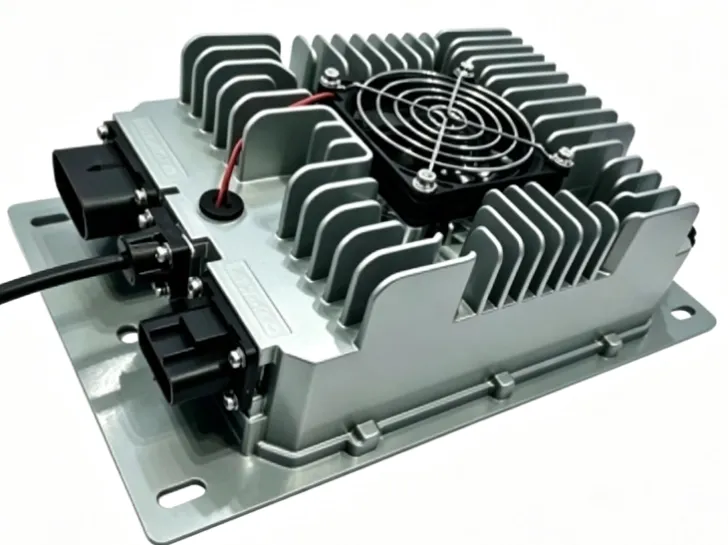
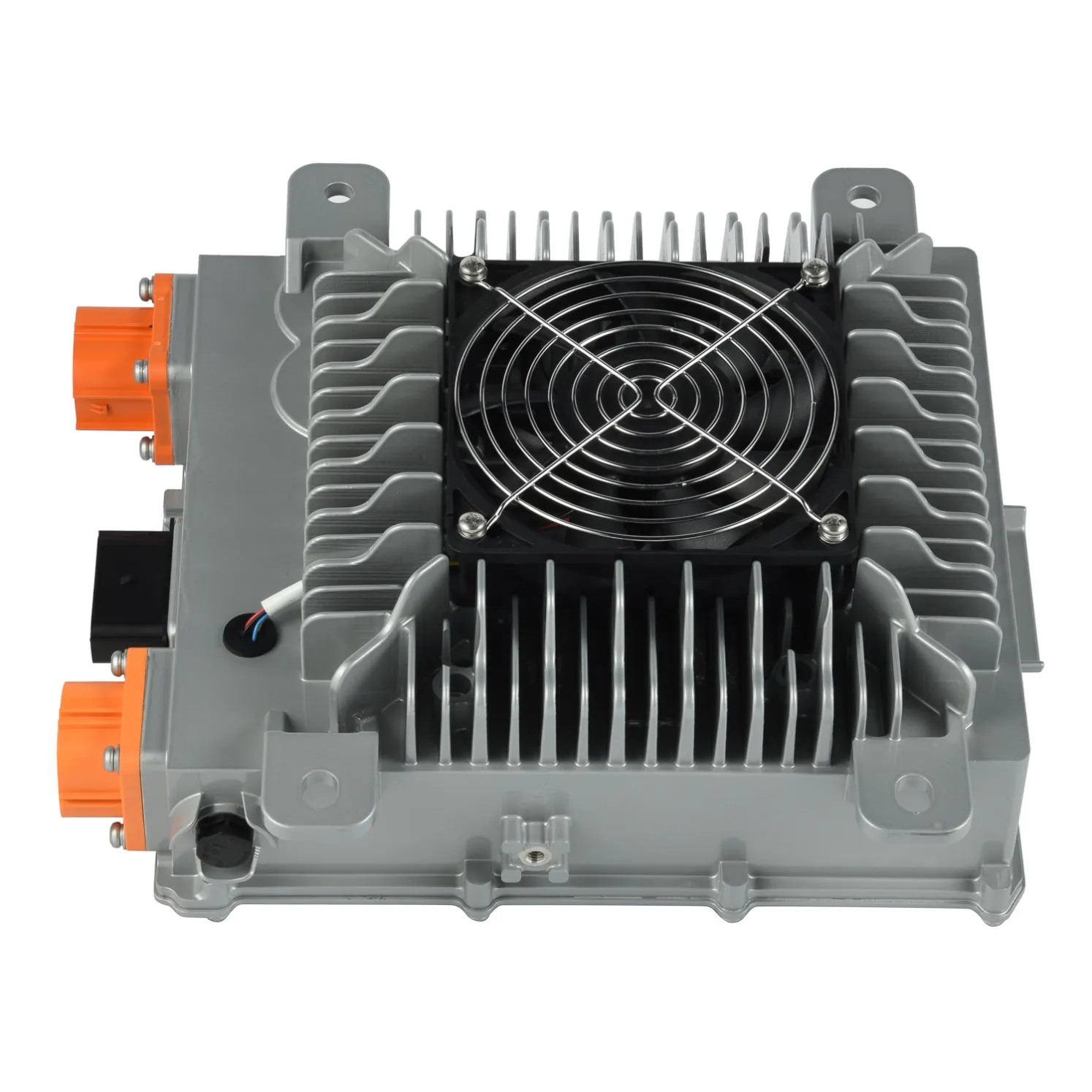
See the full range on the products page.



Next Step
Write down your OBC power and your DC-DC power as two separate numbers, then compare them to the 2-in-1 combinations above. If they match, request a datasheet and RFQ for that 2-in-1. If they do not, request separate OBC and DC-DC datasheets and compare the total system cost, weight, and wiring.
To start, share your vehicle and battery requirements through our contact page, and see how a custom programme is scoped on our OEM/ODM page. Before requesting a quotation, the OBC RFQ checklist lists the inputs that let Echelon quote accurately in one pass.
About Echelon Charger
Echelon Energy Technology specializes in onboard chargers, DC/DC converters, and integrated EV power solutions for commercial and specialty electric vehicles.
For technical discussions, product selection, or OEM/ODM cooperation:
Email: nancy@tici-energy.com
WhatsApp: +86 18114665311