
Should You Specify a Standard Onboard Charger or a Custom Power Unit?
Standard onboard charger or custom power unit? Decide on voltage fit, communication, mounting, environment, and volume — before development cost enters the discussion.
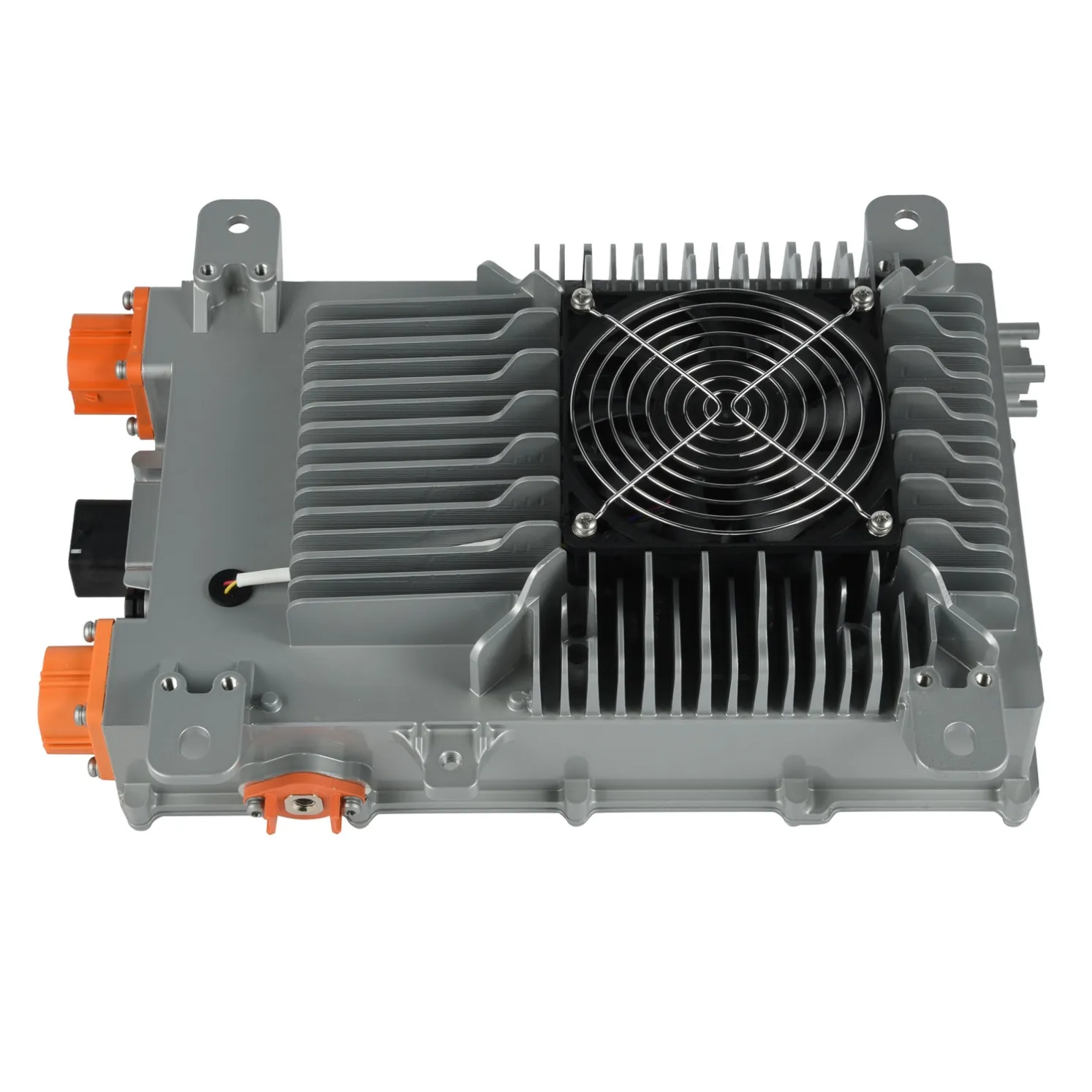
Every OEM programme reaches the same fork: specify a standard onboard charger that already exists, or develop a custom power unit for the vehicle. The wrong choice costs time in both directions — a standard unit forced into a vehicle it does not fit, or a custom programme launched for requirements a standard unit already covers.
This guide sets out how to decide on technical fit: what "standard" actually covers, which vehicle requirements a standard unit already meets, when a standard unit stops fitting, and how to test fit before committing to custom development. It covers the technical decision only; development cost, tooling, minimum quantities, and payment terms are commercial questions to settle separately once the technical direction is clear.
What Does "Standard" Actually Mean for an Onboard Charger?
A standard onboard charger is a released, produced unit with fixed hardware, published specifications, and a defined range of configuration options. "Standard" does not mean "take it or leave it": within a standard unit, charging parameters are commonly configurable for the vehicle and battery it serves.
On the 1.5kW OBC + 500W DC-DC 2-in-1, for example, charging voltage, charging current, and CAN communication can be configured according to vehicle requirements, and connector configuration, cable configuration, software parameters, and vehicle integration requirements can be addressed for OEM projects. That configuration range is what makes a standard unit fit many different vehicles without new hardware.
A custom power unit, by contrast, changes the hardware: a different power level, a different form factor, a different interface, or a different combination of functions. Custom development is justified when the requirement falls outside what configuration of a standard unit can reach — not when the requirement merely needs the standard unit set up correctly.
Which Vehicle Requirements Can a Standard Unit Already Cover?
Most light and medium commercial EV programmes fit inside the standard range. The table below shows what the standard Echelon range already covers, so the fit question can be answered from published specifications rather than assumptions.
| Requirement | Standard range coverage |
|---|---|
| Battery platforms | 48V, 72V, 96V, and 320V versions across the range |
| Charging power | 1.5kW, 2kW, 3.3kW, and 6.6kW onboard chargers |
| DC-DC output | 500W, 1kW, and 1.5kW integrated DC-DC converters |
| AC input | 90–264Vac wide input range |
| Communication | CAN bus, with charging parameters configurable per project |
| Protection | Over-voltage, under-voltage, over-current, short-circuit, over-temperature |
| Sealing and cooling | IP67 on the integrated 2-in-1 units; air cooling across the range |
| Configuration | Charging voltage, current, CAN, connectors, cables, software parameters |
If every vehicle requirement falls inside one row of this table, a standard unit with project configuration is the faster route. The 6.6kW OBC + 1.5kW DC-DC 2-in-1 and the 3.3kW OBC + 1.5kW DC-DC 2-in-1 cover the higher-power end; the 1.5kW 2-in-1 covers compact platforms. For the architecture choice between separate units and integration, see OBC vs DC-DC Converter vs 2-in-1 Integrated Power Unit.
When Does a Standard Unit Stop Fitting?
A standard unit stops fitting when a requirement falls outside both its published specifications and its configuration range. The common cases are specific, and each should be named explicitly before custom development is considered:
First, a power level or voltage platform the range does not cover. Second, a mechanical envelope the standard housing cannot meet — a mounting space, a connector position, or a cooling arrangement the vehicle fixes and the unit cannot match. Third, an interface the standard unit does not provide: a signal, a connector type, or a communication behavior outside the standard interface. The 3.3kW 2-in-1 signal interface, for example, includes CANH/CANL, CC/CP charging signals, HVIL, wake-up input, charging socket temperature sensor inputs, and electronic lock control — a broad interface, but a vehicle that needs signals beyond it needs a different answer.
Fourth, an environmental requirement beyond the standard ratings: sealing, temperature, vibration, or salt spray conditions the standard unit is not rated for. And fifth, a functional combination the range does not offer as a standard unit — for example, charging plus power distribution in one enclosure, which is a different product decision from charger selection alone.
Each of these is a genuine trigger for custom development. A requirement that merely needs configuration — a different charging voltage, a different current limit, a different CAN setup — is not.
How Should OEMs Test Fit Before Committing to Custom Development?
Fit should be tested, not assumed, in either direction. Before concluding that a standard unit does not fit, run the requirement list against the published specifications and the configuration options, with the supplier confirming each item in writing. Before concluding that it does fit, test the standard unit against the real vehicle conditions.
A practical fit test has three stages. First, a paper review: battery voltage range and chemistry, charging power and time requirements, auxiliary load list, interface signals, mounting envelope, and environmental requirements, each checked against the candidate unit's specifications. Second, a bench test with the actual battery and the actual AC supply, confirming charging behavior, communication, and protection responses. Third, a vehicle trial in real operating conditions, confirming mounting, cooling, vibration, and service access.
If the paper review finds a requirement outside the standard range, that requirement — and only that requirement — defines the custom scope. Narrowing custom development to the gap, rather than developing a whole new unit, keeps the programme faster and the risk lower. For the general selection method, see How to Choose an On-Board Charger (OBC) for Commercial EVs.
What Should OEMs Confirm in a Standard-vs-Custom Review?
| Area | Information to confirm | Why it matters |
|---|---|---|
| Battery | Voltage range, chemistry, capacity, charging requirements | Selects the candidate unit and its configuration |
| Charging power | Required power, charging time, AC supply conditions | Tests whether a standard power level fits |
| Auxiliary loads | Full low-voltage load list and peak draws | Tests whether the integrated DC-DC output fits |
| Interface | Signals, connectors, communication behavior required | Finds interface gaps a standard unit cannot cover |
| Mechanical | Mounting envelope, connector positions, cooling airflow | Finds packaging gaps early |
| Environment | Sealing, temperature, vibration, salt spray requirements | Tests the standard ratings against field conditions |
| Volumes | Expected quantities over the programme life | Informs the commercial discussion once fit is decided |
Related Echelon Products
6.6kW OBC + 1.5kW DC-DC 2-in-1 — 6.6kW onboard charger with 1.5kW DC-DC converter for 96V and 320V platforms, with CAN communication and IP67 protection.
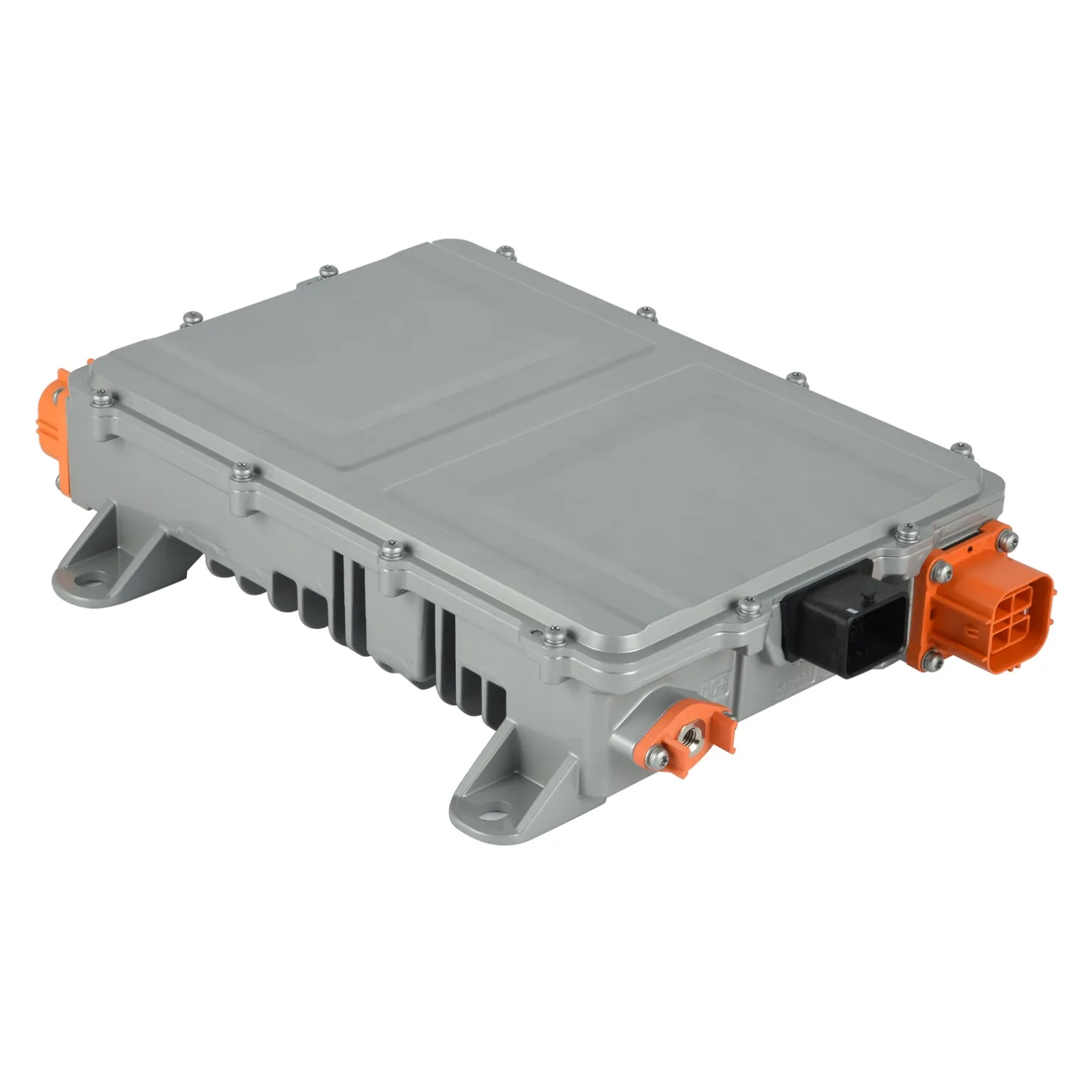
3.3kW OBC + 1.5kW DC-DC 2-in-1 — 3.3kW onboard charger with 1.5kW DC-DC converter for 96V and 320V platforms, with a broad signal interface for vehicle integration.
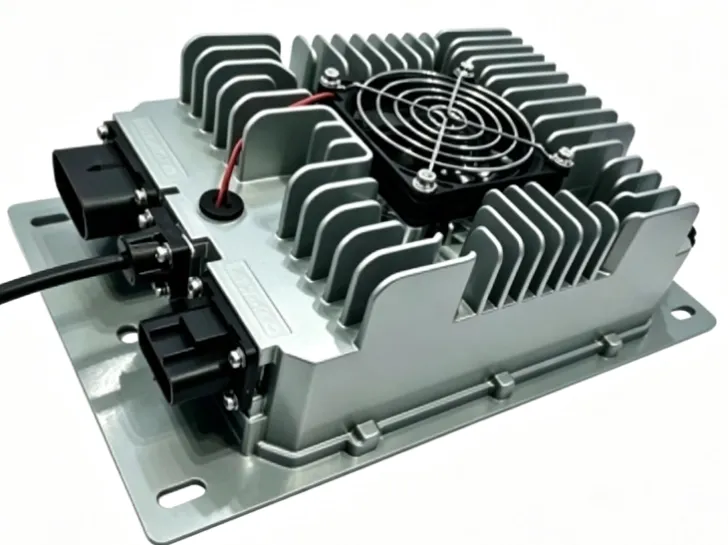
1.5kW OBC + 500W DC-DC 2-in-1 — Integrated 1.5kW onboard charger and 500W DC-DC converter for 48V and 72V platforms, with configurable charging parameters for OEM projects.
Frequently Asked Questions
Can a standard onboard charger be configured for a specific battery?
Yes. Charging voltage, charging current, and CAN communication can be configured for OEM projects, along with connector and cable configuration and software parameters. Provide the battery voltage range and charging requirements so the configuration matches the battery.
When is custom development really necessary?
When a requirement falls outside both the published specifications and the configuration range of every standard unit: an uncovered power level or voltage, a mechanical envelope the standard housing cannot meet, an interface the standard unit does not provide, or environmental requirements beyond the standard ratings.
Does choosing a standard unit rule out later customization?
No. Programmes commonly start with a configured standard unit for prototypes and early production, then narrow any later custom work to the specific gap the standard unit cannot cover. The fit test defines that gap.
What should an OEM provide before requesting a standard-vs-custom review?
Provide the battery voltage range and chemistry, required charging power and time, the auxiliary load list, interface and connector requirements, the mounting envelope, environmental requirements, and expected volumes.
Next Step
Send the Echelon team the battery requirements, charging power and time targets, auxiliary load list, interface needs, and mounting envelope, and ask whether a standard unit with project configuration fits — or what the specific custom gap is.
Contact Echelon directly: Email nancy@tici-energy.com · WhatsApp +86 18114665311.
Use the contact form on the contact page to start the discussion, and see how a custom programme is scoped on the OEM/ODM page.