
What Heavy-Duty Utility Vehicles Demand from a 6.6kW Charging System
Heavy-duty UTVs need more than a 6.6kW label: duty cycle, opportunity charging, auxiliary loads, sealing, and vibration decide whether the charging system survives the job.
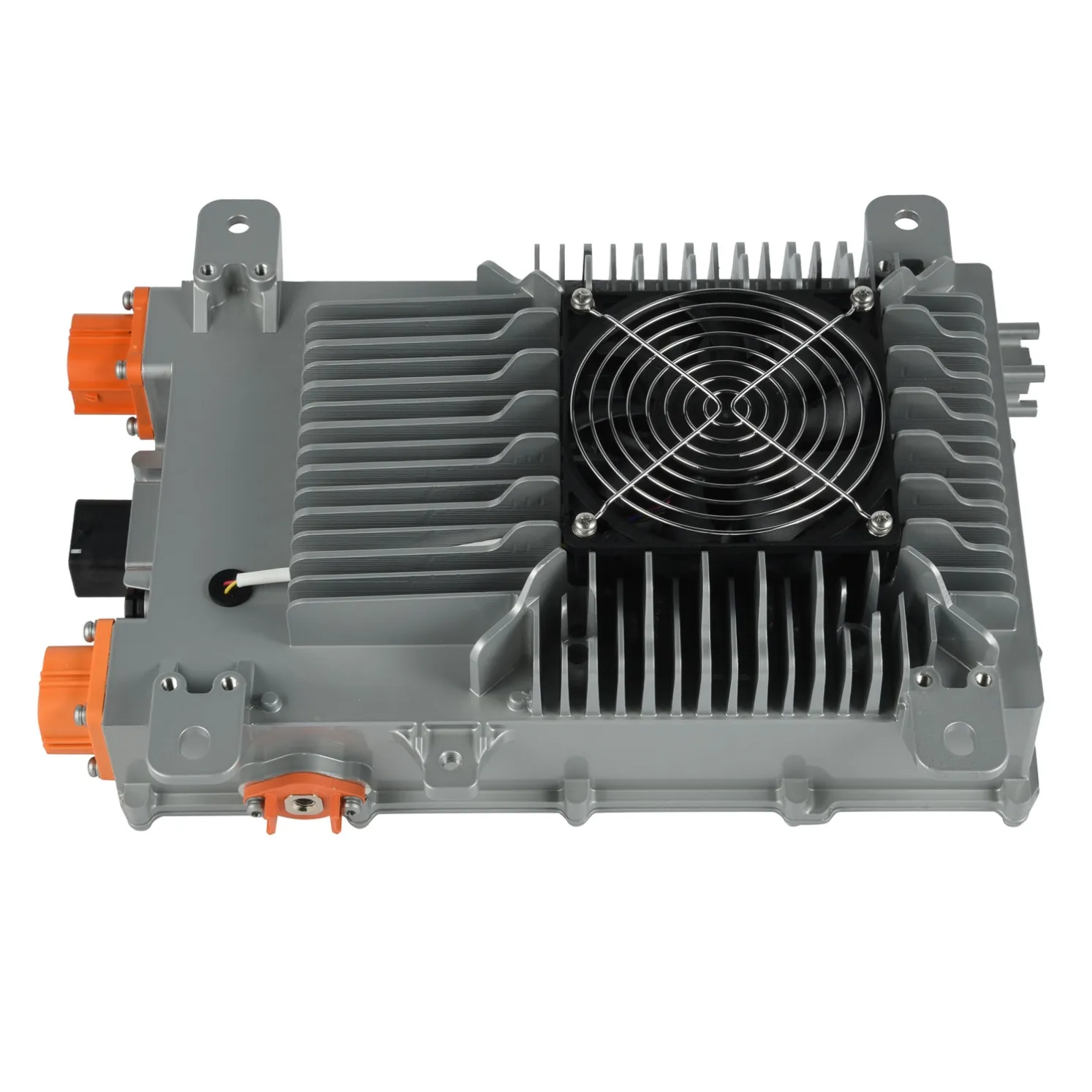
A heavy-duty utility vehicle does not charge the way a passenger car does. It works in shifts, charges in windows between jobs, carries auxiliary loads all day, and operates where dust, vibration, and temperature extremes are normal. A 6.6kW charging system for this kind of vehicle has to survive the duty cycle, not just deliver the headline power.
This guide explains what heavy-duty utility vehicles demand from a 6.6kW charging system: how duty cycle and opportunity charging change the requirement, what the DC-DC converter must cover, and which sealing, vibration, and temperature ratings decide service life. It assumes the 6.6kW power class is already decided; for choosing between power classes, see our guide 3.3kW vs 6.6kW vs 11kW OBC: Which One Do You Need?
Why Does Duty Cycle Matter More Than Peak Power for a Work UTV?
A work UTV earns its keep in hours of operation, not in peak charging speed. The charging system must restore enough energy inside the windows the job allows — overnight, between shifts, or during a mid-day break — and it must do that every working day, for years.
Charging time is set by usable battery energy divided by effective power, not by the OBC label alone. A 6.6kW onboard charger operating at 93% efficiency delivers about 6.1kW to the battery. A 20kWh usable pack therefore needs roughly 3.3 hours from empty to full before the constant-voltage taper, which adds time near the top of the charge. If the available window is shorter than that, the vehicle starts the next shift with less than a full pack — and the shortfall compounds day after day.
The AC supply matters as much as the charger. The Echelon 6.6kW OBC delivers 6,600W at 220Vac but 3,300W at 110Vac. A depot or site that only provides 110Vac halves the effective charging power, whatever the charger label says. Confirm the supply voltage at the real charging location before promising a charging window.
How Does Opportunity Charging Between Shifts Change the Requirement?
Many heavy-duty vehicles do not get a full overnight charge. They get partial charges: thirty minutes at lunch, an hour between shifts, a top-up while the crew changes. Opportunity charging makes the middle of the charge curve more important than the top, because the vehicle rarely sits long enough to finish.
Two consequences follow. First, the charging system should deliver strong power through the constant-current phase, where most opportunity charging happens, rather than being judged on a 0–100% time the vehicle never uses. Second, partial charging must be safe to repeat: the charger, battery, and vehicle controller must handle frequent connect and disconnect cycles without faulting or degrading the charge logic.
As an illustration, a 30-minute opportunity charge at about 6.1kW effective power adds roughly 3kWh — enough to extend a shift, not to refill a pack. OEMs should size the charging plan around the energy the real windows restore, not around the nominal full-charge time.
What Auxiliary Loads Must the DC-DC Converter Cover?
A heavy-duty UTV runs auxiliary loads throughout the working day: the vehicle controller, lighting, displays, communications, and work equipment. Those loads draw from the low-voltage system, which the DC-DC converter supplies from the traction battery.
The 6.6kW OBC + 1.5kW DC-DC 2-in-1 provides a 1.5kW DC-DC converter with 9–16V output at 110A rated current and 132A peak, at 94% efficiency or better. Whether that is enough depends on the vehicle's real load list: simultaneous loads, peak draws, and how long peaks last. A load budget built from the actual equipment list — not a guess — decides whether the integrated converter covers the job or a separate, larger converter is needed.
Integration also matters for packaging. Combining charging and DC-DC conversion in one enclosure removes a separate unit, its wiring, and its mounting position — space a compact utility vehicle rarely has to spare. For the integration trade-offs in general, see OBC + DC-DC Integration: When Does a 2-in-1 Make Sense?
Why Do Sealing, Vibration, and Temperature Ratings Decide Service Life?
Heavy-duty utility vehicles work outdoors, on unpaved surfaces, in rain, dust, and temperature extremes. The charging system lives in that environment for its whole service life. Ratings that look like paperwork on a datasheet decide whether the unit survives.
The 6.6kW 2-in-1 carries IP67 protection, an operating temperature range of −40°C to +55°C, automotive-standard vibration resistance, and 48-hour salt spray resistance, with forced-air cooling. Each rating answers a specific field condition: IP67 against water ingress during washing and wet operation, the temperature range against cold starts and hot working days, vibration resistance against rough terrain, and salt spray resistance against corrosive environments.
Cooling deserves the same attention. Forced-air cooling needs airflow and a mounting position that does not trap heat or ingest debris. For the cooling trade-offs, see Air Cooling vs Liquid Cooling for OBC. And for what IP ratings, temperature, vibration, and salt spray actually mean, see IP67, −40°C, and Automotive Validation Explained.
What Should OEMs Confirm Before Selecting a 6.6kW System for a Heavy-Duty Platform?
| Area | Information to confirm | Why it matters |
|---|---|---|
| Duty cycle | Daily operating hours and real charging windows | Sets the energy the system must restore per window |
| AC supply | Voltage at the actual charging locations (220V vs 110V) | Halves or doubles effective charging power |
| Battery platform | 96V or 320V platform, voltage range, capacity | Selects the charger version and output current |
| Auxiliary loads | Full 12V load list, simultaneous and peak draws | Decides whether the integrated DC-DC converter covers the job |
| Environment | Sealing, vibration, temperature, salt spray requirements | Decides service life in field conditions |
| Communication | CAN interface and vehicle integration requirements | Enables coordinated charging control |
| Mounting | Space, airflow, and service access on the vehicle | Protects cooling and maintainability |
Related Echelon Products
6.6kW OBC + 1.5kW DC-DC 2-in-1 — 6.6kW onboard charger with 1.5kW DC-DC converter in one integrated module for 96V and 320V platforms, with CAN communication and IP67 protection.
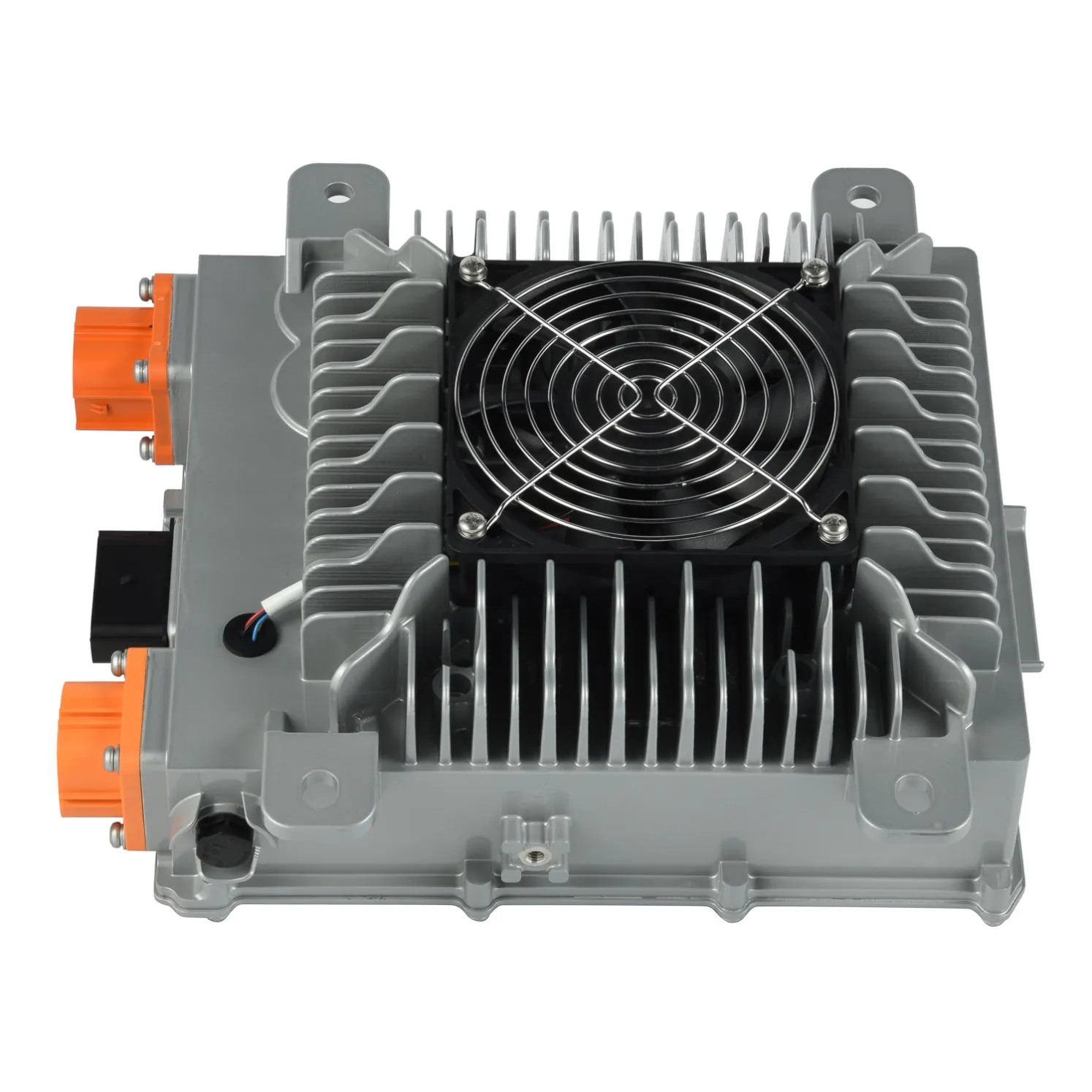
6.6kW OBC — Standalone 6.6kW onboard charger for 96V and 320V battery platforms, with CAN bus communication, air cooling, and multiple protection functions.
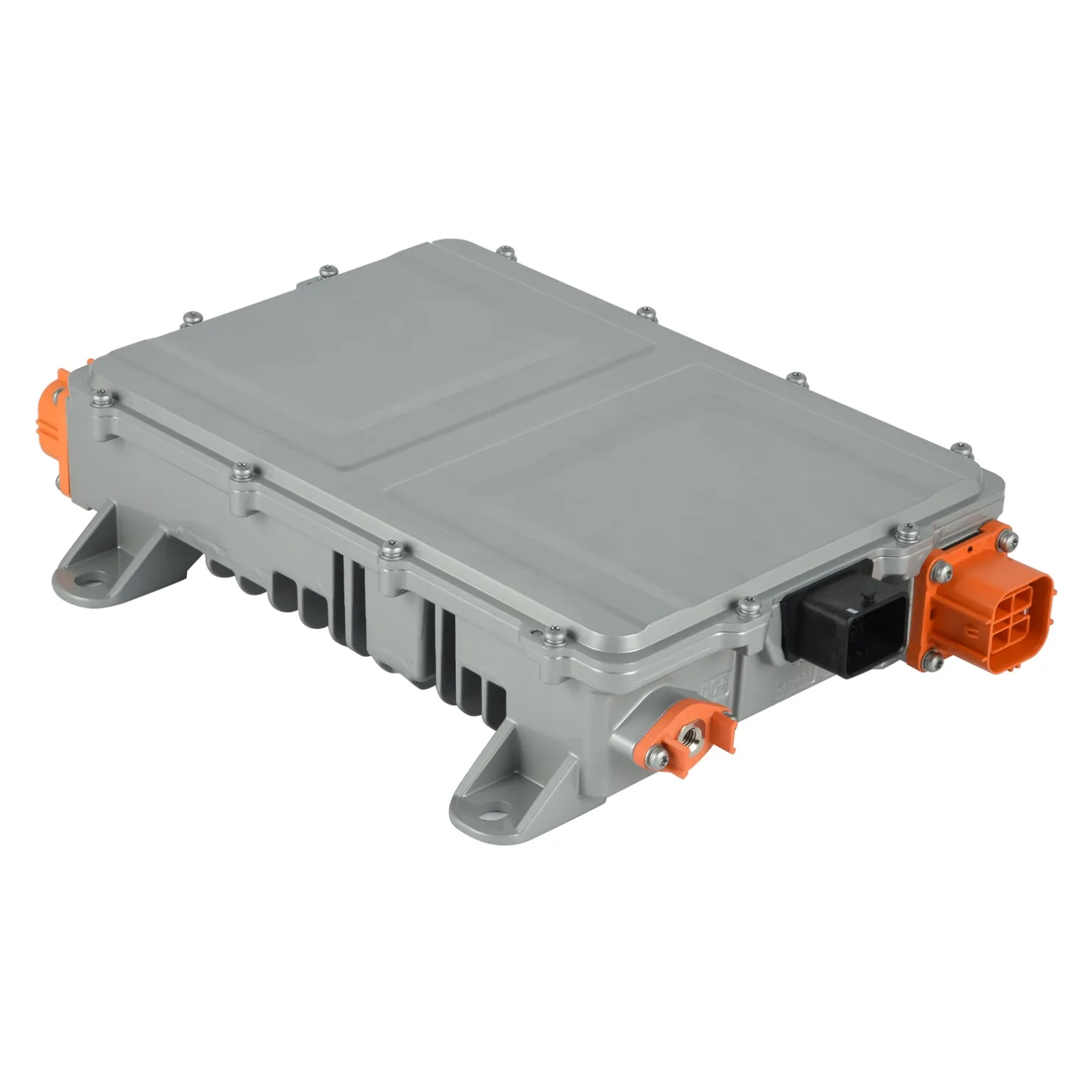
3.3kW OBC + 1.5kW DC-DC 2-in-1 — 3.3kW onboard charger with 1.5kW DC-DC converter for 96V and 320V platforms, for lighter-duty vehicles that do not need 6.6kW charging.
Frequently Asked Questions
Is 6.6kW enough for a heavy-duty UTV?
It depends on the battery size and the charging windows, not on the vehicle class alone. A 6.6kW charger at 220Vac restores about 6.1kW to the battery after efficiency losses. Compare that against the energy each working shift consumes and the time available between shifts.
Does a 110V supply change the charging plan?
Yes. At 110Vac the 6.6kW charger delivers 3,300W — half its 220Vac output. Any charging plan that assumes 220Vac will miss its window on a 110V supply. Confirm the voltage at the real charging locations.
Can one unit cover charging and auxiliary power on a work vehicle?
A 2-in-1 unit can, if the DC-DC output covers the real load list. The 6.6kW 2-in-1 provides 1.5kW at 9–16V with 110A rated current. Build the load budget from the actual equipment before deciding.
What ratings matter most for outdoor utility vehicles?
Sealing (IP67), operating temperature range, vibration resistance, and salt spray resistance decide whether the unit survives field conditions. Cooling airflow and mounting position matter as much as the ratings themselves.
What information should an OEM provide before requesting a 6.6kW system review?
Provide the battery platform and capacity, daily duty cycle and charging windows, AC supply voltage at charging locations, the auxiliary load list, environmental requirements, and CAN integration needs.
Next Step
Send the Echelon team the battery platform, duty cycle, charging windows, AC supply conditions, and auxiliary load list, and ask which 6.6kW configuration fits the vehicle's working pattern.
Contact Echelon directly: Email nancy@tici-energy.com · WhatsApp +86 18114665311.
Use the contact form on the contact page to start the discussion, and see how a custom programme is scoped on the OEM/ODM page.