
Tier 1 Onboard Charger Supplier: How to Tell a Direct OEM Partner from a Build-to-Print Parts Vendor
A Tier 1 onboard charger supplier contracts directly with the OEM, carries design responsibility, and delivers a validated system. Here is how to tell one from a build-to-print Tier 2 vendor.
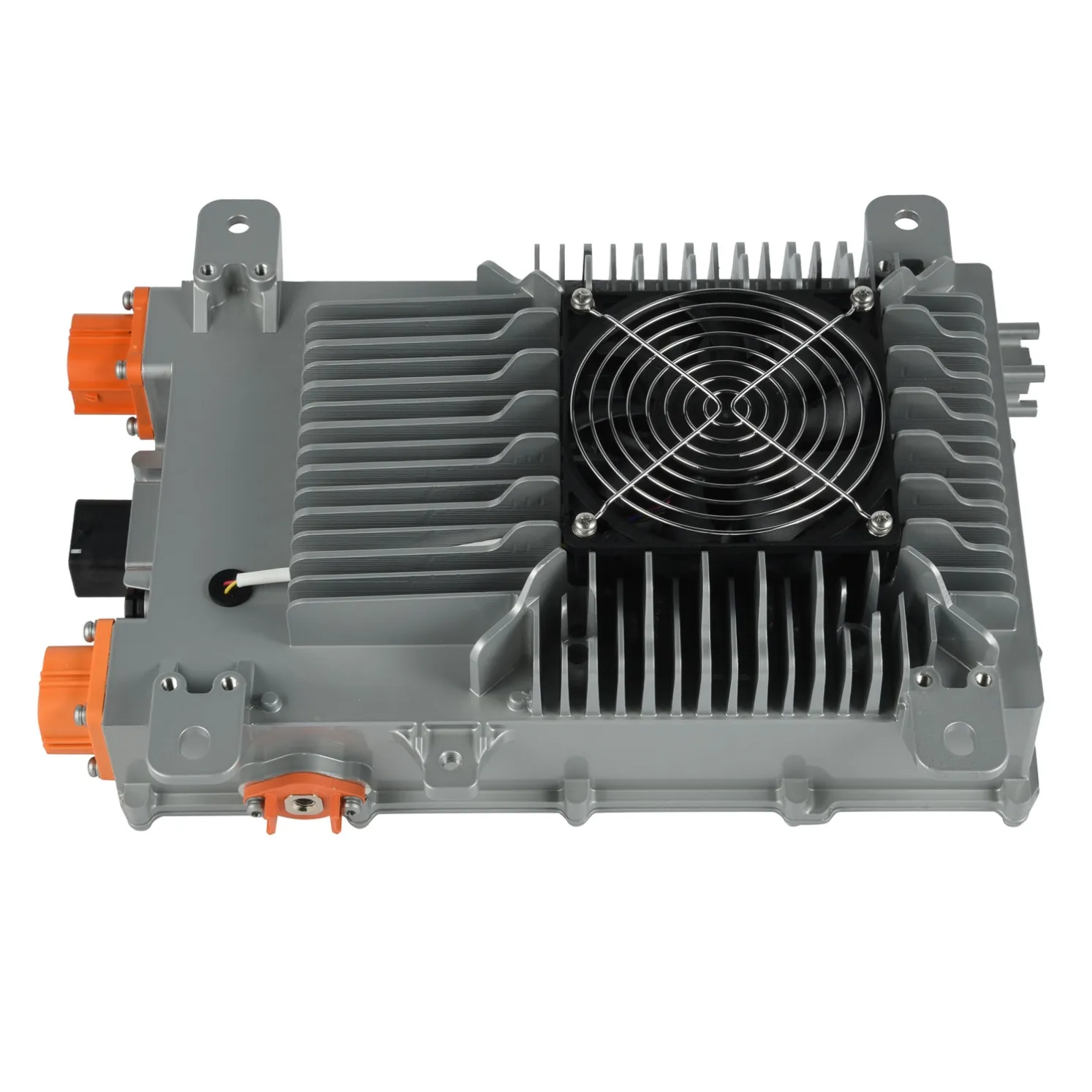
A Tier 1 onboard charger supplier contracts directly with the vehicle maker, carries design responsibility for the charging system, and delivers a finished, validated unit to the OEM's plant. A Tier 2 vendor supplies parts to that Tier 1 supplier, usually build-to-print, with little or no design responsibility and no contract with the OEM. This guide applies the Tier 1 vs Tier 2 distinction to the onboard charger — and gives an OEM buyer five questions that separate a direct Tier 1 onboard charger supplier from a build-to-print parts vendor, before the RFQ goes out.
The tier labels describe a contract for a given part, not a permanent badge on a company. The same supplier can be Tier 1 for one programme and Tier 2 for another: what matters is who holds the OEM's purchase order for that part, who owns its design, and who answers when it fails in the field. For an onboard charger, those three questions have concrete answers — a voltage platform, a CAN protocol, a derating curve, and a validation file — and this guide works through them with Echelon's integrated power units as the worked example. For the general question of whether to specify a standard unit or a custom one, see Should You Specify a Standard Onboard Charger or a Custom Power Unit?. For what to put in the RFQ itself, see OBC RFQ Checklist: What EV Manufacturers Should Provide Before Requesting a Quotation.
Key takeaways:
- A Tier 1 onboard charger supplier holds the OEM's purchase order, carries design responsibility, and delivers a finished, validated system to the OEM's plant.
- A Tier 2 vendor supplies components to a Tier 1 supplier, usually build-to-print, with little or no design responsibility and no OEM contract.
- For an onboard charger, design responsibility means the voltage platform, the CAN protocol and DBC file, the thermal behaviour, and the protection scheme.
- A Tier 1 onboard charger arrives as an integrated system — OBC + DC-DC, or OBC + DC-DC + PDU — in one enclosure, on one CAN node.
- Validation evidence is the proof: test reports, production records, derating thresholds stated in degrees, and the CAN matrix.
- Five questions separate the two: who holds the order, who owns the design, what arrives as one unit, what evidence comes with it, and who answers field failures.
A Tier 1 Onboard Charger Supplier Holds the OEM Contract and Delivers a Finished System
The automotive supply chain is organised in tiers, and the tiers describe who contracts with whom. The usual Tier 1 vs Tier 2 automotive suppliers explainer uses seats, brakes, and cockpit modules as its examples. This guide uses the onboard charger instead. A Tier 1 supplier holds the purchase order from the vehicle maker and delivers a finished system or a major assembly directly to the OEM's plant. In many programmes it also carries design responsibility for the system it supplies, runs product and process validation, submits production part approval, manages delivery schedules into the assembly line, and handles warranty claims linked to its parts. A Tier 2 supplier makes components or sub-assemblies that a Tier 1 incorporates into its product. A Tier 3 supplier provides raw or semi-processed materials to Tier 2 companies.
| Tier | Contracts with | Delivers | Design responsibility |
|---|---|---|---|
| Tier 1 | The vehicle OEM, directly | A finished system or major assembly, delivered to the OEM's plant | Carries design responsibility for the system it supplies |
| Tier 2 | A Tier 1 supplier | Components or sub-assemblies that go into the Tier 1's system | Build-to-print, little or no design responsibility |
| Tier 3 | A Tier 2 supplier | Raw materials or near-raw stock | None |
For an onboard charger, the "system" is the onboard charging system: the charger, the DC-DC converter, the distribution block where one exists, the communication interface, the thermal behaviour, and the protection scheme. A supplier that delivers that whole system to the OEM is Tier 1 for that part. A supplier that delivers only a board, a housing, or a sub-assembly to another supplier is Tier 2 for that part, whatever its brochure says. The label follows the part and the contract — not the size of the company, and not the country it manufactures in.
Ask for this: the purchase-order chain. Who holds the OEM's order for the charging system, and who delivers the finished unit to the plant? If the answer runs through another supplier, the vendor in front of you is Tier 2 for that part.
Design Responsibility Is What Makes a Tier 1 Onboard Charger Supplier
Design responsibility is the line between the tiers, and for an onboard charger it is not abstract. It is five concrete decisions the supplier owns.
| Decision the supplier owns | What it means for an onboard charger | Echelon example (verified) |
|---|---|---|
| Battery voltage platform | Which battery ranges the unit covers, with insulation, switching, and DC-DC design for each platform — a voltage step is a new unit, not a re-rating | 2-in-1 and 3-in-1 units cover 96V (60–128Vdc) and 320V (195–450Vdc) platforms; the 1.5kW 2-in-1 covers 48V and 72V |
| CAN protocol and communication | The DBC file and CAN matrix, the signals the vehicle controller expects, enable and wake-up behaviour, fault reporting | CAN bus on all integrated units; charging voltage, charging current, and CAN configurable for OEM projects on the 1.5kW 2-in-1 |
| Thermal behaviour | Derating stated in degrees, not adjectives — at what temperature the unit reduces power, and at what temperature it shuts down | 3.3kW 2-in-1: OBC reduces at 85°C internal and shuts down at 90°C; DC-DC reduces at 90°C and shuts down at 105°C |
| Protection scheme | Which faults the unit handles itself, and how it behaves on each one | 3-in-1: over-voltage, under-voltage, over-current, short-circuit, over-temperature, plus HV reverse-polarity protection |
| Part number per programme | One configuration, one part number, one validation record — so the unit on the vehicle is the unit that was tested | Separate model numbers per platform: OD-CD-6G1F-96Y / -320Y, OD-CC-3D1F-96Y / -320Y, ODP-CE-3D1A-96Y / -320Y |
A build-to-print vendor cannot answer these decisions, because the buyer made them already. The vendor builds to the drawing the buyer supplied, and the design risk stays with the buyer. A Tier 1 supplier takes the decisions — and the risk — and the evidence is the documentation it can hand over: the DBC file, the derating curve with thresholds in degrees, the validation plan. If a supplier can only show a datasheet and a price, it has shown a catalogue, not design responsibility.
Ask for this: the DBC file and CAN matrix for the exact model number, and the derating curve with thresholds stated in degrees. A supplier that owns the design has both on file; a build-to-print vendor has neither to give.
A Tier 1 Onboard Charger Arrives as an Integrated System, Not a Parts List
A Tier 1 onboard charger arrives as one integrated system: OBC and DC-DC converter — and a PDU where the vehicle needs distribution — in one enclosure, with one mounting position, one cooling path, one set of connections to seal and service, and one CAN node the vehicle controller talks to. The supplier owns the integration: the thermal coupling between the charging stage and the DC-DC stage, the fault behaviour of the combined unit, and the single communication interface. A vendor that ships a charger board and a separate DC-DC board leaves that integration to the buyer. That is Tier 2 work, whatever the invoice says.
| Integrated unit | OBC | DC-DC | PDU / integration | Communication and sealing |
|---|---|---|---|---|
| 6.6kW OBC + 1.5kW DC-DC 2-in-1 | 64–128Vdc, 0–60A (96V) / 240–480Vdc, 0–20A (320V); 6.6kW; 93% or better | 9–16V, 110A rated / 132A peak, 1500W; 94% or better | One enclosure, one mounting position, one cooling path | CAN bus; IP67; −40°C to +55°C; forced air |
| 3.3kW OBC + 1.5kW DC-DC 2-in-1 | 64–128Vdc, 0–34A / 195–450Vdc, 0–12A; 3.3kW (1.65kW at 110Vac); 94% or better | 1.5kW / 1800W peak (6 min), 9–16V, 110A / 132A peak; 94% or better | One enclosure, one mounting position, one cooling path | CAN bus; forced air; 6kg or less |
| 3.3kW OBC + 1kW DC-DC + PDU 3-in-1 | 60–128Vdc, 0–34A / 195–450Vdc, 0–12A; 3.3kW at 220Vac (1.65kW at 110Vac); 94% or better | 1kW rated / 1.2kW peak (6 min), 9–16V, 72A rated / 86A peak; 94% or better | PDU feeds PTC heating, air conditioning, and vehicle power systems | CAN bus; full protection set |
| 1.5kW OBC + 500W DC-DC 2-in-1 | 48V and 72V platforms; 1.5kW | 500W | One enclosure, one mounting position, one cooling path | CAN bus; CC/CV; IP67; air cooling; charging voltage, charging current, and CAN configurable for OEM projects |
Integration is also a service question. One unit means one part number to order, one set of connections to seal, one unit to replace in the field, and one supplier to call when it fails. A charging system assembled from three vendors' parts has three part numbers, three warranties, and three suppliers to coordinate when the vehicle stops charging. The Tier 1 supplier removes that coordination from the buyer; the Tier 2 vendor adds to it.
Validation Evidence Is How a Tier 1 Onboard Charger Supplier Proves the Claim
"Tier 1" is a claim any supplier can print. The proof is the validation evidence that comes with the unit — and a Tier 1 supplier has it on file for the exact model number, because it ran the validation itself.
| Evidence to ask for | What it proves | What Echelon can show |
|---|---|---|
| Test reports | The unit was tested, and the results are recorded per unit — not claimed in a brochure | Per-unit test reports and production records |
| Derating curve with thresholds in degrees | Thermal behaviour is designed and measured, not described with adjectives | 3.3kW 2-in-1: OBC reduces at 85°C internal, shuts down at 90°C; DC-DC reduces at 90°C, shuts down at 105°C |
| CAN DBC file and matrix | The communication interface is defined, documented, and configurable for the programme | DBC file and CAN matrix; charging voltage, charging current, and CAN configurable for OEM projects |
| Sealing and temperature ratings | The unit is rated for the vehicle's environment, in numbers | 6.6kW 2-in-1: IP67 sealing, rated from −40°C to +55°C; 1.5kW 2-in-1: IP67 |
| Protection behaviour | Faults are handled inside the unit, with defined behaviour per fault | 3-in-1: over-voltage, under-voltage, over-current, short-circuit, over-temperature, plus HV reverse-polarity protection |
A build-to-print vendor supplies something else instead: a certificate of conformance to the buyer's drawing. It proves the part matches the drawing — not that the design was validated, not that the thermal behaviour was measured, and not that the unit survives the vehicle's environment. The two documents answer different questions, and only one of them is validation evidence.
Ask for this: a test report for the exact model number you would buy, a sample production record, the derating curve, and the DBC file. If the supplier can only produce a datasheet, the validation behind the claim is unverified — and the claim is a brochure line.
Five Questions Separate a Tier 1 Onboard Charger Supplier from a Tier 2 Vendor
Five questions, asked before the RFQ, separate the two. The Tier 1 vs Tier 2 onboard charger supplier question is answered in writing, not in a brochure. Each question has a Tier 1 answer and a Tier 2 answer, and a supplier that cannot answer in writing is a Tier 2 vendor for that part.
| Question | Tier 1 answer | Tier 2 answer |
|---|---|---|
| Who holds the OEM purchase order and delivers to the plant? | The supplier, directly — it holds the OEM's order and delivers the finished unit to the plant. | A Tier 1 supplier above them; the vendor never sees the OEM's order. |
| Who owns the design when the voltage platform or CAN protocol changes? | The supplier re-engineers and re-validates the unit, and issues a new part number. | The buyer re-issues the drawing; the vendor builds to it. |
| Does the unit arrive as one integrated system? | OBC + DC-DC, or OBC + DC-DC + PDU, in one enclosure, on one CAN node, with one mounting position. | A component or sub-assembly that still needs integrating into a system — by the buyer. |
| What validation evidence comes with the unit? | Test reports, production records, derating thresholds in degrees, and the CAN matrix — for the exact model number. | A certificate of conformance to the buyer's drawing. |
| Who answers when the charger fails in the field? | The supplier, under warranty, with field data from its own units. | The buyer traces the failure through the Tier 1 that bought the part. |
Put the five answers in the RFQ package. A supplier that cannot answer question two or question four in writing is a Tier 2 vendor for that part — and the RFQ should price the integration and validation work the buyer will have to do instead. For what else belongs in the RFQ, see OBC RFQ Checklist: What EV Manufacturers Should Provide Before Requesting a Quotation. For whether the programme needs a standard unit or a custom one, see Should You Specify a Standard Onboard Charger or a Custom Power Unit?.
Echelon Supplies Commercial and Specialty EV OEMs as a Tier 1 EV Charger Supplier
Echelon supplies commercial and specialty EV OEMs under direct OEM/ODM contract: standard integrated platforms configured per programme — battery voltage platform, CAN protocol, charging voltage and current, and part number. The units in the table above are the evidence: 2-in-1 and 3-in-1 integrated power units with CAN communication, IP67 sealing, a −40°C to +55°C rating on the 6.6kW 2-in-1, and derating thresholds stated in degrees. Tier labels describe the contract for a given part, and for the power units Echelon delivers directly to an OEM, Echelon is the Tier 1 supplier: it holds the order, owns the design, runs the validation, and answers for the unit in the field.
Related Echelon Products
6.6kW onboard charger with a 1.5kW DC-DC converter (9–16V, 110A rated / 132A peak) in one integrated module for 96V and 320V platforms, sealed to IP67 and rated from −40°C to +55°C, with CAN-bus communication.
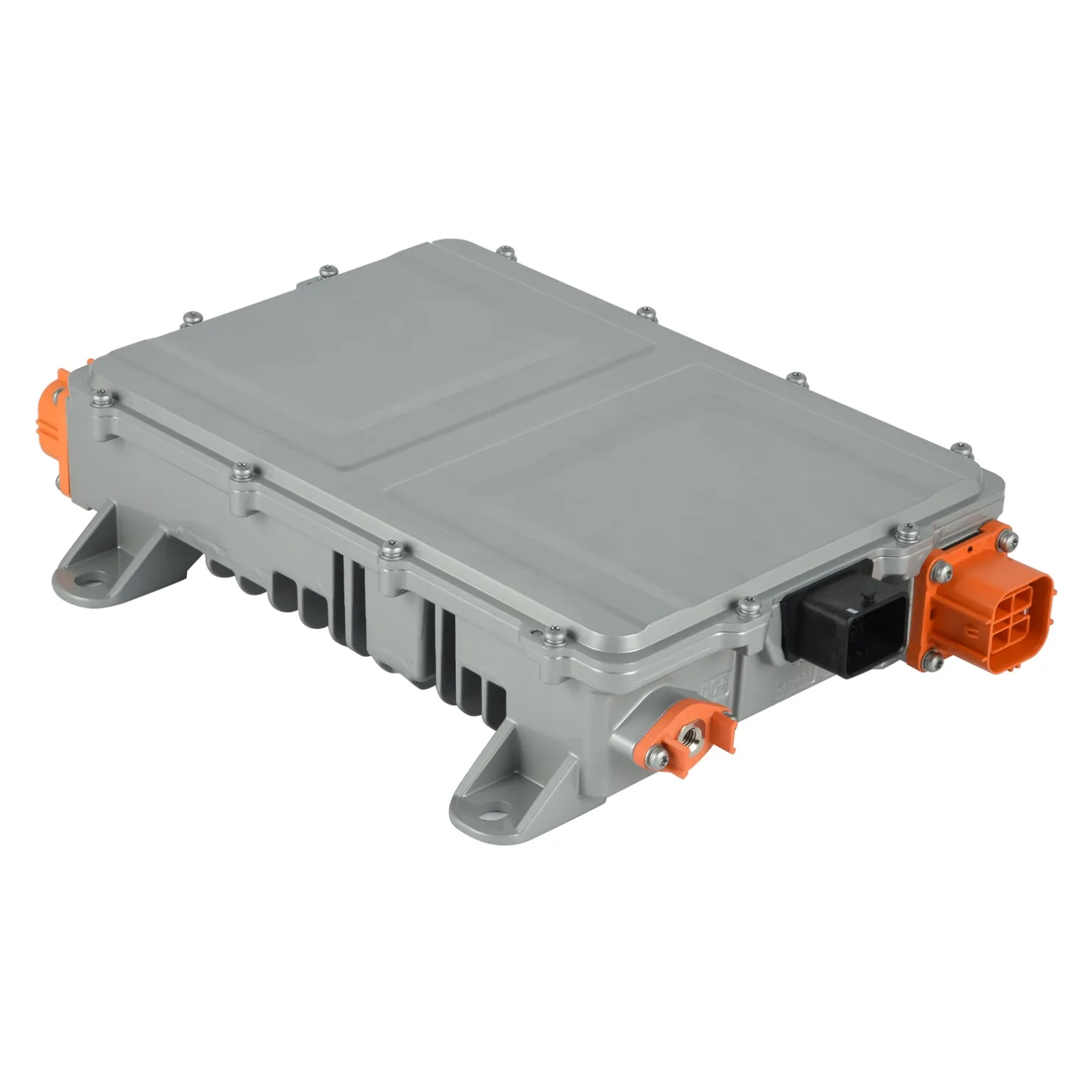
3.3kW onboard charger with a 1.5kW DC-DC converter (1.5kW / 1800W peak, 9–16V, 110A / 132A peak) in one integrated module for 96V and 320V platforms, with CAN-bus communication, forced-air cooling, and derating thresholds stated in degrees.
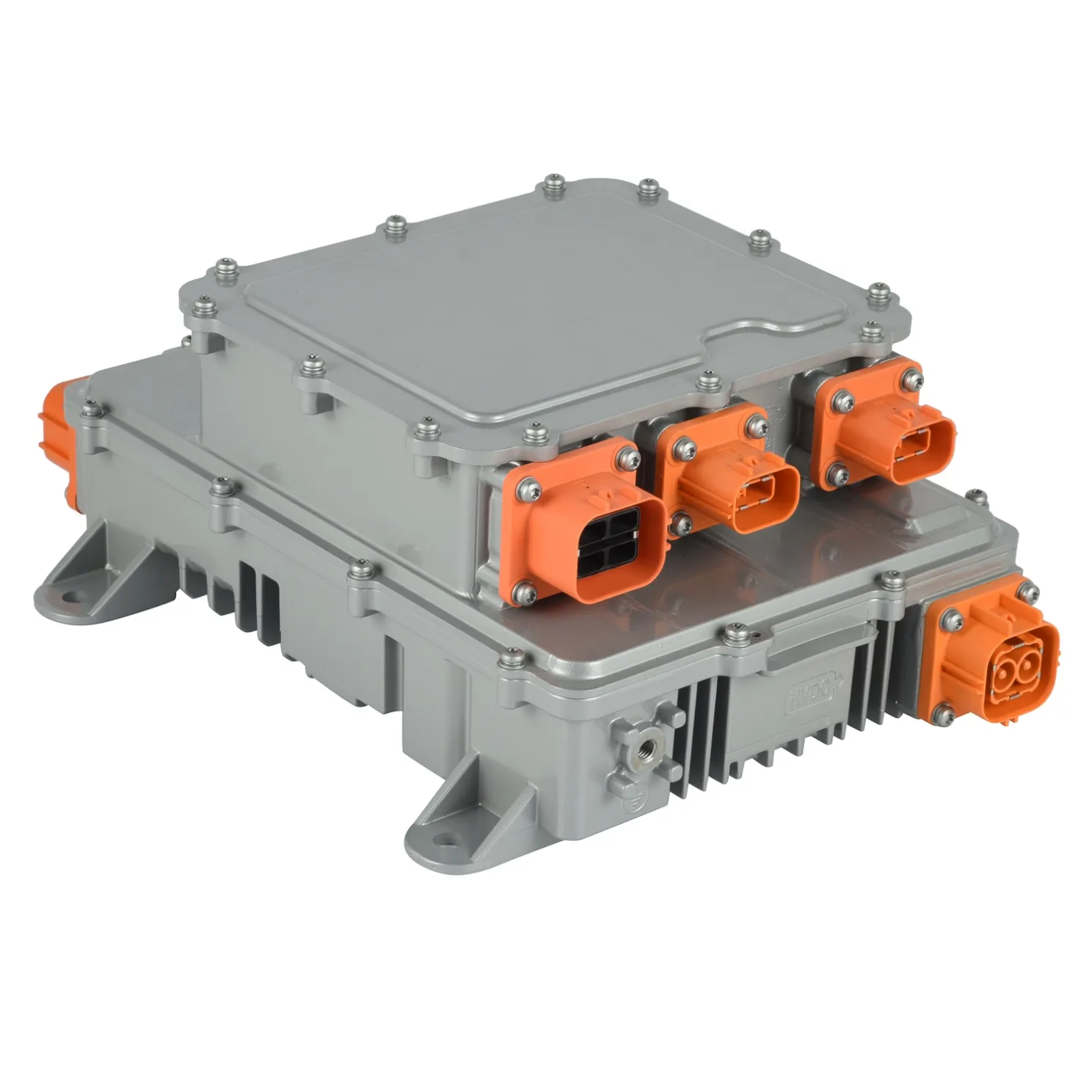
Integrated power solution for 96V and 320V platforms: 3.3kW OBC (60–128Vdc, 0–34A), 1kW DC-DC (9–16V, 72A), and high-voltage PDU in one unit, with CAN-bus communication and full protection. The PDU distributes high voltage to PTC heating, air conditioning, and vehicle power systems.
Frequently Asked Questions
What is a Tier 1 onboard charger supplier?
A Tier 1 onboard charger supplier contracts directly with the vehicle OEM, carries design responsibility for the charging system, and delivers a finished, validated unit to the OEM's plant. It holds the OEM's purchase order for the charging system, owns the voltage platform, the CAN protocol, the thermal behaviour, and the protection scheme, and answers for the unit under warranty.
What is the difference between a Tier 1 and a Tier 2 onboard charger supplier?
A Tier 1 onboard charger supplier contracts directly with the OEM and delivers a finished, validated system. A Tier 2 supplier supplies components or sub-assemblies to a Tier 1 supplier, usually build-to-print, with little or no design responsibility and no contract with the OEM. The difference is who holds the OEM's order and who owns the design — not the size of the company.
Is "Tier 1" a certification a supplier can show?
No. Tier 1 is not a certificate or a badge. It describes the contract for a given part: the supplier holds the OEM's purchase order for that part and carries design responsibility for it. Judge the claim by the evidence — test reports, production records, derating thresholds stated in degrees, and the CAN matrix for the exact model number. A quality-management certification such as IATF 16949 is a company-level certification, not a tier label and not a product certificate.
How do I check whether a charger supplier really carries design responsibility?
Ask for the DBC file and CAN matrix for the exact model number, the derating curve with thresholds stated in degrees, and the validation plan — and ask for a configured sample, with charging voltage, charging current, and CAN set for your programme. A supplier that owns the design has all of these on file. A supplier that can only build to the drawing you supply is a Tier 2 vendor for that part.
Can a small-volume OEM work with a Tier 1 onboard charger supplier?
Yes. A small-volume programme starts from a standard integrated platform and configures it — battery voltage platform, CAN protocol, charging voltage and current, part number — rather than developing a unit from scratch. The 1.5kW 2-in-1, for example, covers 48V and 72V platforms with charging voltage, charging current, and CAN configurable for OEM projects. The standard-or-custom decision is a fit question, not a volume question.
Does Echelon supply onboard chargers as a Tier 1 supplier?
Yes, for the power units it delivers under direct OEM contract. Echelon supplies commercial and specialty EV OEMs under OEM/ODM programmes, with integrated 2-in-1 and 3-in-1 power units, CAN communication, IP67 sealing, and validation evidence for the exact model number. For those units, Echelon holds the order, owns the design, runs the validation, and answers for the unit in the field.
Next Step
Send the Echelon team the programme inputs — the battery voltage platform, the CAN protocol, the simultaneous auxiliary loads, and the charging locations — and ask which integrated power unit fits, what design responsibility Echelon carries for it, and what validation evidence comes with it.
Contact Echelon directly: Email nancy@tici-energy.com · WhatsApp +86 18114665311.
Use the contact form on the contact page to start the discussion, and see how a custom programme is scoped on the OEM/ODM page.