How to Score OBC Supplier Evidence Beyond the Datasheet
Score OBC supplier evidence beyond the datasheet: use an evidence ladder, check certificate and report scope, and compare suppliers with a reusable scorecard.

OBC supplier evidence evaluation means judging a supplier by the records behind its claims, not by the claims themselves, whether the unit is a standalone onboard charger, a DC-DC converter or a 2-in-1 unit. A datasheet states what a product is supposed to do. Evidence shows what was actually tested, on which unit, under which conditions, and with what result. This article gives buyers a scoring method: an evidence ladder that ranks records from bare claim to verified record, a scope check that catches the most common traps, and a reusable scorecard for comparing two suppliers on the same evidence set.
Key takeaways
- Score the evidence, not the product. Two suppliers with similar datasheets can present very different records.
- A claim becomes evidence only when it is tied to a named document, a stated scope, a configuration and a date.
- Scope is where most supplier comparisons fail. Company certificates, type reports and sample results each prove less than they appear to.
- Use the same evidence set for every supplier. A supplier that presents no document scores zero on that item; it does not earn the average.
- A low score is a request for better evidence, not a verdict on the supplier. Score again when the record arrives.
Why an OBC Datasheet Claim Is Not Evidence
A datasheet is a summary of intended performance. It states ratings, ranges and features in a compact form, usually without the conditions, the tested configuration or the test behind each number. That is its job, and it does a useful job at the shortlisting stage. It cannot do the job of evidence, because it does not show what was measured, on which unit, or under what conditions.
Consider a single datasheet line stating a protection feature or a temperature range. As a claim, it tells the buyer what to ask about. As evidence, it proves nothing until a test report, a certificate or a production record ties the claim to a specific model, a specific configuration and a dated result. The difference matters most when two suppliers' datasheets look alike. Similar claims with different records behind them are not similar offers.
This article does not teach supplier screening or technical selection. Screening a supplier in the first place is covered in How to Choose an onboard charger OBC Manufacturer in China: 2026 Buyer's Checklist, and the technical selection checks in How to Choose an On-Board Charger Supplier for Commercial EV Projects. The method here starts after shortlisting: given the claims, how strong is the evidence behind each one, and how do two suppliers compare on the same questions?
One habit prevents most scoring errors. For every claim that matters to the programme, ask for the record behind it before scoring the claim. If no record is presented, score the item as a claim, however confident the statement sounds. Confidence is not a document.
The OBC Evidence Ladder: Four Levels from Claim to Verified Record
The evidence ladder ranks records by how much they tie a claim to a specific unit, configuration and check. Use it to score each evidence item on the same scale, for every supplier. The ladder judges the record, not the supplier's intentions.
| Level | What it is | What it proves | What to ask next |
|---|---|---|---|
| 0 — Claim | A statement in a datasheet, brochure, presentation or email, with no document behind it. | Only that the supplier asserts it. | "Which document supports this, and can I see it?" |
| 1 — Document | A named document exists: a report, a certificate, a drawing or a record. | That a document was produced. It does not yet prove the document covers this model or configuration. | "Which models, configurations and revisions does this document cover, and what is its date?" |
| 2 — Scoped record | The document is tied to the model, configuration and revision under discussion, with a date, an issuing lab or author, and stated conditions and criteria. | That the check was performed on the relevant configuration, under stated conditions. | "Does this record cover the production configuration, or a sample? What was the result against the criterion?" |
| 3 — Verified record | A scoped record whose identity can be checked independently: a certificate number verifiable with the issuer, a report tied to serial numbers the buyer can match, or a result the buyer witnessed or re-ran. | That the record is what it claims to be, for the units it claims to cover. | "How do I verify this number or serial range, and what do I check if the record is challenged?" |
Most supplier evidence sits at Level 1. A document exists, and the conversation stops there. The ladder's value is in the step from Level 1 to Level 2: checking scope, configuration, date and conditions. That step catches the majority of comparison errors, because a document for the wrong model, the wrong revision or an untested configuration looks identical to the right document until its scope is read.
Apply the ladder item by item, not supplier by supplier. A supplier may present Level 3 evidence for one claim and Level 0 for another. Averaging the two hides the gap. Score each item separately, and let the pattern show where the evidence is strong and where it is thin. The commitment questions that sit behind several of these items, including version records and change terms, are set out in 7 Questions to Ask an OBC Manufacturer Before Placing a Volume Order; this article scores the records those questions produce, and does not repeat the questions.
Scope Traps: OBC Company Certificates, Type Reports and Sample Results
Scope traps are the most common reason an OBC or DC-DC supplier comparison goes wrong. Each trap looks like strong evidence until its scope is read. The table below names the traps, how each one appears, and the check that exposes it.
| Scope trap | How it appears | The check that exposes it |
|---|---|---|
| Company certificate presented as model compliance | A quality-system or company certificate is shown as proof that a specific model complies with a requirement. | Ask which models, configurations and requirements the certificate covers. A company-level certificate proves a system, not a model's compliance. |
| Type report presented as production evidence | A report on a type-tested sample is shown as proof that production units perform the same way. | Ask whether the report covers the production configuration, and what production records link the type result to shipped units. |
| Sample result presented as batch evidence | A result from one sample unit is shown as proof for a whole batch or programme. | Ask for the serial number, the configuration and the build stage of the tested unit, and what batch evidence supports the wider claim. |
| Lab accreditation presented as product approval | A laboratory's accreditation is shown as if it were approval of the product tested there. | Ask what the lab actually tested, under which method, and what the report concludes. Accreditation describes the lab, not the product. |
| Undated or unrevised document | A document with no date, no revision and no identifier is presented as current evidence. | Ask for the revision, the date and the identifier, and check them against the configuration under discussion. An undated document cannot be tied to a unit. |
| Datasheet revision mismatch | The datasheet shown is a different revision from the one the report or certificate refers to. | Ask for the datasheet revision, and check that every document in the set refers to the same revision. |
Scope checks take minutes and prevent the most expensive comparison error: choosing a supplier because its evidence looked complete, then discovering the evidence covered a different model, an earlier revision or a single sample. When a scope trap is found, do not treat it as proof of bad faith. Suppliers reuse document sets across programmes, and scope drift is common. Treat it as a request: provide the scoped record, or state plainly that it does not exist.
Checking an OBC Test Report and a Certificate in Five Minutes
A five-minute check is enough to place most documents on the ladder. Work through the steps in order, and stop scoring as soon as a step fails: a document that fails the identity step cannot be rescued by a strong result on a later page.
- Identity. Does the document name the model, the configuration and, for a serialized report, the serial numbers? Does the configuration match the configuration under discussion? If the document names a different model or no configuration, it scores Level 1 at best.
- Revision and date. Does the document carry a revision identifier and a date? Does the revision match the current datasheet revision and the agreed configuration record, where one exists? An undated document cannot be placed on the ladder above Level 1.
- Issuer and number. For a certificate, is there a certificate number and a named issuing body? Can the number be checked with the issuer? For a report, is the testing laboratory or author named, with the method stated? A number that cannot be checked is a weaker record than one that can.
- Conditions and criteria. Does the document state the conditions under which the check was run, and the criterion the result was judged against? A result without conditions and criteria cannot be compared with another supplier's result, however good the number looks.
- Scope match. Does the document's stated scope cover the model, configuration, voltage platform and firmware or software version under discussion? Read the scope statement itself, not the covering email. If the scope does not match, the document does not support the claim, whatever it proves for another configuration.
For the documents themselves, the file package a buyer should expect is described in OBC and DC-DC 3D Models and Drawings: What to Request First, and the sample evidence package in Evaluating an OBC or DC-DC Sample: What the First 72 Hours Should Prove. This article does not repeat those lists. It scores whatever documents arrive against them.
Record the result of each five-minute check in the supplier file: document name, revision, date, scope statement, ladder level, and the check that set the level. A later reviewer should be able to see why a document scored as it did without re-reading the whole file.
OBC Supplier Evidence Scorecard You Can Reuse
The scorecard below is a reusable illustration, not a record of any supplier's evidence. Copy it, use the same rows for every supplier, and score each row 0 to 3 using the ladder. Do not change the rows between suppliers: a comparison is only valid when both suppliers are scored on the same evidence set.
| Evidence item | Record to request | Level (0–3) | Supplier A | Supplier B | Notes |
|---|---|---|---|---|---|
| Certificate scope | Certificate with number, issuer, covered models and configurations, and date. | Record the scope statement verbatim. | |||
| Test report identity | Report naming model, configuration, serial numbers where applicable, conditions and criteria. | Note any scope mismatch. | |||
| Version record | Dated version list for the approved sample and the planned production batch, in the same format. | Note any item missing from either list. | |||
| Change terms | Written change-notice terms naming trigger changes, notice timing and approval requirements. | Note whether re-validation triggers are stated. | |||
| Traceability description | Written traceability chain, both directions, with the stated time to identify affected units. | Note where containment applies. | |||
| Production record sample | A sample production or end-of-line record showing what is recorded per unit or batch. | Note whether records are per unit, per batch, or neither. | |||
| CAN database / protocol availability | DBC file and protocol document at a stated revision, or a written statement of when they will be supplied. | Note the revision and the supply date. |
How to read the result: compare row by row, not by total alone. A supplier that scores 3 on certificates and 0 on the version record has a different risk profile from one that scores 2 across the board, even if the totals are close. The version record, the change terms and the traceability description decide what happens when something changes or goes wrong; weight them accordingly in the decision, and say so in the file. Where a supplier presents no record for a row, score 0 and record the request. Do not leave the row blank, and do not score an unanswered request as average.
Re-score when new evidence arrives. A scorecard is a snapshot of the evidence presented on a date, not a permanent grade. Date each scoring round, file the records behind it, and keep earlier rounds so the improvement, or the lack of it, is visible.
Red Flags in OBC Evidence, Not in Products
Evidence red flags are about OBC and DC-DC records, not about product quality. A product may be sound while its evidence is weak, and the correct response is to request better records, not to reject the product. Any of the following should pause the comparison until the record is supplied or the gap is recorded as an open item:
- No document number or identifier. The supplier cannot name the document behind a claim, or the document carries no number, revision or date.
- Scope that does not match. The certificate or report covers a different model, configuration or revision from the one under discussion, and no scoped record is offered.
- Sample-only evidence for a volume claim. The only record is a result from one sample, with no batch or production evidence behind it.
- Refusal to share a revision. The supplier will describe a document but will not share the revision the buyer needs to check scope and configuration.
- A claim that moves when checked. The scope, the configuration or the date changes between the datasheet, the report and the covering email, with no explanation.
- Evidence that cannot be filed. The record exists only as a verbal statement, a screenshot with no identifier, or a document the buyer is not allowed to keep. Evidence the buyer cannot file cannot be relied on later.
For warning signs in supplier screening and technical selection, see the buyer's checklist in How to Choose an onboard charger OBC Manufacturer in China: 2026 Buyer's Checklist and the supplier-selection checks in How to Choose an On-Board Charger Supplier for Commercial EV Projects. This section covers only the evidence record. Keep the two kinds of flag separate in the supplier file: a product concern and an evidence gap need different responses.
Related reading: 7 Questions to Ask an OBC Manufacturer Before Placing a Volume Order · OBC and DC-DC 3D Models and Drawings: What to Request First · Evaluating an OBC or DC-DC Sample: What the First 72 Hours Should Prove · How to Evaluate an EV Charger Manufacturer Before Starting a Partnership
FAQ
What is the difference between an OBC datasheet claim and an OBC test report?
A datasheet claim states intended performance in summary form, usually without conditions, configuration or the test behind the number. A test report records what was checked, on which unit and configuration, under which conditions, against which criterion, and with what result. The datasheet tells the buyer what to ask about. The report is the evidence that answers the question. Score them on different ladder levels, and never treat a datasheet line as if it were a report.
What scope must an OBC certificate state to be useful?
A useful certificate states the certificate number, the issuing body, the models and configurations it covers, the requirements it addresses, and the date or validity period. Without the covered scope, a certificate cannot be tied to the model under discussion, and it scores Level 1 at most. Always read the scope statement on the certificate itself, and check the number with the issuer where the issuer offers a verification route.
What is the difference between a type report and a serialized test report for an OBC?
A type report records checks on a sample representing a type or design. A serialized test report records checks on identified units, named by serial number. A type report proves the design was checked. A serialized report proves identified units were checked. For a volume decision, ask what links the type result to production units: production records, batch traceability, or end-of-line results for the shipped configuration.
How do I compare two OBC suppliers with similar datasheets?
Score both suppliers on the same evidence set, using the ladder and the scorecard in this article. Request the same records from each: certificate with scope, test report with identity and conditions, version record, change terms, traceability description, production record sample, and CAN database availability. Compare row by row, record the scope statement behind each score, and re-score when new evidence arrives. Similar datasheets with different records are different offers.
Related Echelon Products
See the full range on the products page.
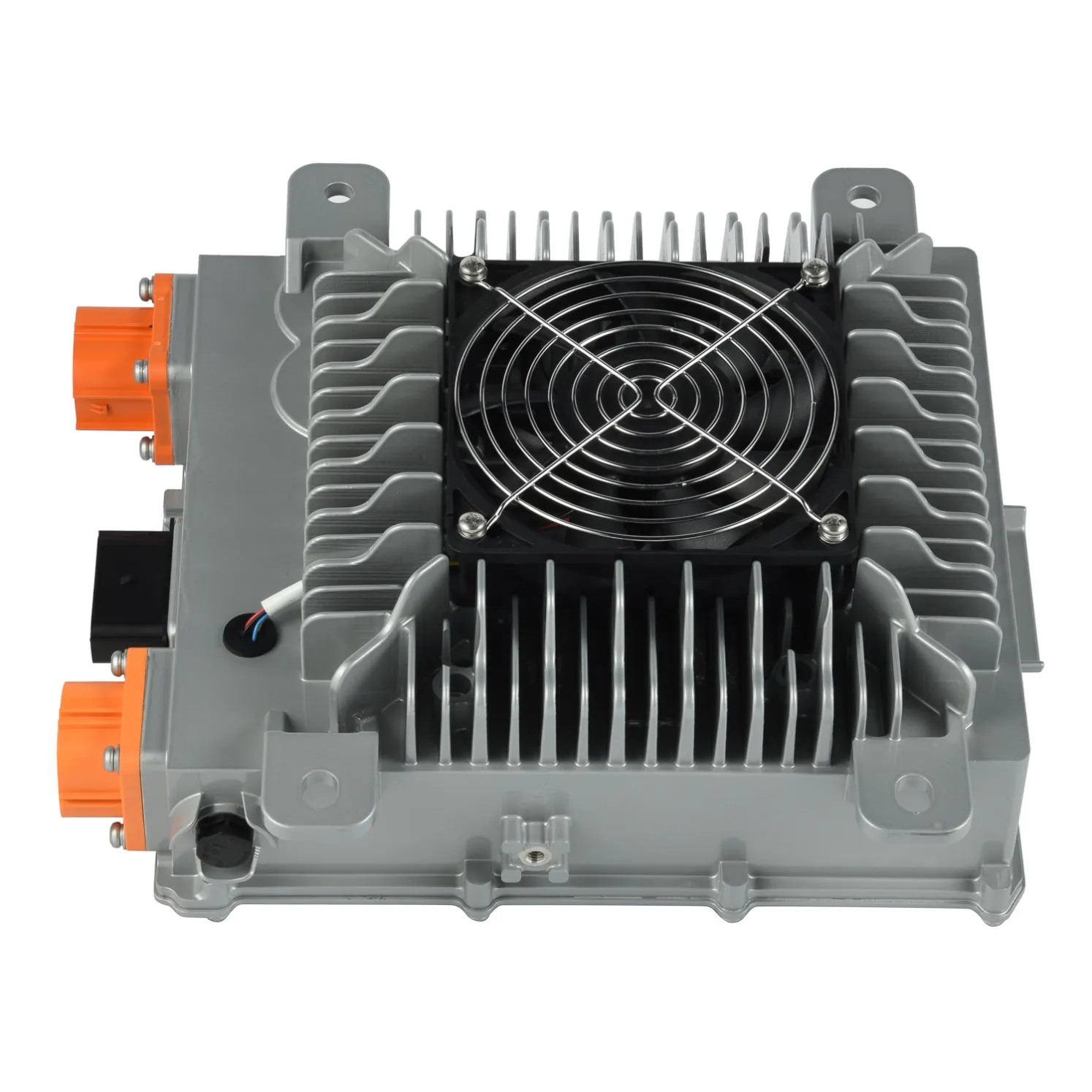
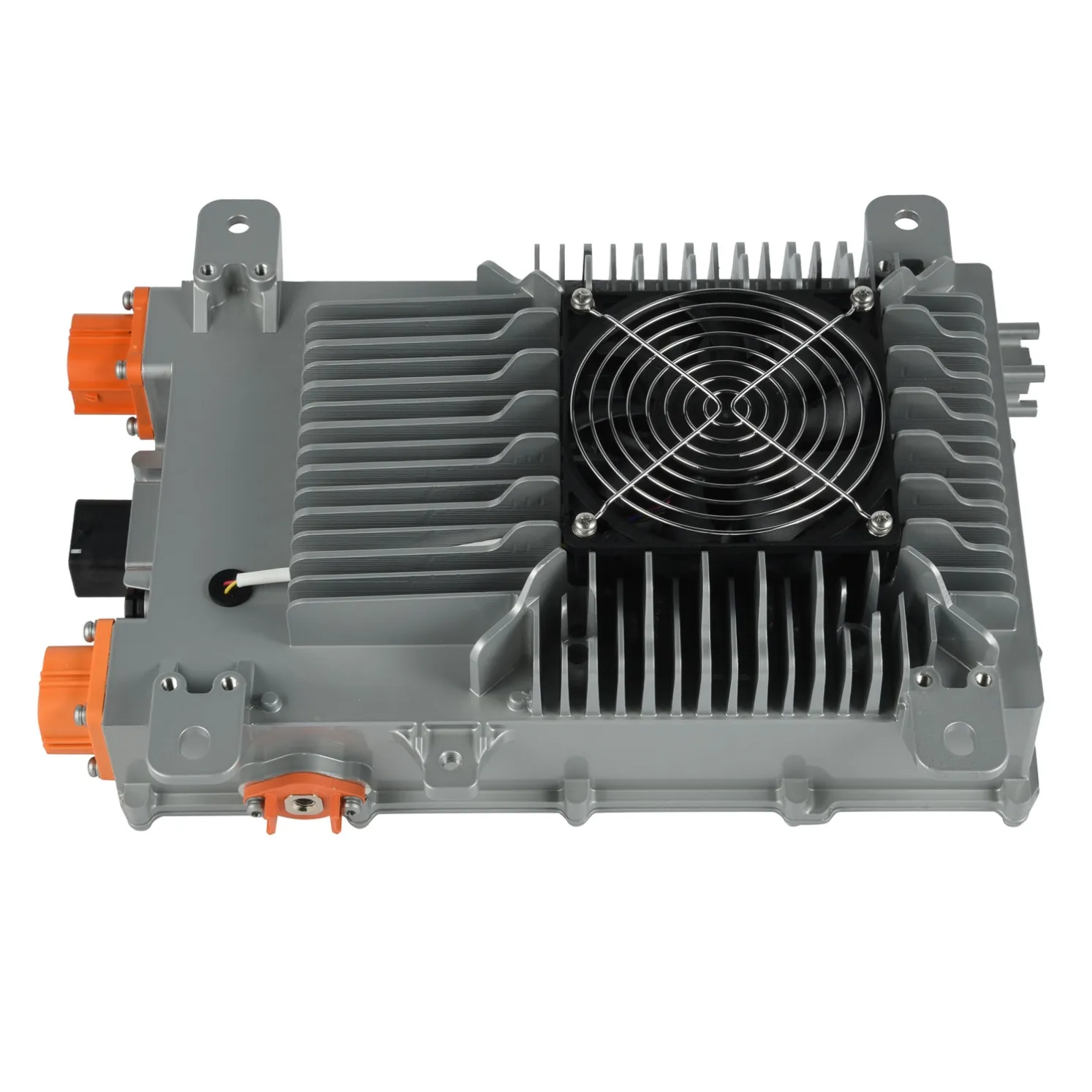
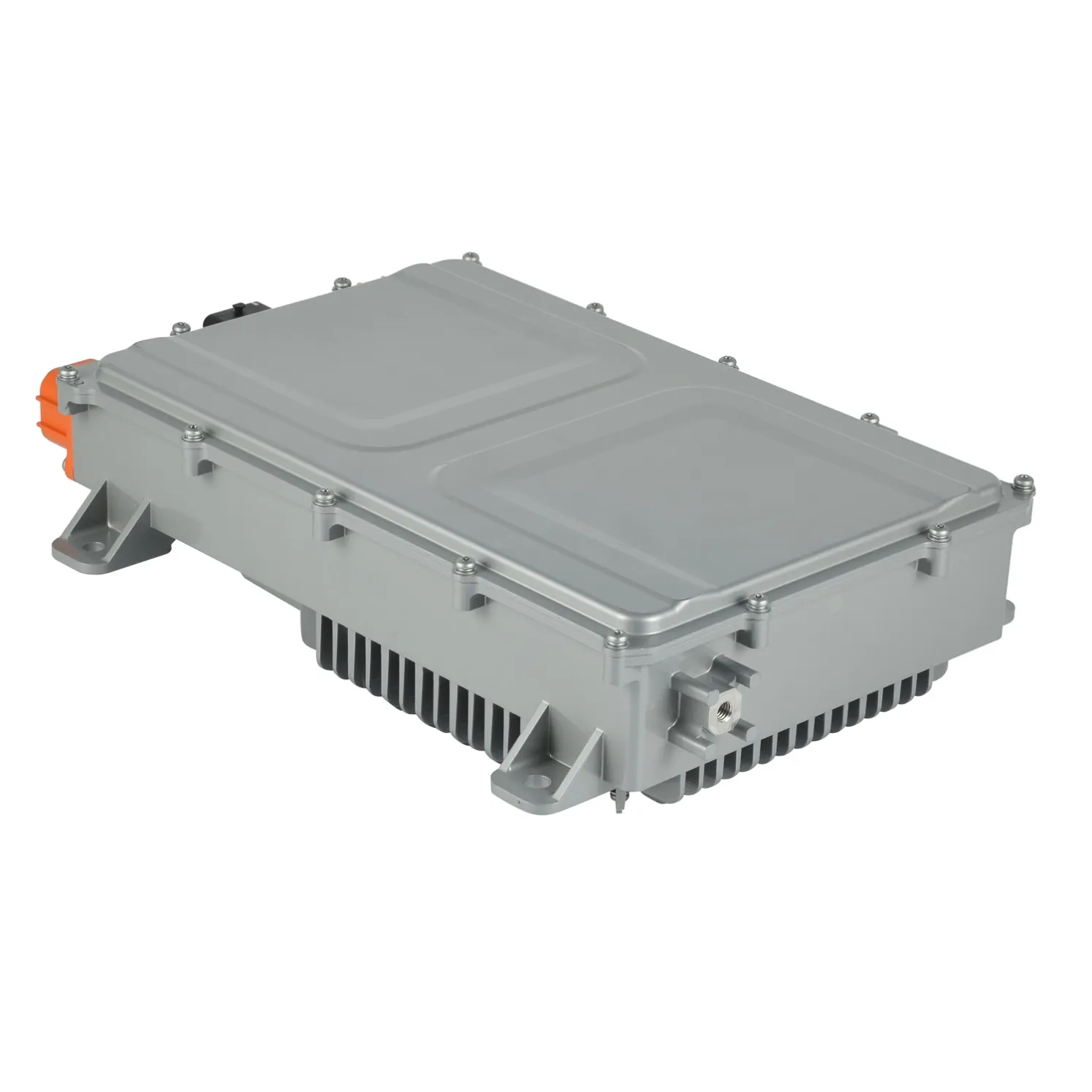
Confirm cooling, protection, CAN, efficiency and ratings for the specific model in its datasheet before you specify it. Do not treat a rating stated for one model as true for every model.
Next Step
Pick the evidence items that matter most to the programme, send the same request list to each shortlisted supplier, and score what comes back with the ladder before the next review meeting. File the scorecard with the records behind it, and re-score when new evidence arrives. The comparison that survives is the one built on records, not on claims.
To start that conversation with Echelon, share your vehicle and battery requirements through our contact page, and see how a custom programme is scoped on our OEM/ODM page.
About Echelon Charger
Echelon Energy Technology specializes in onboard chargers, DC/DC converters, and integrated EV power solutions for commercial and specialty electric vehicles.
For technical discussions, product selection, or OEM/ODM cooperation:
Email: nancy@tici-energy.com
WhatsApp: +86 18114665311