
How to Specify a 3-in-1 Power Unit for a Commercial EV Fleet: What APEC Shenzhen's 1,400-Vehicle Fleet Shows
APEC Shenzhen ran about 1,400 new energy vehicles for two days. Specify a 3-in-1 OBC + DC-DC + PDU power unit for a commercial fleet the same way: from duty, loads, and voltage platform.
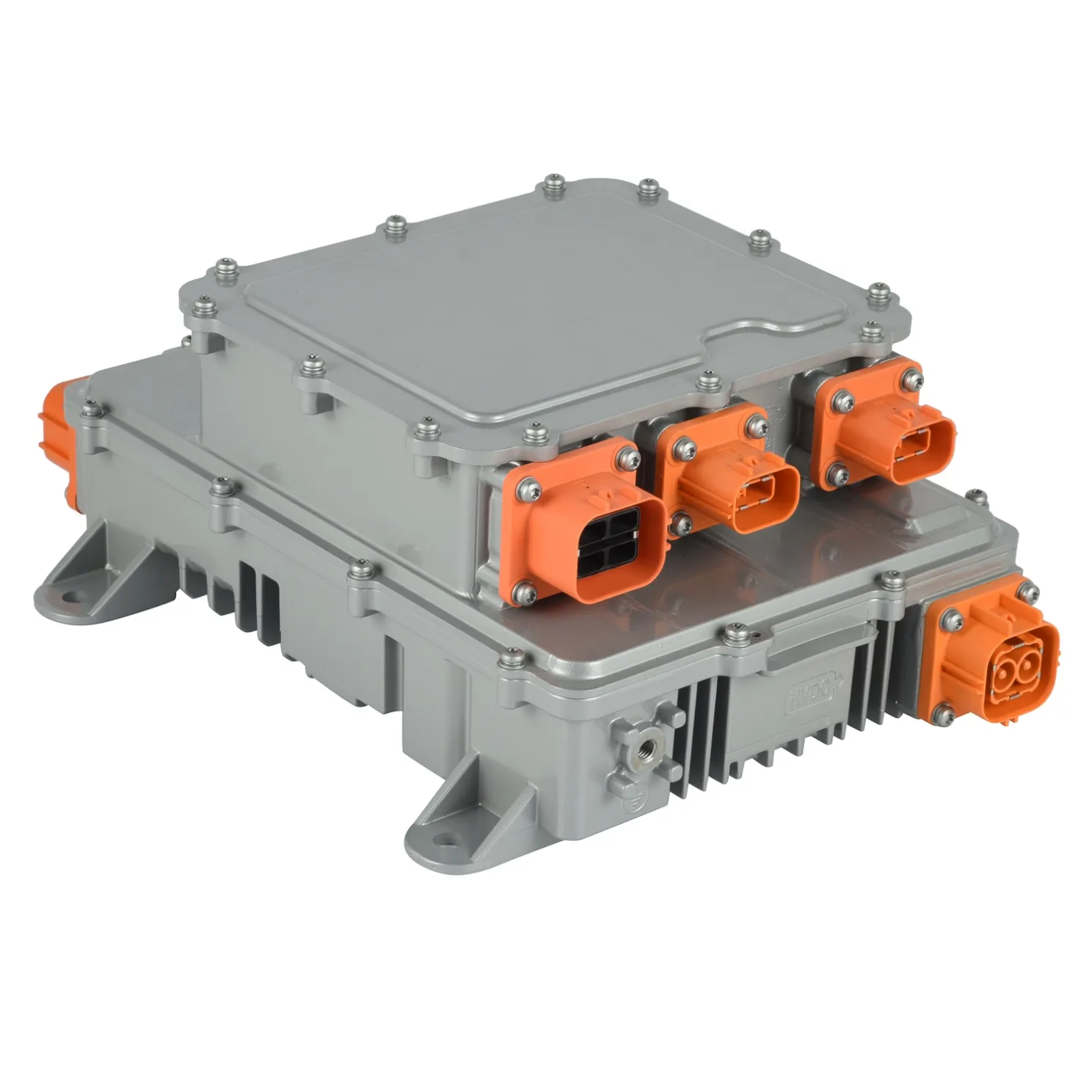
APEC Shenzhen ran its official fleet on about 1,400 new energy vehicles — around 700 Denza vehicles, including more than 600 Denza D9s, and around 700 Hongqi vehicles — for two days of continuous, high-frequency duty, with 24-hour support teams and charging points along the routes. The fleet charged on AC power wherever its routes ended, on the supplies that were already there, while the summit's 1,000 kW flash-charging showcase answered a different question entirely. A commercial EV fleet is specified the same way: this guide shows how to specify a 3-in-1 power unit for a commercial EV fleet — from the vehicle's duty, its loads, and its voltage platform — using Echelon's standard 3-in-1 as the worked example.
A 3-in-1 power unit combines an onboard charger, a DC-DC converter, and a power distribution unit in one enclosure. One unit, one mounting position, one cooling path, one set of connections to seal and service. The selection question is therefore not which power rating to buy. It is which version fits the battery platform, which DC-DC stage covers the auxiliary loads, and what the PDU must distribute — and the answers come from four inputs the buyer supplies before the quotation. For whether a 3-in-1 fits the programme at all, see Understanding OBC+DC-DC+PDU Integration. When Does an EV OEM Need a 3-in-1 Power System?. For the general RFQ checklist covering battery, AC input, CAN, installation, quantity, and project requirements, see OBC RFQ Checklist: What EV Manufacturers Should Provide Before Requesting a Quotation. Some buyers call the distribution block a CDU (combined distribution unit); this guide uses PDU throughout.
Key takeaways:
- APEC Shenzhen's official fleet — about 1,400 new energy vehicles, two days of continuous duty, 24-hour support — charged on AC power at route ends and depots, not on the 1,000 kW showcase chargers.
- A 3-in-1 power unit for a commercial EV fleet is specified from four inputs: the full battery voltage range, the simultaneous auxiliary loads, the AC supplies at the charging locations, and the PDU branch list.
- Echelon's standard 3-in-1 is a 3.3kW OBC with a 1kW DC-DC stage and a PDU, in two versions: 96V (60–128Vdc) and 320V (195–450Vdc).
- The DC-DC stage delivers 72A continuous at 9–16V. Add the simultaneous 12V loads: if the total passes 72A, the standard stage is undersized.
- The PDU layout package has seven items and must arrive with the RFQ. Without it, the supplier quotes on assumptions, leaves the PDU out of the price, or gives no PDU price at all.
- A voltage step is a new unit, not a re-rating: the 96V and 320V versions carry different model numbers because the insulation, switching, and DC-DC design all change.
APEC Shenzhen's Fleet Proved That Fleet Charging Is a Specification Problem
The APEC official fleet did not run demonstration duty. For two days, about 1,400 vehicles carried delegations across Shenzhen on schedules that did not wait for charging: around 700 Denza vehicles, including more than 600 Denza D9s, and around 700 Hongqi vehicles, with support teams running multiple rounds of vehicle checks, maintenance and charging points placed along the routes, and a 24-hour emergency response. That is the duty profile of a working fleet, not a showroom — short turnarounds, back-to-back trips, and no tolerance for a vehicle that is still charging when its next run starts.
The showcase that week was BYD's Super e-Platform: a 1,000-volt architecture supporting 1,000 kW charging, with the Denza D9 offering a five-minute top-up and a nine-minute full charge. It answers a real question — how fast can a passenger car recharge on a highway stop? But the fleet's daily work ran on AC power at route ends and depots, on the supplies that were already there. Shenzhen's own history makes the same point at city scale: more than ten years ago, the city replaced its entire bus fleet and all of its taxis with electric vehicles, and those vehicles charge at depots, overnight, on AC power. Independent analysis of medium- and heavy-duty fleet charging (NREL) finds that about 80% of a commercial fleet's total energy can be charged at the depot during scheduled dwell periods. The depot is where the energy comes from — and the onboard charger is the component that turns those stops into battery charge.
The APEC CEO Summit closed on November 18 with the Shenzhen Initiative — the first outcome document issued in the initiative form in the summit's 30-year history — and zero- and low-carbon mobility is one of its four directions. When 21 economies endorse zero-carbon transport in the same document, charging compatibility becomes a buying requirement: the vehicle must charge on the infrastructure the buyer's market already has. That is a specification question, decided before the vehicle ships.
Specify this: write the charging specification from the vehicle's stops and supplies — where it parks, for how long, on what AC supply — not from the fastest charger on the show floor.
3-in-1 Power Unit Specification Starts from Four Inputs, Not One Power Rating
A power rating alone does not select a 3-in-1 unit. Four inputs do, and each one decides something a power rating cannot.
| Input | What it must state | What it decides |
|---|---|---|
| Battery voltage range | The full charging range, minimum to maximum — not the nominal figure | Which version fits: 96V (60–128Vdc) or 320V (195–450Vdc) |
| Simultaneous auxiliary loads | Every 12V load that runs at the same time, with its rated current | Whether the 1kW DC-DC stage (72A continuous) covers the vehicle |
| AC supplies at charging locations | Every supply the vehicle will meet, and the power the charger delivers on each | The charging schedule: 3.3kW at 220Vac, 1.65kW at 110Vac — plan on the lowest figure. See 110V or 220V, One Onboard Charger Covers Both: What APEC Shenzhen Proves About Wide AC Input. |
| PDU branch list | Each high-voltage branch with its load, rated current, and simultaneity | PDU content and price — no list, no firm PDU price |
The two versions of Echelon's standard 3-in-1 cover the two platforms commercial fleets most often need:
| Version | Battery platform | OBC | DC-DC | Communication | Protection |
|---|---|---|---|---|---|
| ODP-CE-3D1A-96Y | 60–128Vdc, 0–34A | 3.3kW at 220Vac / 1.65kW at 110Vac, 90–264Vac, 94% or better | 1kW rated / 1.2kW peak (6 min), 9–16V, 72A rated / 86A peak, 94% or better | CAN bus | Over-voltage, under-voltage, over-current, short-circuit, over-temperature, plus HV reverse-polarity protection |
| ODP-CE-3D1A-320Y | 195–450Vdc, 0–12A | 3.3kW OBC | 1kW rated / 1.2kW peak (6 min), 9–16V, 72A rated / 86A peak, 94% or better | CAN bus | Same protection set as the 96V version |
If the review shows the vehicle has no high-voltage distribution loads at all, a 3-in-1 is the wrong architecture: the same 3.3kW charging stage is available with a DC-DC stage and no distribution block in a 2-in-1 unit — see OBC + DC-DC Integration: When Does a 2-in-1 Make Sense?. And if the programme needs more charging power while keeping distribution separate from the charger, the 6.6kW OBC + 1.5kW DC-DC 2-in-1 covers the same 96V and 320V platforms at twice the charging power. Either way, the architecture decision belongs before the RFQ, not after the quotation.
The Voltage Platform Decides Which 3-in-1 Version Fits
The 96V unit charges a 60–128Vdc platform, and its insulation is designed and tested up to 128Vdc — the top of the charging range, not the nominal 96V figure. The 320V unit charges a 195–450Vdc platform, and its insulation is designed and tested for up to 450Vdc. That is about 3.5 times the working voltage, and the distances inside the unit grow with it: air gaps, surface paths, board spacing, and the separation between the high-voltage side and the 12V control side. None of it carries over by re-rating. It is laid out again — which is why the two units have two model numbers.
Reinforced isolation between the traction-voltage side and the 12V control side is part of that layout, and the test voltage applied to prove it rises with the working voltage. Isolation monitoring — continuous measurement of insulation resistance between the high-voltage bus and the chassis, reported over the unit's CAN interface — moves from an option to a requirement. At 96V, a first insulation fault is a warning. At 450V, the same fault is a hazard the system has to act on.
Switching follows the same rule. A contactor rated to break 96V DC is not a contactor rated to break 450V DC: the arc it has to extinguish carries about 3.5 times the voltage, so its DC breaking capacity, fault endurance, and voltage rating all have to be specified for the higher voltage. The fuse and the contactor have to agree on who acts first in every fault scenario — the fuse protects the wiring, the contactor handles normal switching, and the fuse curve, the contactor rating, and the cable rating are one calculation, done at the full system voltage. Pre-charge limits the inrush into the DC-link capacitors when the bus is energised; without it, the main contactor closes onto a discharged capacitor bank and takes the full inrush on every power-up, which is what wears the contacts out. A high-voltage interlock loop drops the high voltage when a connector is opened or a service cover is removed, before anyone can touch it.
The DC-DC step-down grows with the voltage while the low-voltage output stays the same: from about 8:1 at 96V to about 37:1 at 450V, with the 12V-class output unchanged. The AC input follows the power, not the voltage class — a 6.6kW charger on 220V single-phase already draws about 30A, and past about 6.6kW three-phase keeps the current per phase manageable, at roughly a third of the single-phase figure. Thermal design is specified in degrees, not adjectives: on the 3.3kW 2-in-1, the OBC reduces power at 85°C internal and shuts down at 90°C, while the DC-DC stage reduces at 90°C and shuts down at 105°C. The 6.6kW 2-in-1 uses forced-air cooling and is rated from −40°C to +55°C, sealed to IP67.
| 96V version (60–128Vdc) | 320V version (195–450Vdc) | |
|---|---|---|
| Isolation | Insulation designed and tested to 128Vdc maximum | Insulation designed and tested to 450Vdc maximum; reinforced isolation between HV and LV domains; isolation monitoring reported over CAN |
| HV switching and protection | Contactor and fuse ratings matched to 128Vdc DC switching | Re-rated for DC breaking at up to 450Vdc; pre-charge and interlock designed for the higher energy |
| AC input | 3.3kW on 90–264Vac single-phase; 1.65kW at 110Vac | Three-phase as charging power rises past about 6.6kW, where single-phase current reaches about 30A |
| DC-DC conversion | 1kW stage, 72A rated, about 8:1 step-down to 12V-class | Same 12V-class output, up to about 37:1 step-down; topology and thermal design revisited |
| Thermal | Derating specified in degrees — 3.3kW 2-in-1 OBC reduces at 85°C internal, shuts down at 90°C | Higher heat density; mounting, airflow, and derating at the real installation ambient become system decisions |
| EMC and safety | Filtering and shielding for the low-voltage class | Stronger filtering and shielding; interlocks, isolation monitoring, and DC-link discharge specified up front |
Two model numbers, two designs. A voltage step is a new unit, not a new rating.
The DC-DC Stage Is Sized from the Simultaneous Load List
The traction voltage rises; the low-voltage bus does not. The vehicle controller, lights, instruments, communications, and auxiliary equipment still run on a 12V-class system, and that system still needs its power from a DC-DC converter. The standard 3-in-1 carries a 1kW DC-DC stage for this duty: 1000W rated, 1200W peak for 6 minutes, 72A rated, 86A peak, 9–16V output.
Size it on the simultaneous list, not the average. List every 12V load that runs at the same time, with its rated current, and add them. The DC-DC delivers 72A continuous and 86A peak for 6 minutes. If the simultaneous total passes 72A, the 1kW DC-DC stage is undersized — the load list has just changed the DC-DC selection, not just the PDU. And confirm the converter's input range covers the full battery voltage range, 60–128Vdc or 195–450Vdc, not just the nominal voltage. A DC-DC stage that works at nominal voltage and fails at the top of the charge range is a prototype problem, not a production answer.
If the simultaneous total passes 72A, the answer is a larger DC-DC stage. The 6.6kW 2-in-1 carries a 1.5kW DC-DC stage (9–16V, 110A rated, 132A peak) alongside its 6.6kW charger, for programmes whose auxiliary loads outgrow the standard stage. The two figures belong to two different units and must not be mixed up.
Specify this: send the simultaneous load list with rated currents, not an average load. A converter sized for the average trips on the day everything runs at once.
A Complete PDU Layout Package Has Seven Items
A 3-in-1 PDU layout package is complete when the supplier can price the PDU from it without asking for a missing number. Here is the package filled in for the ODP-CE-3D1A-96Y.
| # | Item | Filled in for the 96V 3-in-1 |
|---|---|---|
| 1 | Single-line diagram | HV input from the battery, 60–128Vdc; HV outputs to PTC heating, air conditioning, vehicle power systems; LV output 9–16V |
| 2 | Load list | Each HV load with rated voltage and current, and whether it runs at the same time as the others — see the example below |
| 3 | Protection scheme | Fuse and contactor positions and ratings per branch; which branches open independently; built-in over-voltage, under-voltage, over-current, short-circuit, over-temperature, and HV reverse-polarity protection as the baseline |
| 4 | Low-voltage outputs | 12V-class output list against the 72A continuous / 86A peak budget |
| 5 | Cooling interface | Cooling method, hose or airflow positions, vehicle-supplied versus unit-supplied |
| 6 | Control interface | Vehicle-controller connection, CAN signals, enable and wake-up behaviour, fault reporting |
| 7 | Mechanical drawing | Envelope, mounting points, connector positions and orientations, service access |
Load list for the 96V 3-in-1 — the three auxiliary branches the standard PDU feeds, on the 60–128Vdc bus. The buyer fills in the rated current per branch and the simultaneity column. Those two columns are the ones that decide the protection and the price.
| HV load | Rated voltage | Rated current | Runs at the same time? | Protection |
|---|---|---|---|---|
| PTC heating | 60–128Vdc | Buyer supplies | Buyer states | Fuse + contactor per branch |
| Air conditioning | 60–128Vdc | Buyer supplies | Buyer states | Fuse + contactor per branch |
| Vehicle power systems | 60–128Vdc | Buyer supplies | Buyer states | Fuse + contactor per branch |
Two columns do the work. Rated current selects the fuse and contactor for that branch. Simultaneity decides whether branch currents add: if PTC heating and air conditioning run together, the main contactor and the HV input fuse carry the sum. If they never run together, they don't — and the input protection is sized smaller. A load list without currents and without simultaneity selects nothing. It is a diagram, not a specification.
The charging current on the same bus runs up to 34A. The auxiliary branch currents are sized in the same range — which is why a fuse or contactor picked from a standard table, without the load list, is a guess. The 320V version (ODP-CE-3D1A-320Y) follows the same logic at 195–450Vdc and up to 12A: lower current for the same power, different voltage class, same seven items.
A package with the diagram but no load list is still incomplete. The diagram shows the shape of the PDU. The load list shows what it must survive.
A Missing PDU Layout Leaves Three Bad Options
When the layout is missing, the supplier has three options. All three cost the buyer time, and two of them cost the buyer money.
| Outcome | What it means | What it costs |
|---|---|---|
| Quotation on assumptions | The supplier prices the standard PDU — PTC heating, air conditioning, vehicle power systems at standard branch assumptions | Every deviation becomes a change order after the quotation: an extra branch, a higher branch current, a different connector, a different cooling interface. Each change order is a re-price, and a housing change is a re-tool. The delivery date moves. |
| PDU left out of the price | The quotation covers the OBC and DC-DC stages only; the PDU is priced when the layout arrives | The headline price is not the vehicle price. The buyer compares a partial price against competitors' complete prices — and budgets against the wrong number. |
| No PDU price until the layout arrives | The supplier declines to price the PDU at all and waits for the layout package | The programme waits: no firm total, no delivery schedule, and the quotation cannot be completed until the slowest input arrives. |
None of the three is wrong. All three are slower than sending the layout with the RFQ. The cheapest path is the layout first and the quotation second.
Five Teams Sign Off the Package Before the RFQ Goes Out
Five teams sign off the package, in this order. Each sign-off decides something the quotation depends on.
| Step | Who confirms | What the confirmation decides |
|---|---|---|
| 1 | Vehicle team — load list | Which HV loads exist, their rated currents, which run simultaneously. Every other item depends on this; a load list that changes later invalidates the protection scheme and the connector selection. |
| 2 | Electrical team — protection scheme | Fuse and contactor per branch, which branches open independently, fault behaviour. Decides whether the standard protection covers the vehicle or the PDU needs custom protection. |
| 3 | Thermal team — cooling interface | Cooling method, hose or airflow positions, what the vehicle supplies. Decides the housing and sealing design. |
| 4 | Controls team — CAN signals | Enable and wake-up behaviour, fault reporting, the signals the vehicle controller expects. Decides the harness, the software configuration, and the diagnostics. |
| 5 | Packaging team — envelope and connectors | Mounting points, envelope, connector positions and orientations, service access. Decides the housing, the tooling, and the installation effort. |
Send all seven items with the RFQ — not after it. A layout that arrives after the quotation forces a requote, and a requote resets the supplier's pricing clock: the quotation's validity period, and the delivery schedule with it.
If the loads match the standard distribution — PTC heating, air conditioning, vehicle power systems — the standard PDU covers it and the quotation is fast. If they don't, the layout review decides whether it is a configuration change or a custom unit: see Should You Specify a Standard Onboard Charger or a Custom Power Unit?. Either way, the decision belongs before the RFQ, not after the quotation.
Related Echelon Products
Integrated power solution for 96V and 320V platforms: 3.3kW OBC (60–128Vdc, 0–34A), 1kW DC-DC (9–16V, 72A), and high-voltage PDU in one unit, with CAN-bus communication and full protection. The PDU distributes high voltage to PTC heating, air conditioning, and vehicle power systems.
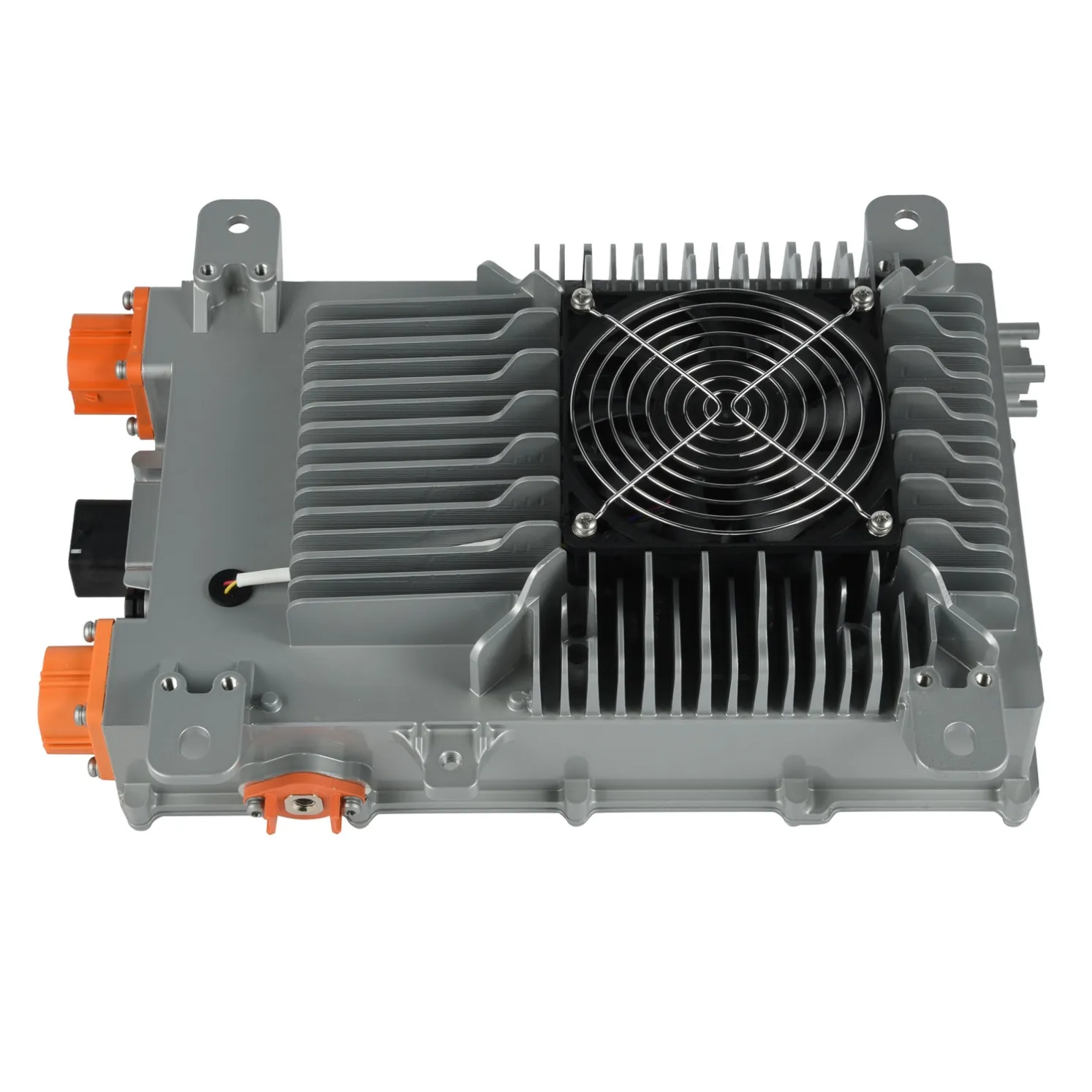
6.6kW onboard charger with 1.5kW DC-DC converter (9–16V, 110A rated / 132A peak) in one integrated module for 96V and 320V platforms, sealed to IP67 and rated from −40°C to +55°C, for higher-power programmes that keep high-voltage distribution separate from the charger.
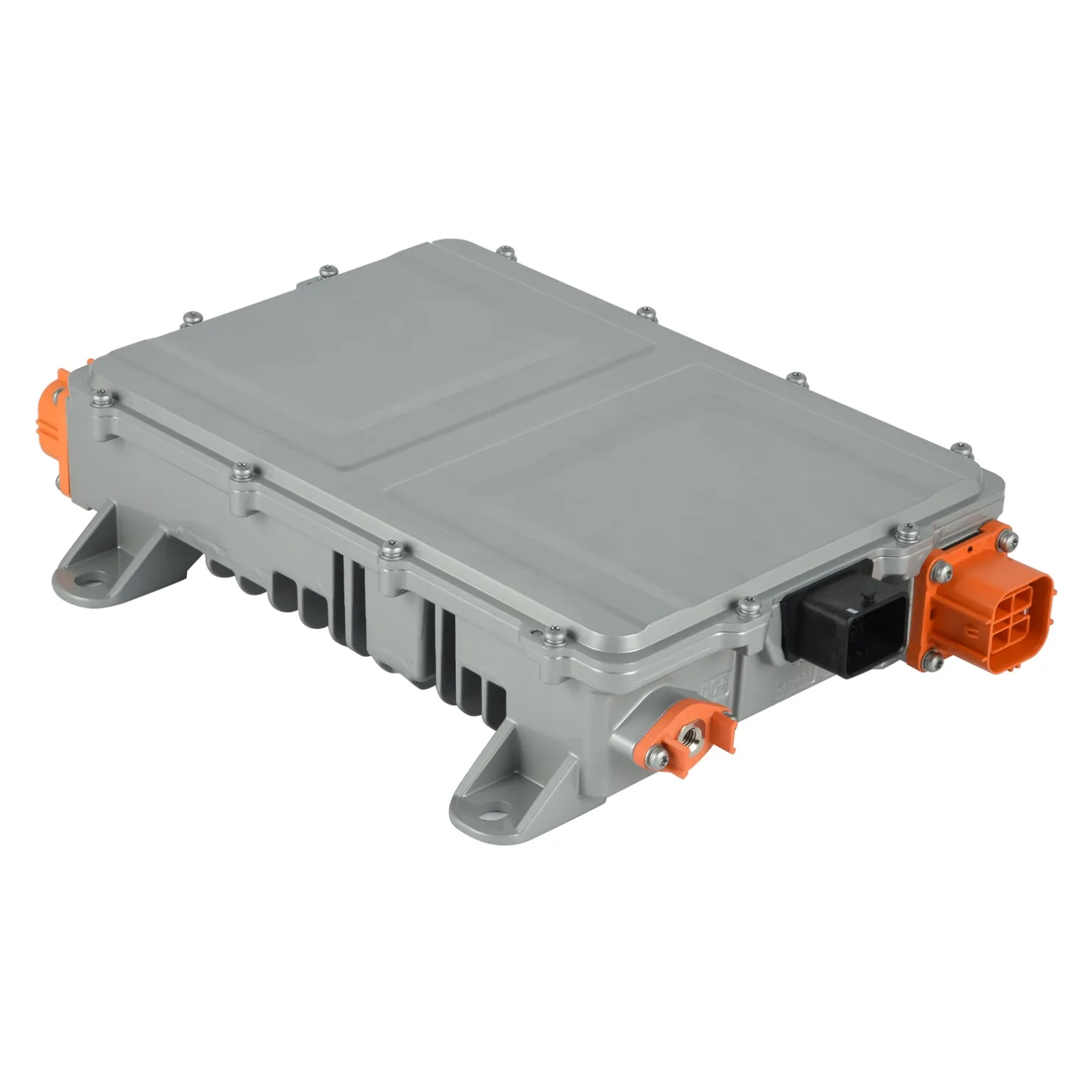
The same 3.3kW charging stage with a DC-DC stage and no distribution block, for programmes that need OBC and DC-DC integration without a PDU.
Frequently Asked Questions
Did Echelon supply chargers or vehicles for the APEC fleet?
No. Echelon did not supply vehicles or charging hardware for the APEC Shenzhen official fleet. The fleet used Denza and Hongqi vehicles with their own charging systems. This article draws the specification lesson from the summit's fleet operation and applies it to commercial EV charging specification.
Can the 96V 3-in-1 work on a higher-voltage system?
No. Its insulation is designed and tested to 128Vdc maximum, its contactors and fuses are rated for 128Vdc DC switching, and its DC-DC stage steps down from a 60–128Vdc platform. Higher-voltage platforms use the 320V version, with a 195–450Vdc output at up to 12A. Different design, not a re-rating.
Can a supplier quote a 3-in-1 power unit without a PDU layout?
Only on assumptions, with the PDU left out of the price, or with no PDU price at all until the layout arrives. A firm price needs the layout package — single-line diagram, load list, protection scheme, low-voltage outputs, cooling interface, control interface, and mechanical drawing — because the fuse and contactor ratings are selected from the branch currents in the load list.
How do I size the DC-DC stage for a fleet vehicle?
Add the simultaneous 12V loads and check the total against 72A continuous (86A peak for 6 minutes) on the standard 1kW stage. If the total passes 72A, the standard stage is undersized. Confirm the converter's input range covers the full battery voltage range, 60–128Vdc or 195–450Vdc.
What AC supplies must the charger cover?
The 96V version accepts 90–264Vac: 3.3kW at 220Vac, 1.65kW at 110Vac. Plan the fleet schedule on the lowest-voltage supply the vehicle will meet, not the headline power.
Is a PDU the same as a CDU?
Some buyers call the distribution block a CDU (combined distribution unit). It is the same function: high-voltage distribution with protection. This guide uses PDU throughout.
Next Step
Send the Echelon team the four specification inputs — the full battery voltage range, the simultaneous auxiliary load list, the AC supplies at the vehicle's charging locations, and the PDU branch list — together with the RFQ, and ask which 3-in-1 configuration fits the fleet.
Contact Echelon directly: Email nancy@tici-energy.com · WhatsApp +86 18114665311.
Use the contact form on the contact page to start the discussion, and see how a custom programme is scoped on the OEM/ODM page.