Low Volume Onboard Charger Supplier: How to Choose a Small-Batch Partner That Delivers
Low volume onboard charger supplier: a real small-batch partner starts from a proven platform, answers MOQ and NRE in writing, and ships samples with evidence. Seven checks before you commit.
-
A low volume onboard charger supplier is a manufacturer that runs small-batch custom charger programmes from platforms already in series production, instead of designing a new charger for every order. The one test that matters: it names the platform, states MOQ and NRE in writing, and ships samples with test evidence.
Buyers searching for a custom onboard charger manufacturer low volume meet the same problem on every front page: manufacturer homepages, marketplace listings, and supplier FAQs — no buyer guide. This guide is the buyer's check for a low volume onboard charger: how to tell a real small-batch partner from a factory that accepts the order and fails on it.
Key takeaways:
- A low volume onboard charger supplier runs small-batch programmes from a platform already in production; a new design is a different programme, with its own NRE and schedule.
- MOQ and NRE are set at the proposal stage, in writing, from how far the design departs from the platform — never as a number quoted on a sales call.
- A credible schedule names the specification freeze and the gates between phases; a single delivery date is not a schedule.
- Samples prove the process only when the evidence package arrives with them: serialized test report, build record, connector and pin data, CAN matrix, derating behaviour, firmware version.
- Certification claims are checked by scope and certificate number; a logo on a brochure proves nothing.
A low volume onboard charger supplier starts from a proven platform, not a new design
The first question is how far the design departs from a platform already in production. Most low-volume programmes are an adaptation: the voltage window, connectors, mounting brackets, and firmware change, while the qualified power stage does not. When no platform covers the requirement — a different topology, a different isolation design, a different thermal path — the programme is a new design, with its own NRE, prototype, and validation scope. A supplier that cannot say which of the two your programme is has not reviewed the requirement.
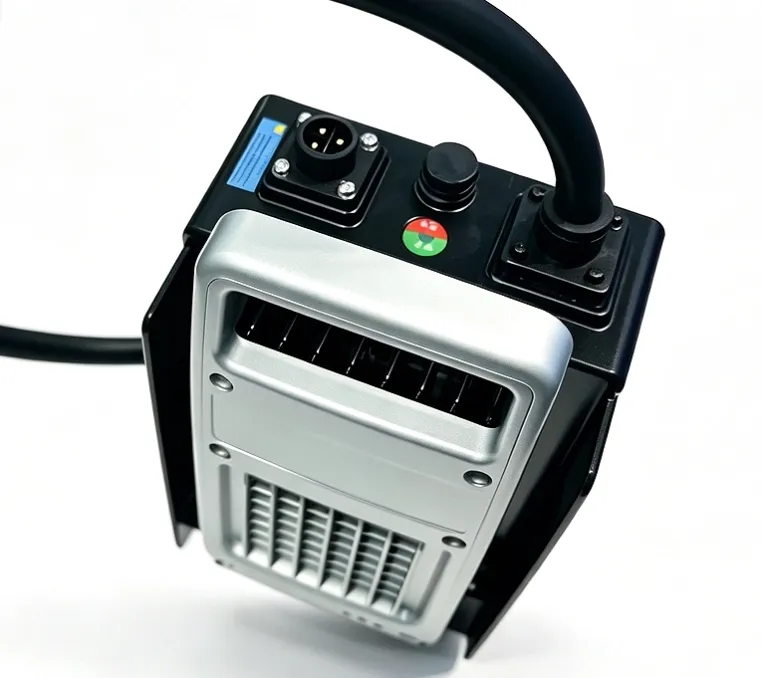
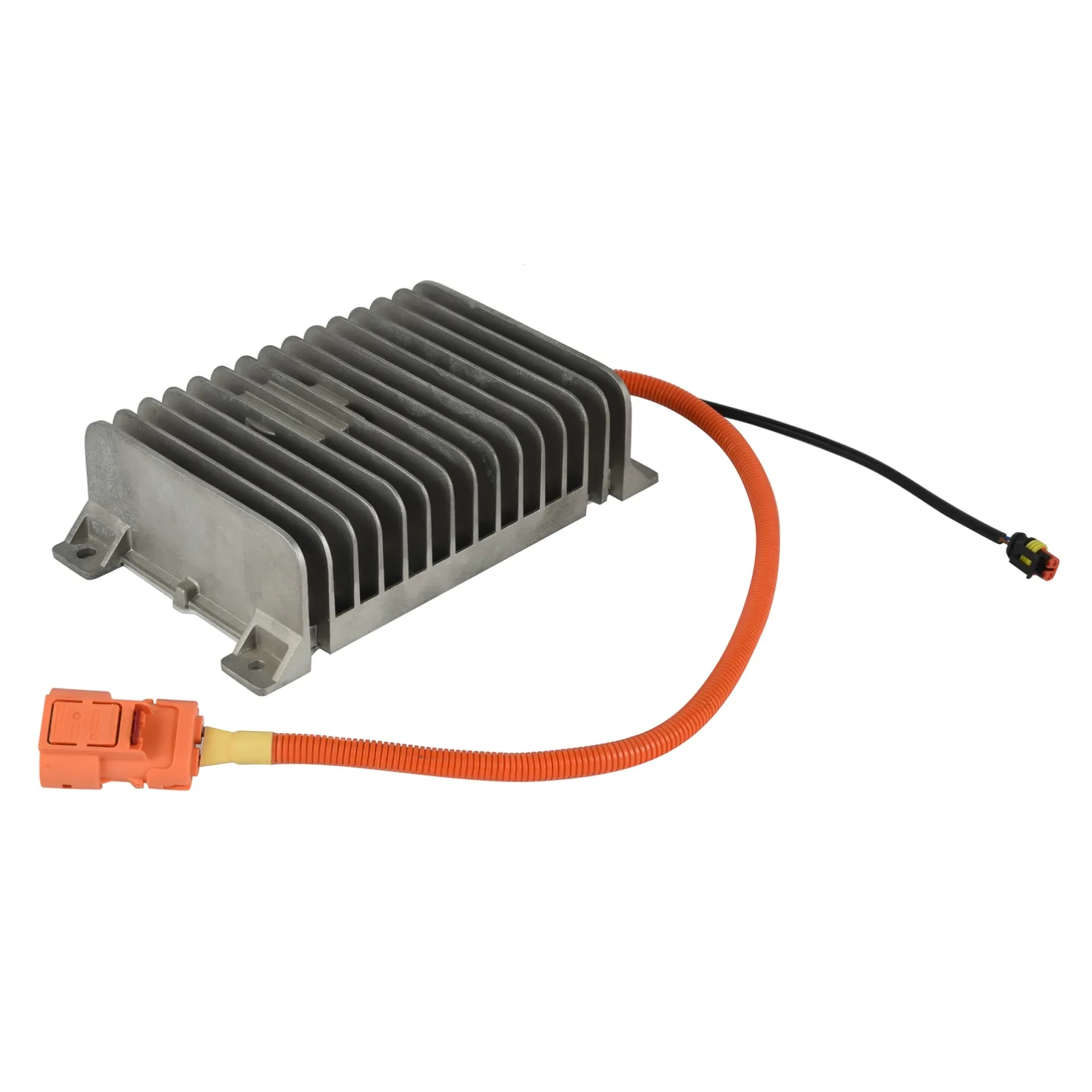
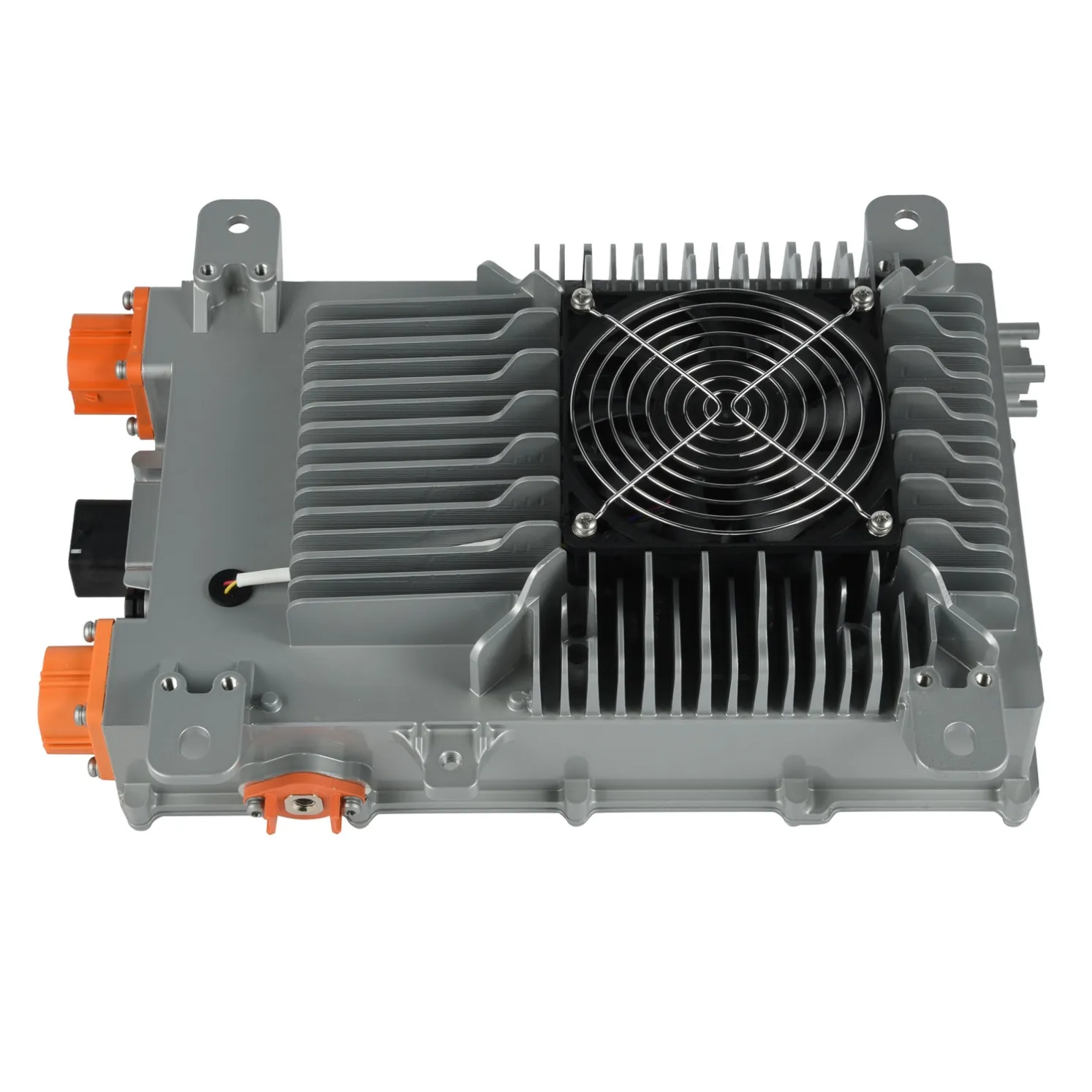
Echelon's programmes cover 72–800 V platforms and 3.3–11 kW charging power, with air or liquid cooling and IP67 options. Programmes above the published product range, including the 11 kW end, are scoped individually at the proposal stage. Ask which platform the programme starts from, and what changes on it — the answer names a unit in production, not a drawing. For whether the programme needs a standard unit or a custom one at all, see Should You Specify a Standard Onboard Charger or a Custom Power Unit?
| Question to ask | If the answer is yes | If the answer is no |
|---|---|---|
| Does the pack's full charge range fit an existing output window? | The programme starts from that platform | A new output stage, with its own NRE |
| Does the DC-DC rating cover the simultaneous auxiliary load? | The integrated stage carries it | A larger stage, or a separate converter |
| Does the housing fit the mounting envelope? | Brackets and connectors adapt | A new enclosure, with its own tooling |
| Does the CAN matrix map without new messages? | Firmware parameters adapt | New communication work, with its own validation |
| Does the cooling path fit the enclosure and ambient temperature? | Cooling adapts within the platform | A new thermal path, with its own validation |
Five yes answers mean an adaptation. Each no adds NRE, schedule, and MOQ — and the proposal must say so, in writing, before the order.
MOQ and NRE belong in the written proposal, not in a sales call
MOQ is not a commercial threshold the supplier picks. It reflects the fixed cost of a production run: setup, tooling amortisation, component minimums, and test time. A charger that reuses an existing housing and power stage removes most of that fixed cost, which is why its MOQ can sit far below a new design. A low MOQ onboard charger is the result of platform reuse, not a discount the supplier offers. Prototype and pilot builds are engineering builds, accounted separately from production volume — they are not the MOQ.
The same logic sets NRE. Adaptation work — voltage window, connectors, brackets, firmware parameters — carries adaptation NRE only. A new design carries the full engineering, prototype, and validation scope. Both are stated in the proposal, after the requirements review, with the design distance that produced them. A number quoted on a sales call, before the requirement is reviewed, is not a price — it is a guess. Lead times quoted for standard catalogue units do not apply to a custom programme; the schedule is set at the proposal stage.
| What the written proposal must state | Why it matters to the buyer |
|---|---|
| Adaptation or new design, with the platform named | Fixes the design distance everything else follows from |
| NRE scope | Shows what engineering work the programme pays for, and what it does not |
| Schedule, with the specification freeze date and the gates between phases | Turns a delivery date into a plan with points the buyer can check |
| Sample scope and the evidence list | States what arrives with the samples, before the batch order |
| Production volume, documentation, and support | Confirms what the series units carry and who answers for them |
How design distance drives cost is What Drives OBC Development Cost: NRE, Prototypes, Tooling and Validation. How MOQ is determined, and how payment milestones map to programme phases, is OBC MOQ and Payment Milestones for Custom Vehicle Programs.
A credible schedule names the specification freeze and the gates between phases
A low-volume programme moves through three phases — requirements and proposal, sample build and validation, pilot and series production — and the quantities, not the path, are what change at low volume. The schedule is set at the proposal stage, after the requirements review, and it names two things a single delivery date never does: the specification freeze, and the gate that closes each phase.
The freeze is the point that protects the schedule. Everything after it is execution; programmes that freeze late move the same uncertainty into build and validation, where changes cost more. The gates are the proof: the proposal states the adaptation or new design with NRE and schedule; the sample phase closes only when validation has passed and design changes are closed; the pilot closes on acceptance against the frozen specification. Ask for the freeze date and the gates in writing. A supplier that offers only a delivery date has given you a hope, not a schedule.
Samples prove the process only when the evidence package arrives with them
A sample order proves one unit, built under one set of conditions. Whether the thousandth unit behaves the same way depends on facts the sample itself cannot show — and the window to establish them is before the batch order, not after. The delivery that supports a concluded evaluation is the unit plus its evidence package.
| Evidence item | What it proves |
|---|---|
| Serialized test report | The unit was tested against its own serial number, not a type-test result |
| Build configuration record | Board, firmware, and component revisions — the unit on the vehicle is the unit that was tested |
| Mating connector part numbers, with manufacturers | The harness can be built and sealed to the same parts |
| Pin definition table | Every connection is defined before integration starts |
| CAN matrix or DBC file, at the stated revision | The communication interface is documented and configurable |
| Protection and derating behaviour | Fault behaviour is defined, with thresholds in degrees where they apply |
| Firmware version, with its update path | The unit can be updated without returning it |
Ask for the package with the sample, not after it. Then run the evaluation the package enables: the first 72 hours should prove the unit against the agreed specification — see Evaluating an OBC or DC-DC Sample: What the First 72 Hours Should Prove. Validation evidence is also what a supplier's standing rests on: test reports, production records, derating thresholds stated in degrees, and the CAN matrix are the proof behind a Tier 1 claim — see Tier 1 Onboard Charger Supplier: How to Tell a Direct OEM Partner from a Build-to-Print Parts Vendor.
Certification claims are checked by scope and certificate number, not by logo
A logo on a brochure is not a certificate. Ask for the certificate number, the issuing body, and the models and firmware the certificate covers — and check the scope rather than accepting the mark. A certificate that covers a different model, a different firmware revision, or a different product family does not cover your unit.
Keep company certifications and product certificates apart. Production runs under an IATF 16949 automotive quality management system — a company-level certification, not a product certificate and not a claim about any single unit. Capacity is stated at 30,000 units per month. Most programmes run under a confidentiality agreement — over 70% of Echelon's projects include one — so project details and intellectual property stay protected from the first message.
If the supplier cannot produce the certificate number and scope in writing, the claim is unverified — treat it as absent.
The RFQ decides the quote: incomplete inputs produce a price, not a programme
A request that names only the power rating cannot be quoted accurately: the power rating alone does not select the charger, and a low volume OEM onboard charger programme is quoted from its inputs, not its label. The inputs below let the supplier evaluate the application in one pass and remove repeated clarification during sample development. Send them at RFQ stage, not after the first sample.
| RFQ input | What a vague answer costs |
|---|---|
| Vehicle application | The operating environment, duty cycle, and integration constraints stay unknown |
| Battery nominal voltage and full charging voltage range | The output window is sized to the nominal value, not the whole range |
| Battery capacity | Charge time cannot be checked against the available charging window |
| AC input available | The practical charging power at real charging locations stays unknown |
| CAN and communication requirements | Baud rate, message IDs, commands, and fault feedback are discovered during integration |
| Mechanical and installation requirements | Envelope, cooling, and mounting are checked after the unit is chosen |
| Prototype quantity and estimated volume | The MOQ and NRE discussion has no numbers to work from |
| Project stage, timeline, certification, and market | The validation scope the target market requires is set late |
The short form is vehicle + battery + AC input + communication + installation + quantity + timeline. The full list, with fill-in fields, is in the OBC RFQ Checklist: What EV Manufacturers Should Provide Before Requesting a Quotation.
Walk away when the supplier cannot answer in writing
Every check in this guide has the same test: the answer arrives in writing, for the exact model number, before the order. A supplier that answers in writing has reviewed the requirement. A supplier that answers only on a call, or only with a datasheet and a price, has not — and the risk stays with the buyer.
The five-question tier test is the companion check: who holds the OEM order, who owns the design, what arrives as one unit, what evidence comes with it, who answers field failures — see Tier 1 Onboard Charger Supplier: How to Tell a Direct OEM Partner from a Build-to-Print Parts Vendor. If the supplier cannot answer two of the five in writing, it is a Tier 2 vendor for that part, and the RFQ should price the integration and validation work the buyer will have to do instead.
| Check | What a credible answer looks like | Walk-away signal |
|---|---|---|
| Platform start | Names a platform in production and what changes on it | Cannot say whether the programme is an adaptation or a new design |
| MOQ and NRE | Stated in the written proposal, after the requirements review | A number quoted on a sales call, before the requirement is reviewed |
| Schedule | Names the specification freeze and the gates between phases | A single delivery date, with no freeze and no gates |
| Samples and evidence | The evidence package arrives with the sample units | A sample with a datasheet and no test report |
| Certification | Certificate number, issuing body, and scope in writing | A logo on a brochure, no number, no scope |
| RFQ | The quote follows the full input list | A price from the power rating alone |
| Written answers | Every check answered in writing, for the exact model number | Answers only on calls, or not at all |
Related Echelon Products
The higher-power starting platform (OD-CD-6G1F-96Y / -320Y): 6.6kW OBC (64–128Vdc, 0–60A / 240–480Vdc, 0–20A) with a 1.5kW DC-DC stage (9–16Vdc, 110A rated / 132A peak), IP67 sealing, CAN communication, and forced-air cooling.
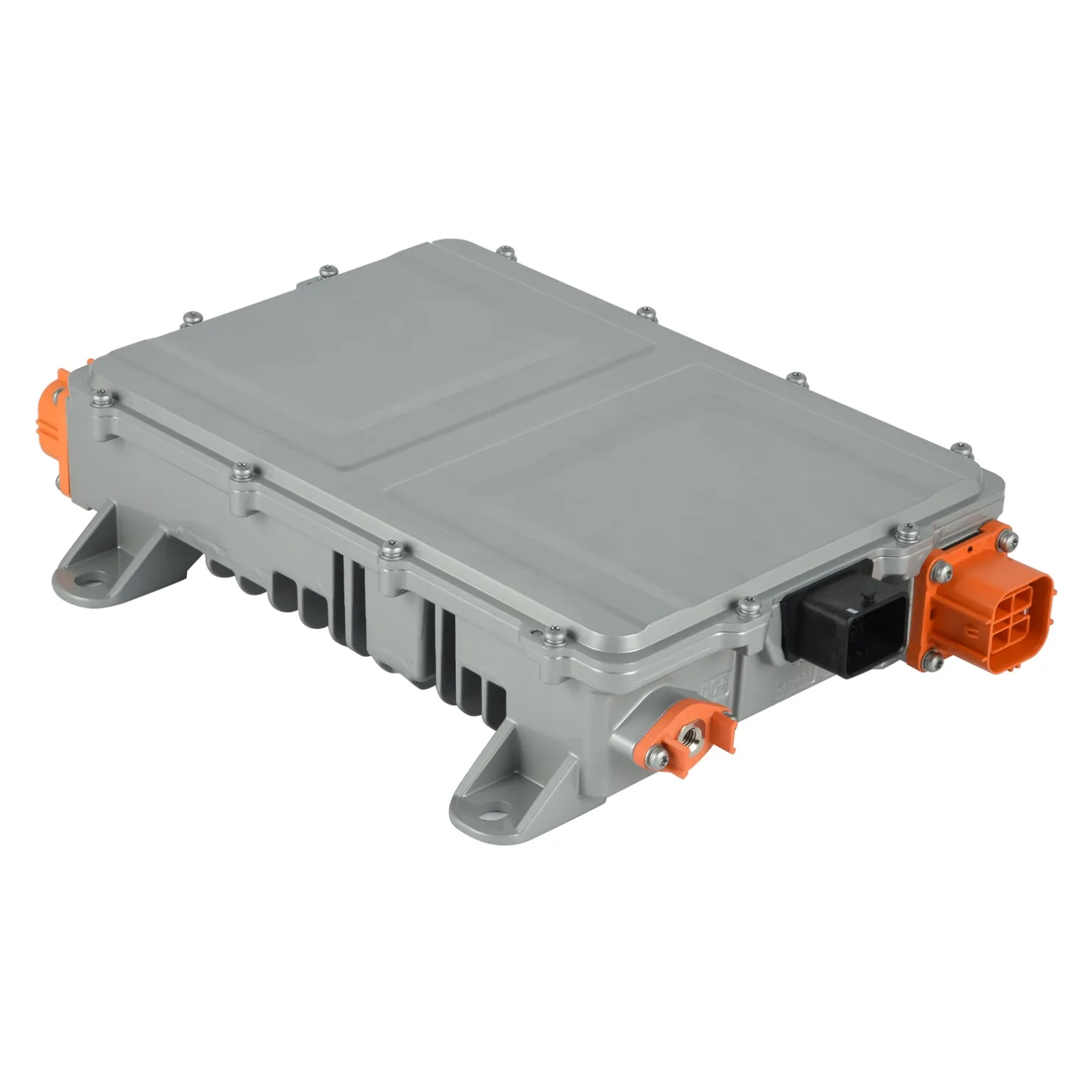
The mid-power starting platform (OD-CC-3D1F-96Y / -320Y): 3.3kW OBC (64–128V, 0–34A / 195–450V, 0–12A) with a 1.5kW DC-DC stage (110A rated / 132A peak, 1800W peak for 6 min), CAN communication, forced-air cooling, and derating thresholds stated in degrees.
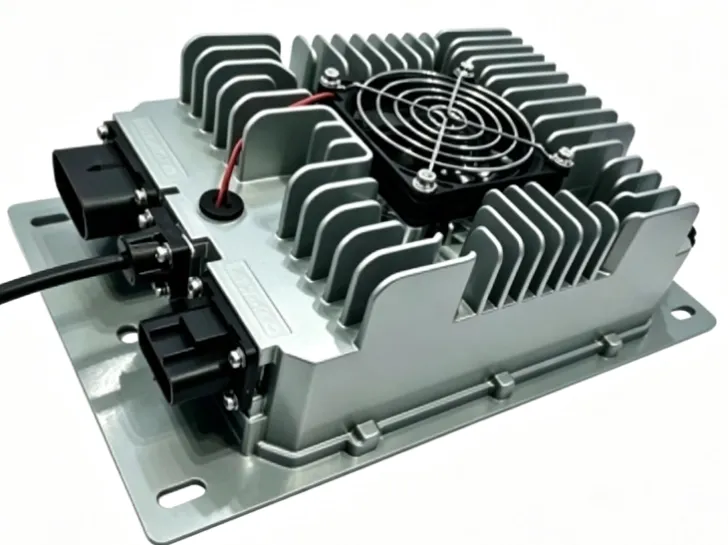
The light-EV starting platform: 1.5kW OBC with a 500W DC-DC stage for 48V and 72V platforms, CAN communication, CC/CV charging, IP67 sealing, and air cooling.
Frequently Asked Questions
What is a low volume onboard charger supplier?
A small batch onboard charger supplier runs small-batch custom programmes from platforms already in series production, instead of building a new design for every order. It differs from a high-volume catalogue factory in one respect: the programme starts from a proven unit and adapts it, so the fixed cost of a new design does not fall on a small batch.
What is the MOQ for a low volume onboard charger?
The MOQ follows from the design distance, so it is stated in the written proposal after the requirements review — not quoted on a sales call. A programme that adapts a platform already in production carries a far lower MOQ than a new design, and prototype builds are engineering builds, accounted separately from production volume.
Can a custom onboard charger avoid NRE?
When the pack voltage window, auxiliary load, and mounting envelope fit an existing platform and the CAN matrix maps without new messages, the programme proceeds with adaptation work rather than a new design, and the NRE scope is correspondingly smaller. The proposal states the NRE scope with the design distance that produced it.
How long does a low-volume custom charger programme take?
How much is new. A programme that reuses a qualified power stage and changes only connectors, brackets, and firmware is much faster than one that changes topology or cooling. The schedule is set at the proposal stage, after the requirements review, and the specification freeze is the point that protects it.
What should arrive with onboard charger samples?
The evidence package: a serialized test report, a build configuration record, mating connector part numbers with manufacturers, a pin definition table, the CAN matrix or DBC file at the stated revision, a description of protection and derating behaviour, and the firmware version with its update path. Run the evaluation in the first 72 hours, against the agreed specification.
What should I send for a low volume onboard charger quote?
Vehicle application, battery nominal voltage and full charging voltage range, battery capacity, required OBC power, AC input, CAN requirements, mechanical and installation requirements, whether you need a standalone OBC or an integrated solution, prototype quantity, estimated annual volume, and target timeline. The RFQ checklist linked above has the full list with fill-in fields.
Next Step
Send Echelon's team your programme data — vehicle application, battery voltage range, required charging power, CAN requirements, and estimated volume — and ask which platform the programme starts from, whether it is an adaptation or a new design, and what the proposal states for MOQ, NRE, and schedule.
Contact Echelon directly: Email nancy@tici-energy.com · WhatsApp +86 18114665311.
Use the contact form on the contact page to start the discussion, and see how a custom programme is defined on the OEM/ODM page.