Jun 26, 2026
What Is an On-Board Charger (OBC) in Electric Vehicles?
Whether you are developing an electric delivery van, electric golf cart, electric motorcycle, forklift, or utility vehicle, understanding how an OBC works is essential
What Is an On-Board Charger (OBC) in Electric Vehicles?
As electric vehicles continue to gain popularity across passenger and commercial transportation sectors, one component plays a critical role in the charging process: the On-Board Charger (OBC).
Whether you are developing an electric delivery van, electric golf cart, electric motorcycle, forklift, or utility vehicle, understanding how an OBC works is essential when selecting the right charging solution.
What Is an On-Board Charger?
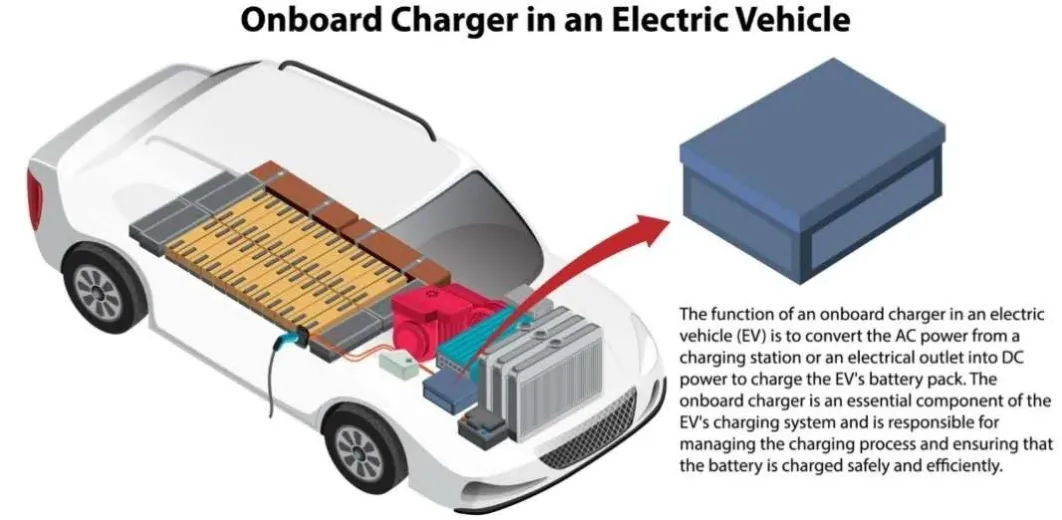
An On-Board Charger (OBC) is a power electronic device installed inside an electric vehicle. Its primary function is to convert alternating current (AC) from the power grid into direct current (DC) that can safely charge the vehicle's battery pack.
Since most public and residential charging stations provide AC power, the OBC acts as the bridge between the charging source and the battery system.
Without an OBC, the battery cannot be charged directly from a standard AC charging station.
How Does an OBC Work?
The charging process typically follows these steps:
- AC power enters the vehicle through the charging port.
- The OBC filters and conditions the incoming power.
- Power Factor Correction (PFC) improves efficiency and reduces harmonic distortion.
- The charger converts AC power into stable DC power.
- The Battery Management System (BMS) communicates with the OBC to control charging parameters.
- The battery pack receives optimized charging current and voltage.
This process ensures safe, efficient, and reliable charging under different operating conditions.
Why Is an OBC Important?
A high-quality OBC directly affects:
- Charging efficiency
- Battery lifespan
- Vehicle reliability
- Energy consumption
- Charging safety
For commercial electric vehicles that operate daily, charger reliability is especially important because downtime can significantly impact fleet productivity.
Common OBC Power Ratings
Different vehicle applications require different charging powers.
Power Rating| Typical Application
1.5 kW| Electric Golf Carts
3.3 kW| Light Electric Vehicles
6.6 kW| Commercial EVs
11 kW| Passenger Electric Vehicles
Selecting the appropriate power level depends on battery capacity, charging time requirements, and vehicle operating schedules.
Typical Applications of OBC Systems
Modern OBC solutions are widely used in:
- Electric Delivery Vans
- Electric Light Trucks
- Electric Motorcycles
- Electric Golf Carts
- Electric Forklifts
- Electric Utility Vehicles
- Electric Street Sweepers
As electrification expands across commercial transportation sectors, the demand for efficient onboard charging systems continues to grow.
How to Choose the Right OBC
When selecting an onboard charger, manufacturers should consider:
- Battery voltage
- Charging power requirements
- Vehicle installation space
- Cooling method
- Communication protocol compatibility
- Environmental protection requirements
-
A properly matched OBC can improve both charging performance and overall vehicle reliability.
Conclusion
The On-Board Charger is one of the most important power electronic components in an electric vehicle. By converting AC power into DC power and working together with the battery management system, the OBC enables safe and efficient charging for a wide range of EV applications.
As commercial EV platforms continue to evolve, integrated solutions combining OBC and DC-DC converter functions are becoming increasingly popular due to their compact size and improved system efficiency.